Glamping promises the best of both worlds: a real bed, a solid roof over your head and nature right outside the door. But if you’re used to the predictability of a hotel, handing your night over to a canvas tent or a dome in the woods can feel like a leap. You might be wondering if is glamping safe enough to book with confidence, or whether you’re trading away locks, lighting and someone at the front desk for a pretty photo.
The honest answer is that glamping is generally safe, but the real risks are not the ones most people imagine. Weather exposure, fire pits, uneven ground and remoteness matter far more than wildlife or spooky stories. This guide walks through how glamping compares to traditional camping, how to vet a site before you pay, what weather and season mean for your safety, how to handle wildlife and remote locations, which booking red flags to watch for, and what to pack so a small problem never becomes a big one.
Is Glamping Safe Compared to Traditional Camping?
The biggest risks in traditional camping come from the setup itself: fumbling with tent poles in the dark, staking a shelter on sloped or rocky ground, and wrestling with gear you may only use once a year. Glamping removes almost all of that. You arrive to a structure that someone else built, on ground that has already been leveled and tested by previous guests.
The structures themselves add a layer of security a tent simply cannot match. Yurts, domes and cabins typically have real doors with locks, solid floors, and walls that stand up to wind and rain. If a storm rolls in at 2 a.m., you are not holding a flashlight wondering whether a guy line will hold.
The risks that remain
What glamping does not remove is the environment around you. Most injuries and complaints in this style of travel stem from weather exposure, fire pits and uneven terrain, not wildlife. Paths between structures can be dim and root-covered, fire pits stay hot long after the flames die down, and remote sites mean help may take a while to arrive.
The fair comparison is this: glamping is safer than tent camping but less controlled than a hotel, where hallways are lit and staff are steps away. That gap is exactly why vetting the site before you book matters so much. A well-run glamping operation closes most of it; a careless one leaves it wide open.
How to Vet a Glamping Site Before You Book
A trustworthy operator makes safety information easy to find before you ever pay. Reliable sites list emergency contacts, the distance to the nearest hospital and cell coverage details right on their booking page. If that information is missing, you will be guessing at the worst possible moment. Ask for it directly and treat a vague answer as data.
Recent reviews are your second tool. Filter for mentions of security, locked doors, lighting after dark and how quickly staff responded when something went wrong. One bad review is noise; a pattern of “nobody answered the phone” is a signal. Also confirm the basics of fire safety: working smoke detectors, a fire extinguisher you can actually locate, and clearly posted fire pit rules.
Host responsiveness is the single best predictor of on-site support. Someone who answers your questions within 24 hours before booking will usually be just as reachable during your stay. Slow, generic replies often mean thin or distant support once you arrive.
When comparing listings, use this checklist:
- On-site staff versus self-check-in: A host who lives on-site or manages nearby can respond to a heating failure or a storm issue in minutes, while a fully remote self-check-in unit may leave you waiting hours for a reply.
- Lighting between structures: Ask whether paths to bathrooms and parking are lit, and whether your unit has both interior and exterior lights, since uneven ground is far riskier in the dark.
- Nearest hospital and road access: A good listing tells you the drive time to emergency care and whether the access road is passable in rain, which matters more the farther out you go.
- Fire pit rules in writing: Look for posted rules on where fires are allowed, what can be burned and how ashes are handled, not just a decorative photo of a fire ring.
Once you have chosen a vetted site, the last step is arriving prepared. A solid glamping trip packing checklist covers the small safety items that turn a minor issue into a non-event.
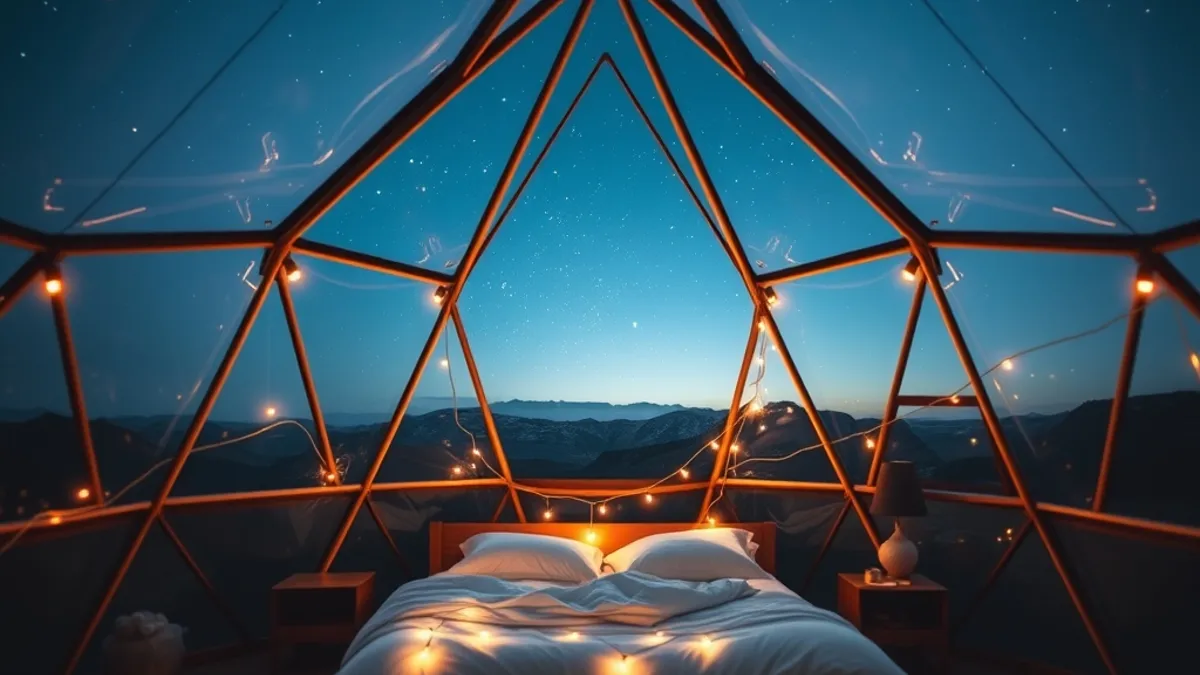
Weather and Season: The Biggest Safety Factor
Weather is the factor that separates a magical glamping trip from a miserable or even risky one. In most temperate regions, the reliable window runs from late May through early October, when nights are warm enough for canvas structures and storms are less frequent. Booking inside that window is the simplest safety decision you can make, and it helps to understand how timing shifts from one destination to another before you commit to dates.
Cold nights are the surprise most guests do not expect
Canvas is thin, and temperatures inside a tent or yurt can drop 10-15°F below the daytime high once the sun goes down. A pleasant 75°F afternoon can become a genuinely cold night, so confirm heating before you book rather than assuming a “cozy” listing means a heater. Ask what kind of heating it is, whether it runs all night and whether extra blankets are provided.
Shoulder-season stays deserve extra caution in storm-prone areas. A hard-walled cabin handles wind and heavy rain far better than a dome or tent, so if you want to travel outside the peak window, choose a solid structure and skip the fabric ones.
Finally, ask the host directly about wind ratings for domes and tents. Most quality units are engineered and rated for standard seasonal storms, and a confident host will know the answer without hesitating. If they cannot tell you the rating or when the structure was last inspected in high winds, treat that as a reason to keep looking. For a fuller breakdown of how the ideal booking window changes across destinations, see the best time to go glamping in each region.
Wildlife, Food Storage and Remote-Location Precautions
One of the most common mistakes first-time glampers make is treating a yurt or safari tent like a hotel room, especially when it comes to food. A canvas wall or a dome shell does nothing to stop a curious raccoon, mouse or bear from smelling the snacks you left on the table. Wildlife encounters are rarely dangerous when food is handled correctly, but they can end your trip quickly when they are not.
Before you book, ask the operator directly whether the property sits in bear or snake country. A good host will answer plainly and explain what they do about it: bear-proof lockers, cleared paths, snake-aware siting for structures and guidance on what to do if you spot an animal. If the answer is vague or defensive, treat that as useful information about the operator overall.
Remoteness is the other factor to plan around. Many glamping sites sit 30-60 minutes from the nearest town, often down unpaved roads with patchy cell service. That is part of the appeal, but it means you need to be self-sufficient for a night or a morning if something goes wrong.
Here is what to have sorted before you drive out of signal range:
- Food storage routine: use the provided lockers or your vehicle, and wipe down cooking areas so smells do not linger near your sleeping structure overnight.
- Headlamp with fresh batteries: paths between structures are often unlit, and a headlamp keeps both hands free for gates, stairs or uneven ground after dark.
- Offline maps downloaded in advance: confirm the download covers the whole drive, not just the last stretch, since rural roads frequently lose coverage mid-route.
- Saved emergency contacts: store the host’s direct number and the local emergency number in your phone, and write them on paper as a backup in case your battery dies.
Booking Smart: Timing, Price Signals and Red Flags
Glamping availability moves faster than most people expect. For peak season stays, book 2-3 months ahead; for popular summer weekends at sought-after sites, you will often need 6-12 months of lead time. Last-minute deals do exist, but in prime season the best units tend to be gone early, and what remains is frequently the priciest or the least desirable.
Price is also a signal. Typical glamping prices run $100-$400 per night depending on the season and the structure type, so a listing that undercuts that range dramatically at the height of summer deserves scrutiny. If a luxury dome with a private hot tub is advertised for a fraction of what comparable sites charge, ask yourself what the photos are not showing. For a fuller breakdown of what different structure types usually cost, see this guide to typical glamping prices.
Red Flags to Watch For
Some omissions in a listing tell you more than anything the listing actually says. Be cautious if there are no photos of the bathroom, no cancellation policy, no physical address and no host phone number. A legitimate operator can tell you where the site is, how to reach someone in an emergency and what happens if you need to cancel. Vagueness on all four points at once is rarely an accident.
How to Pay Safely
Always pay through the booking platform’s secure checkout rather than by direct wire transfer, bank transfer or payment apps requested over email. Platform payments give you a paper trail and a dispute process if the unit does not match the listing. A host who pushes you off-platform to “save the fees” is removing your only real protection, and that alone is reason enough to book elsewhere.
What to Pack for a Safe Glamping Trip
Glamping sites feel luxurious enough that people leave their camping habits at home, and that is exactly where problems start. The structure may have a real bed, solid floors and heating, but you are still in a rural setting where the nearest store or pharmacy can be a long drive away. Most injuries and complaints at these sites come from things like weather exposure, fire pits and uneven terrain rather than anything dramatic, which means a small kit of essentials covers the situations that actually come up. Pack it in your car before you leave home, when you can still think clearly, rather than improvising once you arrive and discover what you are missing.
Terrain is the most underestimated issue. Paths between structures, bathrooms and parking areas are often gravel, grass or dirt, sometimes with steps or slopes, and they are rarely lit at night. Closed-toe shoes and a bit of layering in your outfit make moving around after dark far less risky. A small flashlight clipped to your jacket or kept by the bed is worth more than any phone flashlight, since it leaves your hands free.
Connectivity is the final piece. Cell service at remote sites can be weak or nonexistent, so do not rely on your phone for everything. Plan for the possibility that you cannot stream, search or call until you walk up the road a bit.
- First-aid kit with blister care: add tweezers and antiseptic wipes, since splinters from wooden decks and small cuts are more common than serious injuries at these sites.
- Power bank, fully charged: remote sites may have limited outlets, and a charged power bank keeps your phone available for maps and emergency calls.
- Offline maps plus a printed copy of your bookings: screenshots help too, but paper survives a dead battery, and confirmation details may include gate codes you cannot look up later.
- Personal medications in original packaging: pack more than you think you need, since a delayed return or an extra night is much simpler when you are not rationing a prescription.
- Layers including a warm hat: even in summer, evenings between structures can feel noticeably cooler than the daytime, especially at sites in open or elevated terrain.
- A real flashlight or headlamp: paths are often unlit, and a dedicated light beats a phone for walking to the bathroom or fire pit after dark.
The Bottom Line on Glamping Safety
So, is glamping safe? For most travelers, yes. You trade the thin fabric of a tent for a solid structure with locks and weather protection, and the risks that remain are manageable ones: exposure to the elements, cooking fires, rough paths and the remoteness of the location. Those are exactly the factors you can research and prepare for, unlike the surprises that come with unfamiliar camping gear.
The formula is simple. Vet the site before you book, checking that the host communicates clearly and lists emergency contacts. Book 2-3 months ahead within the late May through early October window, pack a first-aid kit, a headlamp and layers, and you have covered most realistic risks. A stay in the typical $100-$400 per night range, with responsive hosts and clear emergency information, is a reliable, low-risk choice. Have you tried glamping yet? Share your experience or questions in the comments, or pass this along to a friend planning a trip.