Booking your first glamping trip usually comes with one nagging question: how much do you actually need to bring? Some travelers show up with a car full of sleeping bags and camp stoves, only to find a made-up bed, fluffy duvet and coffee maker waiting inside their tent. Others assume everything is provided and end up wishing they had packed a towel.
The truth is that a glamping stay includes far more than a traditional campsite, but the exact inclusions vary widely between a basic safari tent and a luxury dome with a hot tub. This guide breaks down what typically comes standard, from bedding and linens to cookware, bathrooms, heating and Wi-Fi. We will also look at how inclusions differ by price tier and share simple ways to confirm the details with your host before you book, so there are no surprises when you arrive.
What Is Included in a Glamping Stay? The Basics
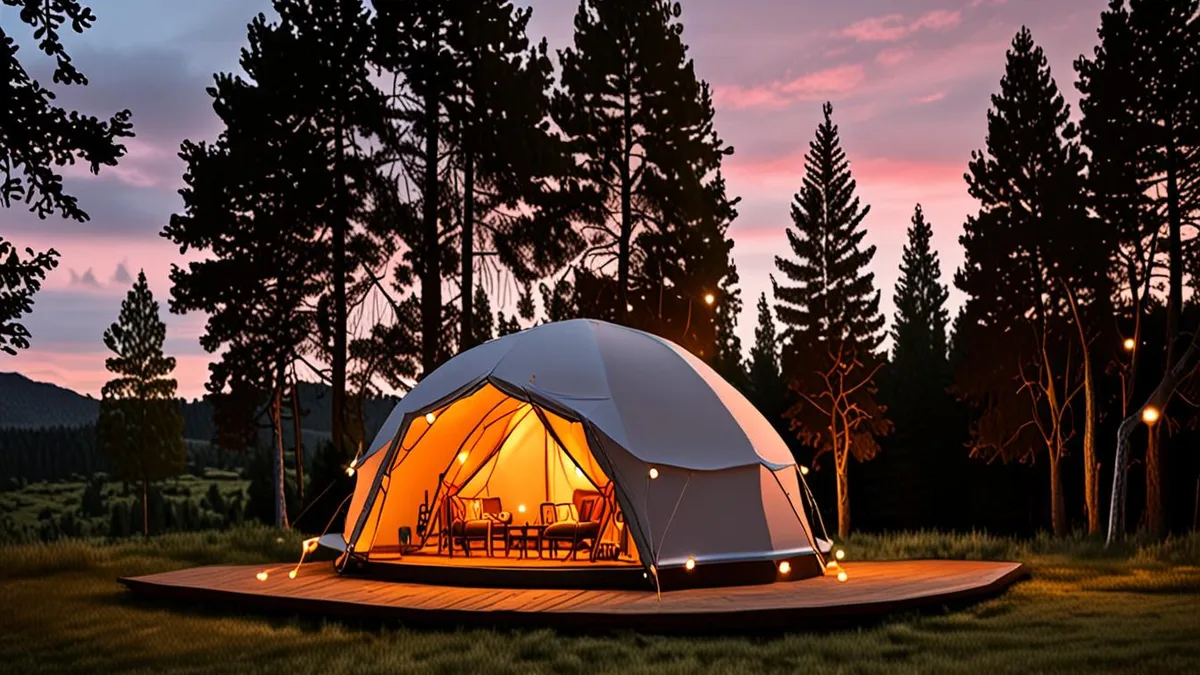
Glamping is short for glamorous camping, and the definition is simple: you stay in a purpose-built structure that is already set up and ready when you arrive. That structure might be a large canvas tent, a geodesic dome, a wooden cabin or a yurt. Unlike traditional camping, there is no pitching, no rolling out a sleeping pad and no wrestling with guy lines in the dark. You park, walk in and the accommodation is done.
The standard inclusions are what separate glamping from a night in a tent you brought yourself. Nearly every unit comes with a real bed, made up with linens, plus pillows and blankets. You also get lighting, usually electric or solar powered, and some form of heating or cooling depending on the climate and the property’s tier. In practice, this means you can arrive with an overnight bag rather than a garage of camping gear.
Housekeeping and check-in norms
Housekeeping works differently from a hotel. Units are cleaned between stays, but daily servicing is rare unless you are at a resort-level property with staff on site. If you need fresh towels or a mid-stay tidy, ask the host whether that can be arranged and whether it costs extra.
Check-in at most glamping sites falls around 3–4 pm, with check-out around 10–11 am the next morning. These windows can shift in remote locations where the owner does the cleaning personally, so confirm your arrival time when you book, especially if you are driving in after dark.
Bedding, Towels and Linens: What You Don’t Need to Pack
The single biggest packing relief in glamping is the bed. In nearly all glamping units, beds come fully made with sheets, a duvet or blankets, and extra pillows stacked on top. There is no need for sleeping bags, air mattresses or a pillow from home, even in tent-style accommodations. If the unit sleeps four, expect all four beds to be dressed and ready.
Bath towels are standard too, and many sites provide a spare set for longer stays or for swimming. Be aware that some sites charge a small fee for additional towel swaps during your stay, so a spare set in your bag can save you a few dollars. In luxury units, you may also find bathrobes, slippers and small toiletries such as soap and shampoo waiting by the sink.
That said, a few personal items remain your responsibility. Before you finalize your packing list, it helps to work through a complete glamping packing checklist so nothing essential slips through.
- Personal toiletries: toothbrush, medications, deodorant and any skincare products, since provided toiletries usually stop at soap and shampoo.
- Swimwear: many glamping sites sit near lakes, rivers or pools, and some luxury units include a hot tub where a towel and swimsuit come in handy.
- Specialty bedding for children: bed rails, a favorite blanket or a specific pillow for young kids are rarely provided unless you confirm it with the host in advance.
Kitchens, Cooking Gear and Food Provisions
Kitchen setups vary more than almost any other inclusion, so this is the area worth checking closely before you book. Cabins usually come with a full kitchen, including a stove, fridge and counter space. Tents and domes more often have a kitchenette inside the unit or access to a shared camp kitchen, while the most basic sites give you nothing more than a fire pit and a grill outside.
Whatever the setup, the cookware itself is nearly always included. Expect pots and pans, cooking utensils, plates, cups and cutlery for the stated number of guests, plus a kettle or a coffee maker. You should not need to bring a single piece of kitchen equipment, though a sharp knife and a cutting board are worth confirming if you plan to cook proper meals.
Is food included?
In most cases, no. Food is usually not part of a glamping stay, so plan to shop before you arrive, especially at remote sites with no store nearby. The exceptions sit at the luxury end: some properties add a welcome basket, a breakfast hamper for your first morning or an on-site café where you can order meals.
Three details make or break a self-catering stay, so confirm them with the host before arrival. First, whether there is a fridge and how big it is. Second, the stove type, since a gas burner and an induction hob behave very differently and induction requires compatible cookware. Third, whether drinking water is provided on site or whether you need to bring your own supply.
Bathrooms: Shared Facilities vs En-Suite
Bathrooms are the single biggest dividing line between a basic glamping stay and a comfortable one. At budget and simple sites, expect a shared shower and toilet block a short walk from your tent or yurt. These facilities are usually clean and functional, but you will be walking outside at night, possibly in the rain or cold, so pack a headlamp and slip-on shoes.
Mid-range and luxury units typically come with a private en-suite bathroom built into or attached to the structure. That means a flush toilet, a proper hot shower and often a small vanity with a mirror and counter space. Once you have experienced stumbling ten meters across a muddy field at midnight versus walking three steps from your bed, you will understand why this feature matters so much to travelers.
Eco-focused sites sometimes take a different approach. Composting toilets and solar-heated showers are increasingly common on sustainable properties, and they work well when maintained properly. The trade-off is that water pressure and temperature can be gentler than you are used to at home, so read the listing details carefully if these setups are not your thing.
The list below covers what to check before you commit:
- Distance and lighting: at sites with shared blocks, ask how far the facilities are from your unit and whether the path is lit after dark.
- Hot water timing: some shared blocks run out of hot water during peak morning hours, so ask whether showers are metered or on-demand.
- En-suite size: in domes and safari tents, bathrooms can be compact wet-room style; photos usually show whether the shower is full-sized or a small cubicle.
- Off-grid limitations: solar showers and composting toilets may need a few hours of sun to perform well, which matters on cloudy stretches of your stay.
- Price impact: an en-suite bathroom is one of the biggest price drivers in glamping, often adding roughly $50–$100 per night compared to a similar unit with shared facilities.
Comfort Extras: Heating, Wi-Fi and Entertainment
One of the biggest perks of a glamping stay is that warmth is usually handled for you. Most units include a wood-burning stove or a fire pit, and these are standard inclusions for stays between October and April. There’s nothing quite like a crackling stove in a yurt or dome when the temperature drops outside, and hosts typically provide instructions on how to light and maintain the fire safely. If you’ve never used a wood stove before, don’t worry—most are simple, and hosts are usually happy to walk you through it.
Wi-Fi and power: what to realistically expect
Wi-Fi is included at many glamping sites, but manage your expectations in remote locations. Connections can be slow, drop out in bad weather, or be limited to a common area near reception rather than reaching your tent. If you need to work during your stay, ask the host about signal strength before booking rather than assuming.
Electricity varies even more. A cabin often has full mains power with outlets for charging devices, while an off-grid safari tent or dome might rely on solar panels that power lighting only. In those cases, bring a portable power bank for phones and cameras. Check the listing to see whether your unit is on-grid or off-grid.
Extras depend heavily on the price tier. Budget and mid-range stays might include a fire pit, a couple of chairs and a deck or hammock. Luxury units often add private hot tubs, board games, telescopes for stargazing and complimentary firewood bundles. Some hosts charge for firewood beyond a first bundle, so confirm what’s included if you plan to keep the fire going all evening.
How Inclusions Vary by Price and How to Check Before Booking
Not every glamping stay includes the same things, and price is usually the clearest clue. A tent with a shared shower block and a yurt with a private bathroom and hot tub are both “glamping,” but the experiences sit at opposite ends of the spectrum. Knowing which tier you are booking helps you set expectations and avoid paying for extras you will never use. If you want a broader picture of what stays cost across the board, this guide to typical glamping prices breaks down the numbers in more detail.
- Compare the price tier to the amenity list. Budget stays, typically around $80–$150 per night in Europe and $100–$200 in the US, usually mean shared bathrooms and a basic kitchen or fire pit setup. Mid-range properties, roughly $150–$250 per night, typically add en-suite bathrooms and better cooking facilities. Luxury stays at $250 and above often bring hot tubs, catering options and, at some properties, daily service.
- Read the full amenity list, not just the photos. Photos can show a beautifully styled tent while hiding the fact that the shower is a two-minute walk away. The listing’s amenity section tells you what is actually included, so go through it line by line before you fall in love with the pictures.
- Message the host with specific questions. Ask directly about linens, cooking gear and heating, especially if the listing is vague or the photos are from another season. A host who answers clearly and quickly is also a good sign of how the stay itself will be managed.
- Book early for peak demand. En-suite units for peak summer weekends often need reserving 4–6 months ahead, so if a private bathroom matters to you, plan well before the summer rush rather than hoping for a late cancellation.
The good news is that the price tiers are fairly consistent across countries and operators, so once you know what a given nightly rate typically buys, you can scan any listing and spot whether it offers fair value. Spend ten minutes on the amenity list and one message to the host, and you will know exactly what you are getting before your card is charged.
The Bottom Line on What a Glamping Stay Includes
So, what do you actually need to pack for a glamping trip? Far less than for traditional camping. Your stay includes the structure itself, a properly made-up bed, lighting, and usually towels and basic cookware. In most cases, you can leave the sleeping bags, air mattresses and camp stove at home.
The biggest differences between stays come down to bathrooms, kitchens and comfort extras like heating and hot tubs, which vary most between budget and luxury tiers. Because every site is different, the simplest way to avoid surprises is to read the full amenity list and confirm details with the host before booking. Do that, and you will arrive knowing exactly what is waiting for you. If you have a glamping question or a tip of your own, leave a comment or share this article with a friend who is planning a trip.