You have your dates picked and a rough budget in mind, but every search for the villa vs hotel in Santorini question seems to raise more questions than it answers. Cave villas look dreamy, caldera-view hotels look convenient, and both come with fine print that can quietly change your total cost. The right choice depends less on the photos and more on how you actually travel.
This guide breaks the decision down piece by piece: the core differences between the two options, what you really pay per night in each season, whether the caldera rim or the beach side suits you better, and how privacy, space and amenities compare. We also cover booking windows and minimum stay rules, which matter more in Santorini than in most destinations. By the end, you should be able to match your budget and dates to the option that fits your trip, not someone else’s.
Villa vs Hotel in Santorini: The Core Differences
At first glance, a villa and a hotel in Santorini might both promise caldera views and a place to sleep, but the experience on the ground is quite different. Most villas on the island are private cave houses or cliffside homes, carved into the rock in the traditional Cycladic style. They typically come with a kitchen or kitchenette, a plunge pool of your own and an outdoor terrace where you can eat breakfast in your robe without seeing another guest.
Hotels work differently. Your room rate usually bundles in daily housekeeping, a front desk you can call at any hour, breakfast and access to a shared pool, often one of those famous infinity pools overlooking the caldera. Someone else handles the logistics, which matters more than you might think when you have just climbed 50-100+ steps with your luggage.
What a villa actually gives you
A villa is essentially a private home for the length of your stay. You check yourself in, cook if you feel like it, and set your own rhythm. For groups traveling together or anyone staying a week or longer, that space and flexibility can transform the trip. You are not coordinating breakfast times or fighting for sun loungers.
What a hotel actually gives you
A hotel, by contrast, is built around service. Fresh towels every day, someone at reception when your ferry is delayed, a restaurant downstairs when you arrive hungry after a long flight. Couples on a short trip often find this convenience is exactly what they want, since there is no shopping, cooking or cleaning to think about.
The simplest way to frame it: villas trade service for space and privacy, while hotels trade space for service. Neither is better in the abstract, it depends on who you are traveling with and how long you are staying.
Price Comparison: What You Actually Pay Per Night
Let’s talk numbers, because the price gap between a villa and a hotel in Santorini is bigger than most travelers expect. A caldera-side cave villa typically runs around 200-500 EUR per night in shoulder season, and once late June hits, expect 400-900+ EUR per night for the same property. July and August are the priciest months on the island, and villa owners know it.
Mid-range caldera hotels are gentler on the wallet: roughly 150-400 EUR per night in shoulder season for a room with that famous sunset view. The real difference shows up in flexibility. Hotels usually let you book just a night or two, while most villas in summer require a 3-7 night minimum, which means your total villa bill can climb quickly even if the nightly rate looks reasonable.
That said, the math flips when you travel with a group. Splitting a 3-4 bedroom villa between six or eight people often brings the per-person cost below what two separate hotel rooms would run you, especially in peak season. Just remember that villa rates rarely include breakfast or daily cleaning, so add a line in your budget for groceries or a private housekeeping service if you want those extras.
- Extra services add up: arranging a cook, a private transfer, or mid-stay cleaning at a villa is usually billed separately, so ask the host for typical costs before you book.
- Hotel breakfast offsets part of the gap: if two of you eat a proper breakfast every morning, the included hotel spread can shave a meaningful amount off your daily food spend compared to a villa stay.
- Shoulder season narrows the difference: in May to mid-June or mid-September to October, the price gap between a cave suite hotel and a small villa shrinks enough that a couple can sometimes justify the villa.
- Compare per-person, not per-night: a villa at 600 EUR split six ways beats a 250 EUR hotel room for two, but only if your group actually fills the bedrooms you’re paying for.
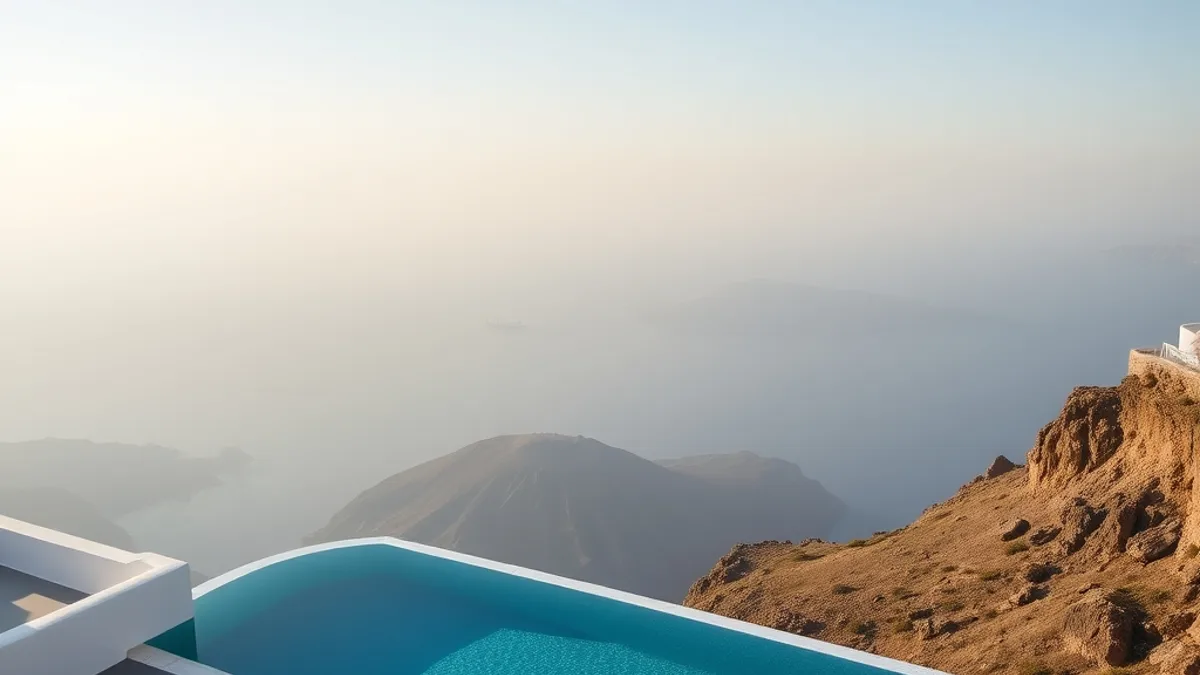
Location: Caldera Rim vs Beach Side
Where you stay on Santorini shapes your whole trip. The island has two very different sides, and the villa vs hotel choice often matters less than the location choice itself.
The famous postcard views come from the caldera rim villages: Fira, Oia and Imerovigli. This is where the cave houses, infinity pools and sunset terraces are, and it is also where you will pay the highest prices on the island. If watching the sun drop into the Aegean from your own terrace is the priority, this is the strip to target.
The beach side tells a different story. Kamari and Perissa sit on the island’s southeastern coast, roughly 20-30 minutes by car from the caldera villages. Accommodation here is noticeably cheaper, and you get a long black-sand beach with tavernas and beach bars within walking distance. Many travelers stay beach-side and drive or take a bus to the caldera villages for sunset, getting the views without the premium nightly rate.
Check the steps before you book
Cliffside living has a catch: stairs. Many caldera properties sit 50-100+ steps below the main path, which sounds romantic until you are hauling suitcases up in July heat. Some properties offer porter help or luggage transport, but not all do.
Before booking any cliffside villa or hotel, ask exactly how many steps there are, whether someone will help with bags, and how close the nearest drop-off point is. If you have knee problems, heavy luggage or small children, a property closer to the caldera road can save you a lot of sweat. The view is the same from the top.
Privacy, Space and Amenities
The biggest daily difference between a villa and a hotel in Santorini shows up the moment you step outside your room. A typical caldera villa hands you a private plunge pool, a shaded terrace and a full kitchen, all yours alone. That means you can pick up wine, cheese and tomatoes from a local market and watch the sunset from your own terrace instead of squeezing onto a crowded viewpoint in Oia.
Hotels flip that equation. You get a shared infinity pool perched over the caldera, often a spa, and an on-site restaurant where breakfast and dinner are handled for you. Nobody asks you to wash a dish or figure out a check-in code. If your idea of a vacation is zero chores, a hotel does the heavy lifting.
That said, villa life does ask a little of you. Expect self check-in with a lockbox or key code, and light self-catering unless you arrange outside help. The trade-off is space and privacy that no hotel room can match, especially if you are traveling with friends. The same logic applies worldwide, which we break down in our guide to choosing between villas and hotels in Bali.
- Private plunge pools are usually small but deep — think two to four people max, perfect for a morning swim rather than laps, and cleaned between guest stays rather than daily.
- Villa kitchens range from basic to full — some offer just a kettle and mini fridge, so confirm the setup if you plan to actually cook dinner.
- Hotel spas and restaurants often require reservations — book dinner slots and treatments early in peak season, since caldera-facing tables fill up fast.
- Self check-in means no luggage help — if your villa sits down a staircase path, you carry your own bags, so pack light or ask the host about porter options when booking.
When to Book and How Long to Stay
Santorini’s best caldera-view properties sell out early, and the timing of your booking matters as much as the timing of your trip. Peak season runs from late June to early September, with July and August the busiest and most expensive months. During those weeks, the small cluster of villages along the caldera rim fills up fast, and travelers who wait too long are usually left choosing between overpriced leftovers or accommodation far from the views they came for. Here is how to plan ahead.
- Book 4-6 months ahead for peak season. Caldera-view villas and hotels in Fira, Oia and Imerovigli have limited inventory, and the best-value options are typically reserved by early spring for summer dates.
- Book 2-3 months ahead for shoulder season. Availability is easier and prices milder, but the most popular cave houses still get claimed early, especially for weekends.
- Match your stay length to your accommodation type. Most villas enforce a 3-7 night minimum in summer, while hotels usually accept 1-2 night stays, so a short trip generally points you toward a hotel.
- Aim for the shoulder-season sweet spot. May to mid-June and mid-September to October offer the best balance of price, weather and crowd levels, with warm swimming conditions and calmer streets.
One practical tip: once you have your dates, book the accommodation before flights if you can. Caldera-view rooms are far scarcer than airline seats, and flexibility on your travel dates is worth more than flexibility on your carrier. If your dates are fixed for July or August, commit to a property as soon as you find one that fits your budget rather than waiting for a better deal that may never appear.
It also pays to set alerts and check rates directly with properties before you pay a booking platform fee. Some smaller cave houses and family-run hotels offer better terms, free date changes or a discount when you message them directly, especially outside the busiest weeks. Keep cancellation policies in mind too: a slightly higher rate with free cancellation can be safer than a non-refundable bargain if your plans are still flexible. And if you are booking for a group, confirm the exact bed configuration in writing before paying the deposit, since photos do not always show how many people a property genuinely sleeps comfortably.
Which Should You Choose?
By now the trade-offs are clear, so the decision really comes down to how you travel. Groups staying a full week will almost always be happier in a villa, where a shared terrace and plunge pool become the social heart of the trip. Solo travelers and quick-stop couples usually get more value from a hotel, where breakfast and daily housekeeping are built into the rate and a short stay is welcome rather than discouraged.
Couples deserve a special mention. Romance on a mid-range budget rarely means a private villa on the caldera rim in August — the peak season prices simply don’t cooperate. Instead, a smaller cave suite hotel in shoulder season often delivers the same whitewashed charm, a caldera-facing balcony and breakfast on your terrace at a friendlier price. If a private pool is the dream, it helps to know what you’re signing up for; our guide to staying in a private pool villa in Bali covers the realities.
- Villa groups should assign one person as the host contact — self check-in codes, cleaning schedules and damage deposits are easier to manage with a single point of communication.
- Hotel travelers on short stays should prioritize location over size — a compact room steps from Fira’s main street beats a larger room requiring a long transfer when you only have a couple of days on the island.
- Romantic travelers should check sunset orientation, not just “caldera view” — some west-facing rooms see the full sunset while others face north along the rim and get only indirect light.
- Budget solo travelers can look at hotel single rates in shoulder season — mid-range caldera hotels often price single occupancy more kindly than villas, which charge flat rates regardless of headcount.
Final Thoughts
So, villa or hotel? The villa vs hotel in Santorini decision really comes down to three things: how long you are staying, how many people are traveling, and what your budget can comfortably handle. If you are a group staying four nights or more, a cave villa usually stretches your money further and gives you space no hotel room can match. If you are here for a night or two and want breakfast, housekeeping and a front desk handled for you, a hotel makes more sense.
Whichever way you lean, remember the simple trade-off: villas win on space and privacy, hotels win on service and short-stay flexibility. And since the best caldera-view options vanish early, locking in your peak-season pick around half a year in advance gives you the strongest selection either way. If this helped you decide, leave a comment or share the article with your travel crew.