Picture this: you book a glamping tent online, drive hours with excited kids, and arrive to find a cramped canvas dome with two thin air mattresses, a fire pit inches from the tent door and nothing to do when it rains. It happens more often than it should, because photos and listing descriptions rarely tell the whole story. A little verification before you pay saves the whole trip.
This guide walks through glamping for families step by step, so you know exactly what to check before booking. We’ll cover space and real sleeping arrangements, the safety features and child-friendly details that matter on site, kitchens, bathrooms and everyday comforts, activities to keep kids entertained, smart timing and realistic costs, how to pick the right season and location, and a final checklist for booking with confidence.
Space and Sleeping Arrangements for Glamping for Families
The first thing to scrutinize is the stated sleeping capacity, because listings can be misleading. A tent advertised as sleeping four might mean two adults on a proper bed and two kids squeezed onto floor mattresses. Before booking, message the site and ask exactly what beds are provided: how many, what size, and whether they’re real frames or inflatable mattresses on the ground. A “4-6 person” label means little until you know what each of those people actually sleeps on.
How much space do you really need?
Floor area matters most when the weather turns. On a sunny trip, a small tent feels fine, but a family of four stuck inside for a rainy afternoon needs room to move. Aim for roughly 25-30 m² or larger; below that, suitcases, wet shoes and board games will fight for every inch. Check the listed dimensions on the site’s spec sheet rather than judging from wide-angle photos, which make even modest tents look spacious.
Beds, linens and extra children
Ask two practical questions before you commit. First, are linens and towels included, or do you need to bring sleeping bags and pillowcases? Second, if you have a third child, can the site add a cot or extra bed, and is there a charge? Some sites include this free with a simple request, others treat it as an add-on, and a few simply can’t fit another bed in the tent. Sorting this out in advance is far easier than discovering it at check-in.
Safety and Child-Friendly Site Features
Safety is where glamping for families differs most from a couples’ getaway, and it’s worth a few direct questions to the site before you book. Start with the accommodation itself: doors should lock securely from the inside, windows and vents need proper screens to keep insects out at night, and any hard-sided cabin or tent with heating should have working smoke and carbon monoxide detectors. If a listing doesn’t mention detectors, ask. It’s a quick question, and the answer tells you a lot about how the site is run.
Then look outward at the site layout. Young children roam, so you want to know what they’ll encounter within a few steps of your tent. Ask specifically about fences, water, roads and fire, and check whether the site publishes its rules online. A well-run family site usually describes these details openly. For everything you should bring along, a complete glamping packing checklist helps you cover safety essentials like first-aid supplies and flashlights.
- Ask whether play areas are fully fenced, since an open playground next to an unfenced pond changes the supervision you’ll need.
- Find out how far tents sit from any internal roads, and whether cars are allowed to park near the units or must stay in a separate lot.
- Check the distance between tents and fire pits or communal fire rings, and whether fires are supervised or left burning overnight.
- Look for shallow water hazards such as streams, ponds or pools, and whether the site marks or barriers them.
- Notice if the site lists quiet hours, often around 10 pm, which usually signals a family-oriented atmosphere rather than a party crowd.
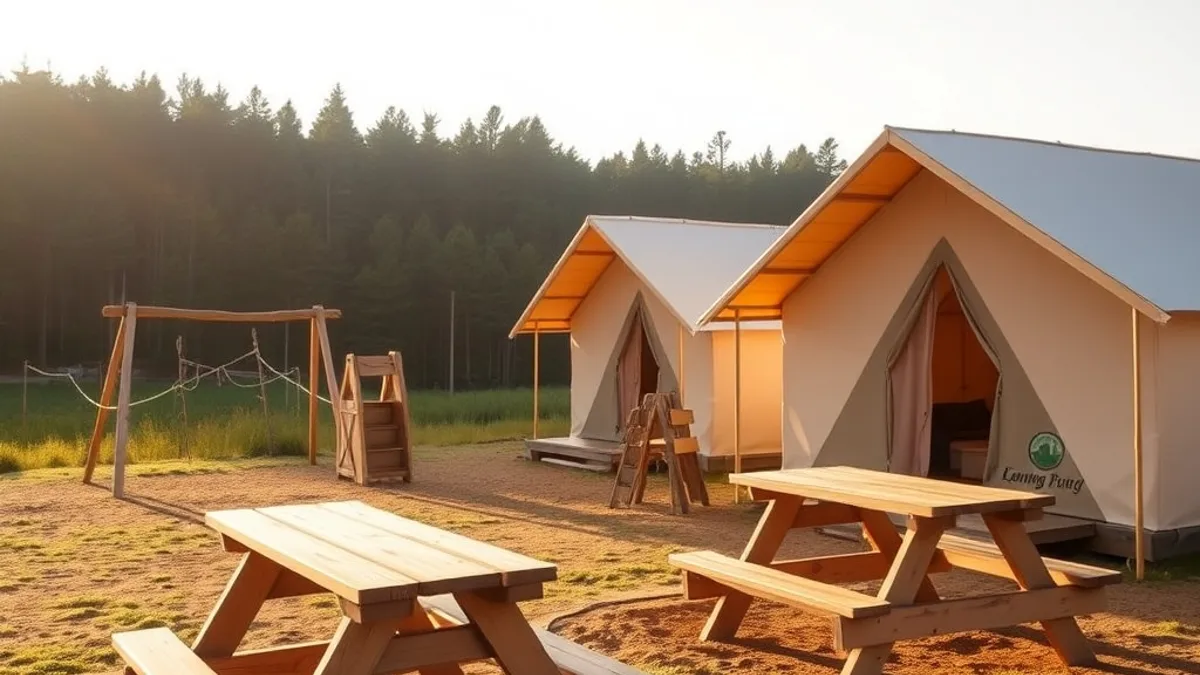
Kitchen, Bathroom and Practical Comforts
Bathroom arrangements make or break a family glamping trip, so decide early what you can live with. A private en-suite bathroom is the most comfortable option with young kids, especially for nighttime trips and morning routines. Shared facilities can work fine too, but check the walking distance from your tent and how many bathrooms serve how many units. A two-minute walk in daylight is one thing; the same walk at midnight with a half-asleep five-year-old is another.
Food prep and staying comfortable
Feeding kids three times a day gets expensive and impractical without somewhere to cook. Look for a kitchenette in your unit or a communal kitchen with a fridge and a stove, enough to prepare breakfast, pack picnic lunches and heat simple dinners. Confirm what cookware and utensils are provided so you don’t arrive with food and no pan.
Temperature is the other big comfort factor. Tents can get surprisingly cold outside the June-August window, so ask what heating is provided, whether it’s included in the rate, and whether it runs overnight. In hot regions, fans, shade positioning or air conditioning matter just as much. If you need to stay reachable, check the site’s stated Wi-Fi situation and ask about phone coverage, since some scenic locations have weak signals by design. Knowing this in advance lets you plan for work calls, school pickups or simply letting grandparents check in.
Activities and Entertainment for Kids On Site
When you’re traveling with kids, the tent itself is only half the equation. What keeps everyone happy on a multi-day stay is what happens outside it, so the activity offering deserves as much attention as the bed count. A site with a playground, a few friendly animals to feed, or a small pool can fill whole afternoons without you planning a thing.
Animal farms are a particular win for younger children. Collecting eggs in the morning or watching goats being fed gives kids a routine they look forward to, and it’s the kind of memory that outlasts any day trip. Pools and supervised activity sessions, meanwhile, give parents a genuine break, which matters more on a five-night stay than most people expect.
Rain is the great test of any family glamping site. Before booking, check what’s within walking distance for a wet afternoon: an indoor games room, a covered common area with books and board games, or even a small on-site café can be the difference between a cozy rainy day and a long one. If a site’s listing only mentions outdoor activities, ask directly what happens when the weather turns.
Finally, get clear on the money side. Some sites bundle everything in, while others charge separately for pony rides, canoe rentals, craft sessions or evening campfires.
- Playgrounds: look for age-appropriate equipment, not just a single swing set, and check whether it’s visible from the tents so you can supervise from your deck.
- Animal farms: ask whether feeding times are daily and included, since some sites treat animal encounters as a paid add-on.
- Pools: confirm whether the pool is heated and lifeguarded, or whether it’s swim-at-your-own-risk, which changes how closely you’ll need to watch kids.
- Supervised activities: find out the minimum age and whether sessions run daily or only on weekends and school holidays.
- Indoor backup: ask specifically about games rooms, craft corners or a loaner library of board games for rainy evenings.
- Extra fees: request a full price list of optional activities before you arrive so there are no surprises on checkout day.
When to Book and What Family Glamping Costs
Family glamping has moved well beyond a niche, and the most popular sites, especially those with pools, farms and playgrounds, fill up fast. For June to August dates at a well-known family site, booking 2-3 months ahead is a realistic rule of thumb. Leave it later and you’ll often find the family-sized tents gone, leaving only smaller units that won’t fit four people comfortably.
What you’ll typically pay
Prices vary widely by region and season, but a useful planning range is $120-$350 per night for a family-sized tent or cabin. Basic safari-style tents in less touristy areas sit at the lower end, while large furnished units with en-suite bathrooms near popular destinations reach the top of that range and beyond. Remember that some sites also charge per person rather than per tent, so a family of four may pay noticeably more than the advertised base rate.
If your dates are flexible, May and September are the sweet spot in most Northern Hemisphere regions. Shoulder-season stays often cost 20-40% less than peak summer, and you get quieter grounds, easier parking and shorter lines at the few attractions that are open. The trade-off is weather, which we’ll come back to shortly.
For a fuller breakdown of what different types of sites charge and where the money goes, see this guide to typical glamping prices before you set a budget.
Choosing the Right Season and Location
The best destination depends less on the scenery and more on who’s in the back seat. With toddlers, keep drives under 2 hours; a long transfer can undo a whole day before you’ve unpacked. School-age kids tolerate longer journeys better, which opens up regions you’d otherwise skip. Match the trip length to the youngest traveler, not the oldest.
Timing and weather
Shoulder-season prices are tempting, but weather is regional and unpredictable. May can be warm and dry in one area and cool and soggy in another a few hours away, and September varies just as much. Before committing to a discounted month, check regional weather patterns, average rainfall and typical nighttime temperatures, since a tent that’s pleasant in August can be chilly on a wet spring night. Our article on the best season for glamping by region breaks this down destination by destination.
Remote charm versus practical access
A site deep in the countryside sounds idyllic until you realize the nearest grocery store is a 40-minute drive and you’ve run out of milk on day two. With kids, some access matters: a small shop on site or within a short drive, a pharmacy or clinic reachable in reasonable time, and phone coverage in case something goes wrong. You don’t need to be next to a town, but a completely off-grid location is a bigger commitment with children than with adults. Aim for the balance that suits your family: remote enough for dark skies and quiet, close enough that a forgotten item or a scraped knee isn’t a crisis.
Booking Family Glamping With Confidence
Glamping with kids goes wrong when families book a photo-worthy tent online and only discover on arrival that it’s cramped, unsafe or has nothing for the children to do. The fix is simple: verify the essentials before you pay. Check the real sleeping setup and floor space, confirm safety features and child-friendly site rules, look closely at bathrooms and kitchens, and make sure there’s enough on-site entertainment to keep kids happy on a rainy afternoon.
Then match the trip to the calendar and your budget. Family glamping tents typically sleep 4-6 people, popular sites often need booking 2-3 months ahead for summer dates, and prices usually run $120-$350 per night depending on region and season. A site that ticks all these boxes turns glamping into an easy first family adventure. If this guide helped you plan your trip, leave a comment or share it with another family.