It’s one of the most common disappointments in beach travel: you book a gorgeous beachfront resort, wade into the water with your mask, and find nothing but pale sand, cloudy water and the occasional stray fish. A beautiful beach and a resort with good snorkeling are two very different things, and glossy marketing photos rarely tell you which one you’re getting.
This guide walks you through exactly what to check before you book. We’ll cover why that perfect beach in the photos doesn’t guarantee good snorkeling, how to spot a house reef or protected bay on a map, what recent guest reviews can reveal about water clarity and sargassum, and how to judge depth, entry access and safety at the waterline. We’ll also compare gear rental and guided trips, explain how to time your stay for the clearest water, and finish with a quick checklist you can use on any booking page.
Why the Beach in the Photos Doesn’t Guarantee Good Snorkeling
That postcard-white beach you’re admiring is often a warning sign for snorkelers. Powdery white sand usually continues underwater as a wide, sandy seabed with no rocks, no coral and very little structure. Fish need something to live around, so a featureless sandy bottom close to shore often means few fish to see unless you swim a long way out or take a boat to a reef offshore.
Resort marketing photos rarely help, either. Official images tend to show infinity pools, sun loungers and a strip of beach taken at the most flattering angle. Almost none of them show what the water actually looks like ten meters out, whether there’s anything to see down there, or how wavy it gets on an ordinary afternoon.
Open ocean can look calm in a photo
There’s also the wave problem. A resort can sit on a stretch of open coastline that takes the full force of the sea, with surf, stirred-up sand and poor visibility even while the pool and beach look perfect in every shot. A calm morning photo tells you nothing about conditions during your stay.
The lesson is simple: judge a property by its underwater geography, not its beach. The sections below show you how to do that before you hand over any money.
Check for a House Reef or Protected Bay Before Booking
The single best predictor of good snorkeling is what kind of coastline the resort sits on. Resorts built along a house reef, next to a rocky point, or tucked inside a protected bay consistently offer better snorkeling than those facing open, exposed coastline. Reef rock and seagrass attract fish; a bare sandy shore doesn’t.
Distance matters just as much. If a house reef lies within 50-100 m of the shore, you can swim out to it directly from the beach whenever you like, without booking a boat, hiring a taxi or waiting for a scheduled trip. That turns snorkeling into a casual, twice-a-day activity rather than a planned excursion.
Why protected bays matter
Bays and coves shield the water from wind and swell, which keeps the surface calm and stops sand from being stirred up. On windy days, an exposed beach can turn gray and murky while a sheltered bay just a few kilometers away stays clear and easy to swim in.
Before booking, spend twenty minutes investigating the shoreline yourself:
- Open satellite maps and zoom in on the water. Dark patches near the shore often indicate reef rock or seagrass beds, while a uniform pale turquoise band usually means plain sand.
- Look for a headland, breakwater or island offshore. Any natural barrier between the resort and the open sea suggests calmer, clearer water in front of the property.
- Study guest photos, not just official ones. Travelers often shoot straight down from their balcony or from the waterline, which reveals whether there’s rock, seagrass or nothing but sand in front of the resort.
- Check how the shoreline curves. A resort set in the concave curve of a cove gains natural protection that a straight, open stretch of beach simply doesn’t have.
Ten minutes of map work before booking can save you a week of swimming over empty sand.
Read Reviews for Water Clarity, Fish Life and Sargassum
Once you’ve shortlisted a few properties, recent guest reviews become your most honest source of information. Search reviews from the last several months for specific words like visibility, coral, turtles, rays and sargassum seaweed. Vague praise such as “great beach” tells you little; a review that says “we saw three turtles before breakfast” tells you a lot.
Watch the sargassum calendar
If you’re considering the Mexican Caribbean or similar Atlantic coastlines, keep seaweed in mind. Sargassum is most likely to pile up from May to October, while November to April usually brings clearer water and cleaner beaches. Reviews written during your intended travel months are far more useful than ones from the opposite season, because a glowing July review may describe conditions you’ll never see in February, and vice versa.
Guest photos are your second tool. Photos posted by travelers in the last 6-12 months show real, current conditions far better than official resort images, which may be years old. Look for shots taken from the water: they show you the actual color, cloudiness and marine life in front of the property.
Finally, pay attention to reviews that mention lifeguards, entry ladders and shallow access. These details signal that the resort actively manages its shoreline for swimming and snorkeling, rather than simply letting guests fend for themselves at whatever stretch of coast happens to sit in front of the buildings. A property where guests describe easy, safe water entry is usually one where the snorkeling is genuinely part of the experience.
Evaluate Depth, Entry Access and Safety at the Waterline
Depth matters more than most first-time snorkelers realize. Water that is 1-4 m deep near shore is the sweet spot: deep enough for fish and coral to settle in, yet shallow enough that you can stand or surface easily if your mask fogs or your legs get tired. If the seabed drops off quickly into deeper water just a few meters out, beginners and kids will struggle, and the fish often stay out of comfortable view.
Entry access is the second thing to study before you book. A sandy, gradual entry is the easiest way into the water, especially for children or anyone nervous about swimming. Rocky ledges can hold the best marine life, but they need clearly marked entry points, ladders or steps so you are not climbing over sharp coral rock in bare feet. Look closely at guest photos of the waterline, not just the beach.
Safety infrastructure tells you a lot about how seriously a resort takes its water activities. Here is what to check:
- Buoyed swim zones: a rope of buoys separates swimmers and snorkelers from boats, jet skis and incoming watercraft, which matters on busy stretches of coast.
- Lifeguard coverage: posted lifeguard hours mean someone trained is watching the water, not just a flag on a pole that nobody monitors.
- Current and wind indicators: resorts that fly colored warning flags daily are actively tracking conditions and will tell you when it is unsafe to enter.
- Shallow rest areas: sandbars or shallow patches inside the swim zone give tired snorkelers a place to stand and regroup.
Compare Gear, Guided Trips and On-Site Snorkeling Services
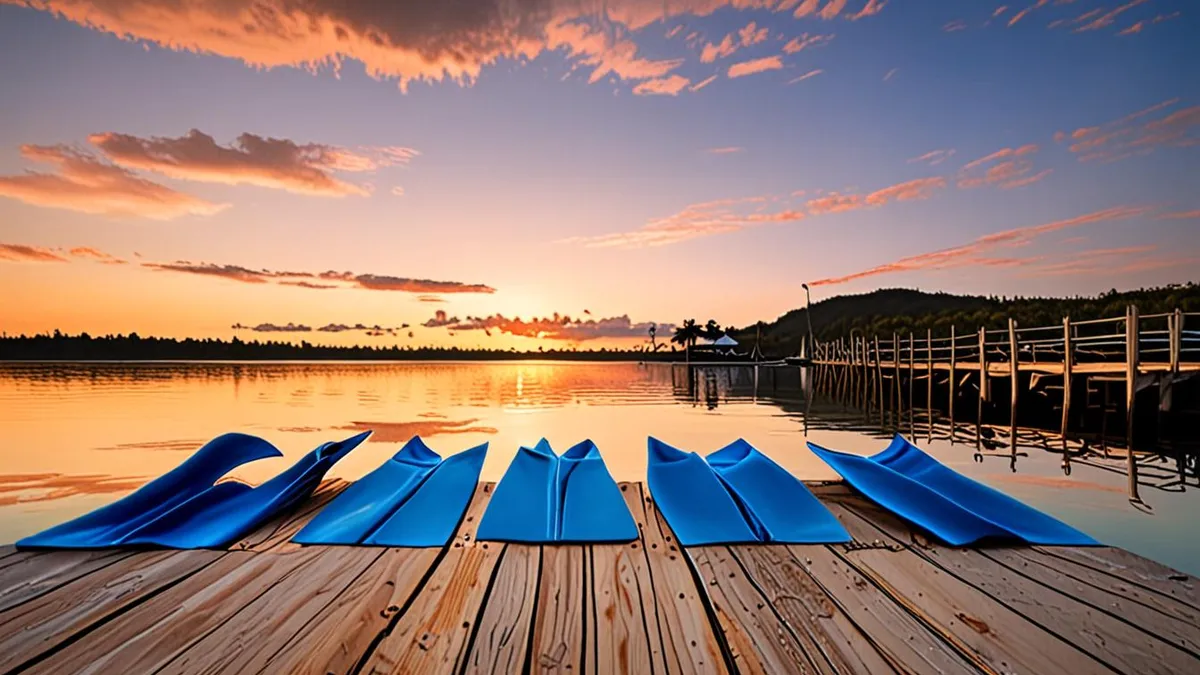
Snorkeling adds up fast when you rent gear separately. Masks, fins and snorkels typically cost 10-20 USD per day at a rental shop, which is real money over a weeklong stay. Many all-inclusive resorts include free mask and fin rental for guests, so ask about this before you book. Check the quality too: a well-run resort replaces masks regularly and offers prescription or kid-sized options, while a tired drawer of cracked masks is a bad sign.
Guided trips are the other half of the equation. A guided house-reef tour is a smart way for beginners to learn the layout, spot camouflaged creatures and learn basic techniques with an instructor nearby. Boat trips to offshore reefs usually run 40-80 USD per person for a half-day outing, so factor that into your budget if you want to explore beyond the shore. Ask how often trips run and whether they fill up in high season.
Signs of a genuinely snorkeling-focused resort
An on-site dive and snorkel shop is one of the strongest signals you can find. It means the property maintains equipment, employs guides and treats the water as a core part of the guest experience rather than an afterthought. Shops that offer gear storage, rinse stations and fish identification cards show they cater to repeat snorkelers, not just casual tourists.
If you are weighing an all-inclusive package against a standard room, it helps to compare what is actually bundled in. Our overview of the best all-inclusive resorts in Mexico for adventure lovers breaks down which properties include gear, guides and water activities in the nightly rate.
Time Your Stay for the Best Snorkeling Season
In the Mexican Caribbean, timing shapes your entire snorkeling experience. The best conditions run from November through April, when the seas are calmest and visibility at its clearest. During these months you are far more likely to get the glassy, blue water you see in resort photos, and the reef colors and fish actually show up the way they should. The rest of the year brings warmer water but a higher chance of rain and sargassum seaweed washing ashore.
Booking ahead for high season
High season is when everyone wants an oceanfront room, and the best ones go first. Booking 2-3 months ahead secures those rooms at noticeably lower rates than last-minute prices. If snorkeling is the main purpose of your trip, spending a little extra for a room steps from the reef pays off daily, since you can get in the water early before the wind picks up.
The shoulder-season sweet spot
Late April and early May offer a clever compromise. The water is usually still clear and calm, yet the winter crowds have gone home and rates start to soften. You trade a small risk of the first seaweed arriving for quieter reefs and easier restaurant reservations. If you want to dig deeper into timing your booking for the best price, see our guide to the best time to book all-inclusive resorts in Mexico for lower prices.
Quick Checklist for Choosing Your Snorkeling Resort
That sandy, fish-free stretch of water in front of so many beachfront resorts is exactly what this guide helps you avoid. The fix comes down to three checks made before you book: confirm a house reef or protected bay within walking distance of your room, verify recent guest reports on water clarity, marine life and sargassum for your travel months, and check the depth, safe entry options and whether gear or guided trips are included.
Do that, and the best snorkeling of your trip will be a short swim from your towel rather than an excursion you never quite get around to booking. If you have a favorite snorkeling resort or a tip that saved your trip, share it in the comments or pass this article along to a fellow traveler.