Ask for a hotel breakfast in three different countries and you might get three completely different meals. In one place it’s a spread of eggs, bacon and fresh fruit; in another it’s a roll, a slice of cheese and a cup of coffee. That gap between expectations and reality is one of the most common surprises travelers run into, especially when the breakfast turns out to cost extra at the door.
This guide walks you through what a hotel breakfast typically looks like in Europe, Asia and the US, from serving hours and typical dishes to what’s usually included in your rate and what isn’t. We’ll also compare buffet and à la carte formats, weigh whether the breakfast add-on is actually worth it, and show you how to check the details before you book. By the end, you’ll know exactly what to expect from your morning meal wherever your trip takes you.
What Hotel Breakfast Means in Europe
In Europe, the classic hotel breakfast is the continental format: bread and pastries, cold cuts, cheese, jam, coffee and juice. It’s a light start to the day, and in many budget hotels that’s genuinely all you get — often just coffee and a pastry. If you’re picturing scrambled eggs and crispy bacon, you may need to adjust your expectations or your hotel choice.
When you get the full spread
Full buffets with eggs, bacon and sausages are standard in 4-5 star hotels, where the morning spread is often a point of pride. At budget and mid-range properties, a hot breakfast is rare, so if a cooked meal matters to you, look closely at the hotel’s star level and guest photos before booking.
Timing matters too. European breakfasts are typically served 7:00-10:00 am, which catches out plenty of late risers. If you stroll down at 10:15, you’ll often find staff clearing tables and the coffee machine already off. Resort hotels are the exception, with some serving until 10:30-11:00 am, but don’t count on it everywhere.
Price is the other surprise. When breakfast isn’t included in your room rate, a continental hotel breakfast usually costs 10-25 EUR per person when paid at the door. That’s a meaningful add-on for a family of four, so it’s worth deciding before check-in whether you’ll eat at the hotel or grab something at a nearby café instead.
Hotel Breakfast Traditions Across Asia
Asia runs the earliest hotel breakfasts of the three regions, often starting at 6:00 am and running until around 10:30 am. The early start makes sense: business travelers heading to meetings and tour groups catching morning departures both need to eat before 7:30. If you’re joining a day tour, this schedule works firmly in your favor.
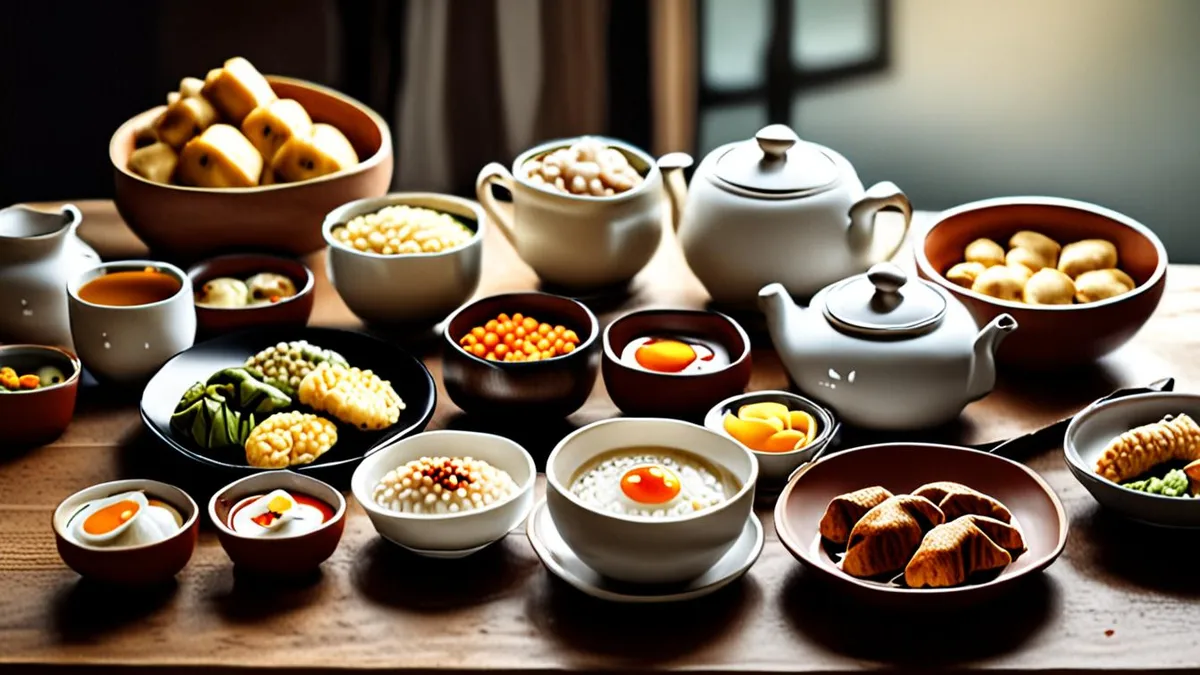
The food itself is where Asian breakfasts shine. Buffets commonly combine Western staples like eggs, toast and cereal with local dishes such as congee, noodles and rice, so you can alternate between familiar and local every morning. In many hotels, this mix is the best-value meal of the day.
Mid-range and upscale properties often go further with fresh fruit, dedicated tea stations and live cooking stations where chefs prepare dishes to order. But inclusions vary widely by country and even by hotel tier, so never assume breakfast is part of your rate — check the booking details line by line.
- Congee stations: many hotels offer several toppings — century egg, shredded chicken, pickles — so you can customize your bowl exactly as locals do.
- Tea culture: in tea-drinking countries you’ll often find a dedicated station with multiple varieties, not just a single urn of generic black tea.
- Dumplings and steamed baskets: some buffets include steamer baskets with dumplings or buns, sometimes made fresh at a live station.
- Curries at breakfast: in South and Southeast Asia, mild curries and rice dishes are standard morning fare rather than an oddity.
- Grab-and-go options: hotels used to early tour departures sometimes pack breakfast boxes for guests leaving before the buffet opens — ask at the front desk.
How Hotel Breakfast Works in the US
The US works almost backwards compared to Europe. At mid-range chains, a free breakfast is usually included in the rate and served from around 6:00 to 9:30 am. Expect a self-serve setup: cereal, pastries, fruit, waffles you make yourself and bottomless coffee. It’s not fancy, but it’s included, and it saves you a stop before a day of driving or sightseeing.
Upscale hotels play by different rules
Walk into an upscale city hotel and the free breakfast disappears. These properties rarely include it, charging about 15-35 USD per person for a full hot breakfast — often à la carte or a small buffet with made-to-order eggs. For a family, that can add up fast, so check the rate details before you assume breakfast comes with the room.
Serving hours are the shortest of the three regions, typically ending by 9:30 am, which is a real constraint if you like slow mornings. The trade-off is generosity: portions are large, coffee refills flow freely, and nobody minds if you go back for a second waffle. What you give up is variety — even a good US hotel breakfast rarely matches the range of an Asian buffet with its local dishes and live stations.
One practical tip: breakfast habits vary by city and by how busy a hotel expects to be. If you’re planning a city break and want to time your booking around demand, it helps to understand seasonal pricing — the same logic covered in this guide to the best time to book hotels in Rome for lower prices. Wherever you stay, confirm the breakfast hours at check-in so an early cutoff doesn’t catch you out.
Buffet vs À La Carte: What You Actually Get
The format of your breakfast matters just as much as whether it is included. Buffets and à la carte service deliver very different experiences, and knowing which one you are booking helps you plan your morning. The biggest difference comes down to flexibility: a buffet lets you build your own plate, while a set menu makes the choice for you.
Buffets reward early risers. Arrive close to opening and you get the freshest pastries, the full hot selection and the best seating. Wait until an hour before closing and you may face picked-over fruit, lukewarm eggs and a bread basket full of ends. If fresh pastries are your priority, ask the front desk what time the bakery items come out.
À la carte breakfasts are common in boutique European hotels, especially smaller properties without the space or staff for a large spread. They limit you to a set menu, often with two or three combinations, so check the options before committing if you have a big appetite. Live cooking stations, where a chef prepares omelets, noodles or eggs to order, appear mostly in 4-5 star Asian and resort properties. If that kind of spread appeals to you, it helps to understand what you are paying for — this guide to what a 5-star hotel stay actually includes breaks down the perks and costs.
- Room service breakfast: usually costs 20-50% more than the same meal in the dining room, and a tray charge or service fee can push it higher, so reserve it for mornings when you genuinely need to eat in your room.
- Set menu timing: à la carte kitchens often have narrower serving windows than buffets, so a late arrival may leave you with a reduced menu or no service at all.
- Made-to-order items: at buffets with a live station, the omelet or noodle line can build a queue during peak hours, so go there first before plating anything else.
- Takeaway potential: some buffet hotels let you take a piece of fruit or a pastry when you leave, which is handy before a long transfer day — ask rather than assume.
Is Breakfast Worth Adding to Your Booking?
Breakfast add-ons look cheap at the moment of booking and expensive once you do the math. The right answer depends on where you are staying, what the hotel actually serves and how your mornings are scheduled.
Do the comparison before you click
Start by comparing the add-on price against nearby cafés. In Europe, a continental hotel breakfast charged separately usually costs 10-25 EUR per guest, while a full hot breakfast at an upscale US city hotel runs about 15-35 USD. A bakery or coffee shop around the corner often beats both on price, and sometimes on quality. In many European cities, a coffee and a fresh pastry from a local café costs a fraction of what the hotel charges.
That said, booking breakfast with the room can be the smarter move. In Europe, adding breakfast to your reservation often increases the room rate by around 10-20 EUR per night, which can work out cheaper than paying the walk-in price separately. If the spread is genuinely good, that is a real saving.
Where the value is strongest
In Asia, included breakfasts usually offer the best value of the three regions. Mid-range and upscale properties commonly serve buffets that combine Western staples with local dishes like congee, noodles and rice, so you get a generous and interesting meal without reaching for your wallet each morning.
Finally, think about your schedule, not just the food. If you are joining early tours, a hotel that starts serving early or offers a grab-and-go option matters more than the size of the spread. If you plan slow, late starts, a café down the street may suit you better than a breakfast you will sleep through.
How to Check Breakfast Details Before You Book
Most breakfast disappointments are avoidable with ten minutes of research before you book. The problems that trip travelers up most often — surprise charges, early cutoffs and missing options — are all visible in advance if you know where to look. The trick is that booking platforms rarely put this information front and center. It hides in rate descriptions, FAQ pages and guest reviews, and it takes a little digging to pull it out. Here is a simple routine to follow before you enter your payment details.
- Read the rate description line by line. Booking sites use wording that looks similar but means very different things. “Breakfast included” means it is part of your rate, while “breakfast available” means the hotel serves it but you will pay at the door. Some rates also show both versions side by side at different prices, so check which one you selected. If two rates differ by a small amount, do the math on whether the included meal is actually the better deal for your travel style.
- Check the serving hours. Look in the hotel’s FAQ section or recent guest reviews for actual serving times. Early cutoffs are common almost everywhere, and they clash badly with late mornings or jet lag recovery. If the times are not listed, a quick message to the hotel will settle it — and most properties reply within a day.
- Filter reviews for the word “breakfast”. Most booking platforms let you search guest reviews for keywords. Filtering for “breakfast” gives you a fast read on quality, variety and whether the spread matches the photos. Recent reviews matter most, since menus and staffing change. Pay attention to comments about crowding, too: a popular buffet can run out of the good items well before service ends.
- Message the hotel about dietary needs. If you are vegetarian, halal or gluten-free, ask directly what the buffet or menu covers rather than hoping for the best. A specific question gets a specific answer, and the reply tells you a lot about how the property handles guest requests in general.
Doing this before payment takes only a few minutes and prevents the most common breakfast surprises: an unexpected per-person charge, a missed meal because of an early cutoff, or a spread that cannot feed you at all. Once you know the hours, the format and the price, you can decide whether the hotel breakfast is part of the plan or just a backup option. That decision is easier to make calmly at home than standing in the lobby at checkout, arguing over a bill you did not expect. A little prep turns breakfast from a gamble into a choice you made on purpose.
Wrapping Up: Hotel Breakfast Around the World
A hotel breakfast can mean anything from a pastry and coffee to a sprawling hot buffet, and the region you are in shapes what lands on your plate. In Europe, breakfast leans continental, typically served from 7:00-10:00 am, with walk-in prices around 10-25 EUR per person when it is not included in your rate. Asia starts earliest, often 6:00-10:30 am, and offers the widest mix of local and Western dishes, from congee and noodles to eggs and pastries. In the US, mid-range chains usually include breakfast in the rate, while upscale city hotels commonly charge about 15-35 USD for a full hot breakfast.
The biggest breakfast surprises come down to three things: serving hours, whether breakfast is actually included, and what it costs at the door. Check those details before you book and you will rarely be caught off guard. If this helped you plan your next trip, leave a comment or share the article with a fellow traveler.