Glamping in California is a wonderful idea until you actually try to plan it. The state stretches from foggy redwood coastline to scorching desert to alpine lakes, and each of those regions has a completely different best season, price range and style of stay. Pick the wrong area for the wrong month and you could end up shivering in coastal fog or sweating through a desert night. Meanwhile, the most photogenic sites often sell out months in advance, especially for summer weekends.
This guide breaks the state down region by region so you can choose the right area first, then time your booking around it. We’ll compare the coastal standouts of Big Sur, Mendocino and Santa Barbara, the desert stargazing scenes in Joshua Tree and Death Valley, mountain and lake options around Lake Tahoe and the Sierra, and vineyard stays in Sonoma and Napa. Then we’ll cover when to book, what typical rates look like, and how to match your stay type and budget to the region you pick.
Why Glamping in California Needs Region-First Planning
California is so large and varied that planning a glamping trip here really starts with a map, not a calendar. The coast, the desert, the mountains and wine country all have their own climates, and they peak in completely different months. A bluff-top tent on the Big Sur coast is at its best in early fall, while a stargazing dome near Joshua Tree becomes almost unusable in summer heat. The same dates that are perfect for one region can be a mistake in another.
That’s why choosing your area first matters more than choosing your dates. The region you pick determines your season, your price range and even your stay type. Coastal trips lean toward tents and cabins with ocean air, desert trips lean toward domes built for stargazing, and mountain trips favor sturdy cabins and safari tents. Lock in the region, and the rest of the planning falls into place.
Why there’s no single best time
Ask when the best time for glamping in California is and the honest answer is: it depends on where you’re going. There is no single statewide window that works everywhere. Instead, each region has its own peak months, shoulder seasons and off-seasons, along with different price swings and booking lead times. The sections below walk through each region’s climate, stay styles and ideal windows so you can match the destination to the trip you actually want.
Coastal Areas: Big Sur, Mendocino and Santa Barbara
California’s coast is the classic glamping image: ocean air, cypress and redwoods, and tents perched within earshot of the surf. Three areas stand out as the flagship coastal destinations, and each has a distinct personality.
Big Sur, Mendocino and Santa Barbara
Big Sur is the drama queen of the coast. Glamping here often means bluff-top tents or sites tucked at the edge of redwood groves, with the Pacific crashing below. It’s the choice for travelers who want the most spectacular views, though expect those views to come with premium demand and limited availability.
Mendocino, farther north, suits travelers who like things rustic-chic rather than showy. Cabins here pair well with the region’s cooler, foggy summer weather, headland walks and small-town charm. If you run hot or want to avoid crowded beaches, Mendocino’s crisp coastal air is a real draw. Santa Barbara rounds out the trio by combining real beach access with easy wine-country day trips inland, making it the most flexible base for mixed-interest groups.
The coastal glamping season runs roughly May to October, with September often delivering the calmest weather of the year. Summer mornings can still be foggy, especially up north, so pack layers. Before you go, it helps to work through a complete glamping packing checklist, since coastal nights cool down quickly even in high season.
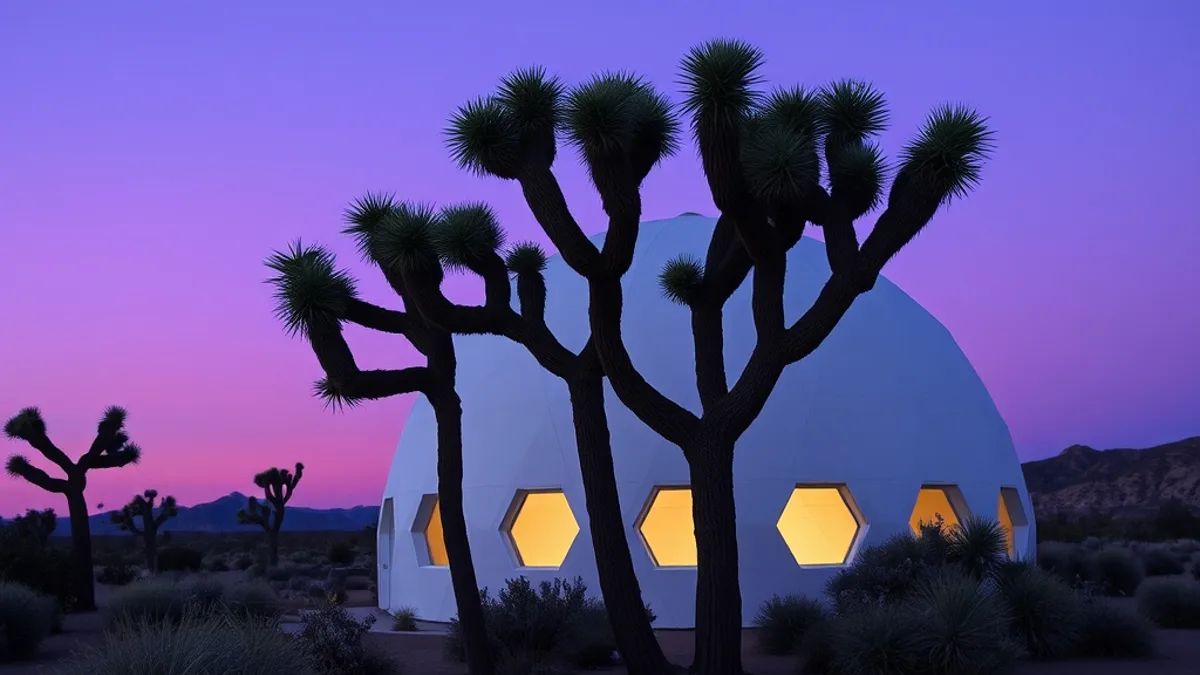
Desert Areas: Joshua Tree and Death Valley
The California desert is a different glamping world entirely: wide skies, strange rock formations and nights cold enough to justify a fire. Two destinations dominate, and both live by the same rule: visit in the cool months.
Joshua Tree has become the design-lover’s desert. The area is known for stargazing domes with clear skylights and design-led A-frame stays scattered among the boulders. It’s as much about the architecture and the night sky as it is about the national park next door. Death Valley, by contrast, suits travelers who want cooler-season desert glamping with truly dramatic landscapes around them, from salt flats to painted canyons.
The desert glamping season runs October to April. Summer heat makes stays impractical, with daytime temperatures that most tents and domes simply aren’t built to handle. If your dates fall between October and April, you’re in the sweet spot.
Expect rates of roughly $150-$400 per night, with premium stargazing domes running higher than that range.
- Dark-sky etiquette: Many desert sites sit in genuinely dark locations, so bring red-light headlamps and keep exterior lights off after dark to protect the stargazing.
- Cold nights, warm days: Even in season, desert nights can drop near freezing, so ask hosts about heating, extra blankets and insulated flooring before you book.
- Park proximity: Stays near the park boundaries trade seclusion for shorter drives to trailheads, so decide which matters more before choosing a site.
- Cell service: Coverage is patchy across both areas, so download offline maps and confirm check-in instructions with your host in advance.
Mountain and Lake Areas: Lake Tahoe and the Sierra
Lake Tahoe is the headline act for mountain glamping in California, and for good reason. The season here runs roughly June to September, when daytime temperatures are comfortable, the water is actually swimmable, and most sites have fully reopened after winter. You’ll find two main flavors of stay: lakeside sites with morning views across the water, and forest sites tucked into the pines a short drive from the shore. Both book out quickly in summer, especially around holiday weekends.
If Tahoe feels too busy or too pricey, look lower. Sierra foothill ranches offer a quieter take on mountain glamping, with safari tents and cabins spread across working land, often with creeks, orchards or hiking trails on-site. Because these properties sit at lower elevations, their shoulder seasons tend to be shorter and milder than Tahoe’s, which can make spring and fall stays more workable than you might expect.
Wildfire smoke: the one thing to check before you commit
Wildfire smoke risk is highest in late August and September, and it can change a trip fast even when the fire itself is far away. Before booking a late-summer stay, check current conditions and ask the property about its cancellation or rescheduling policy. Flexible terms matter more in the Sierra than in any other California glamping region, so favor hosts that offer them when your dates fall in that window.
Wine Country: Sonoma and Napa Valley
Wine country glamping is its own category: tent suites set among vineyard rows, often a short walk or drive from a tasting room. Properties in Sonoma and Napa Valley lean into the pairing, with some offering on-site tastings, others partnering with nearby wineries, and many including picnic setups so you can bring a bottle back to your tent at sunset. It’s the most polished version of glamping in the state, and the rates reflect it.
Timing your vineyard stay
The best windows are May-June and September-October. These stretches deliver green vines in early summer and golden fall color later, while helping you avoid peak harvest crowds and the busiest tasting-room weekends. Summer visits work too, but expect more traffic on the two-lane roads and fuller restaurants.
One practical note: weekend minimum stays of two nights are common in peak windows, so a Saturday-only request may come back with no availability even when the calendar looks open. If your dates are flexible, arriving midweek often gets you a better site, a quieter property, and easier tasting-room reservations. Book early for September and October weekends regardless, since those fill first.
When to Book Glamping in California
Glamping in California doesn’t have one booking calendar, because the regions peak at different times of year. A coastal tent, a desert dome and a Tahoe cabin all open up and sell out on different schedules. The steps below cover how far ahead to plan for each, and how to find better prices if your dates are flexible. For a deeper look at how seasons align across the state’s climates, see this guide to the best season for glamping by region.
- Book coastal and Tahoe sites 3-6 months ahead for summer weekends. These are the most contested dates in California glamping. Popular lakeside and bluff-top sites can be gone well before the season starts, so lock in your dates as soon as your summer plans take shape. Waiting until spring for a July coastal trip is a gamble you’ll often lose.
- Plan desert trips 1-3 months out, outside holiday weekends. The desert season is longer and less crowded, so most Joshua Tree and Death Valley stays don’t need the same lead time. Around holiday weekends, though, treat desert sites like coastal ones and book early, since demand spikes sharply.
- Shift to midweek whenever you can. Midweek stays cut prices and open last-minute availability in every region, from Big Sur to the Sierra foothills. If you can take a Monday-to-Wednesday trip, you can often book closer to your dates and still land a good site, sometimes at a noticeably lower rate.
Whichever region you choose, set a reminder based on the lead times above rather than waiting for inspiration to strike. A quick calendar note three to six months out for summer coastal or Tahoe trips, and one to three months for the desert, takes most of the stress out of the process. Then all that’s left is picking the site itself and enjoying the trip you planned well.
Matching Stay Type and Budget to Your Area
Most California glamping stays fall somewhere in the middle of the nightly range, but that range hides a lot of variation. A safari tent in Sonoma in May and a stargazing dome in Joshua Tree in November can cost the same while offering completely different experiences. Luxury domes with private hot tubs, full kitchens or panoramic views sit at the top of the market, so it pays to know what you’re actually paying for. If you want a fuller breakdown of what drives these prices, see how much glamping typically costs per night.
Stay type matters as much as price, because each style is built for a different climate and setting. Here’s how they generally match up:
- Safari tents work best along the coast and in wine country, where canvas walls breathe well in mild weather and many sites come with real beds, wood decks and shared bathhouses a short walk away.
- Geodesic domes shine in the desert, where their sealed, insulated shells handle cold desert nights and their clear panels or skylights put the Milky Way directly over your bed.
- Cabins and tiny homes suit mountain areas like Tahoe and the Sierra, offering solid walls, proper insulation and often wood stoves for chilly evenings at elevation.
Before you book, check the listing for climate-specific details. Ask whether the tent or dome has heating for cold nights, cooling or fans for warm afternoons, and shaded cover for midday sun. A gorgeous canvas tent without a heater is a miserable choice in the Sierra in June, and a sealed dome without shade can turn uncomfortable in the desert by April. Reading the amenities list carefully takes two minutes and saves a lot of discomfort.
Wrapping Up Your California Glamping Plan
California is enormous, and its glamping regions couldn’t be more different from one another. A foggy redwood-edge tent in Mendocino and a stargazing dome near Joshua Tree are barely the same category of trip, which is exactly why picking your area first solves most of the planning puzzle. Choose your region: the coast, the desert, the mountains or wine country. Then match the season to it, roughly May to October for the coast and Tahoe, October to April for the desert.
Once the region and season are set, booking becomes simple. For popular summer weekends on the coast and at Tahoe, plan 3-6 months ahead so you’re not left scrolling through sold-out listings. Desert trips outside holiday weekends usually come together on 1-3 months’ notice. Budget $150-$400 per night for most stays, with luxury domes running higher. If this helped you plan your trip, leave a comment or share the article with a friend who needs a getaway.