You booked a glamping trip weeks ago, and now the forecast shows rain for the entire weekend. You’re staring at the weather app wondering if you should cancel, reschedule, or just go anyway and hope for the best. It’s a common dilemma, and the answer is more encouraging than you might think.
Glamping in the rain is not only possible, it can actually be one of the coziest versions of the experience. Unlike regular camping, glamping structures are built to keep you dry and comfortable, and rainy stays often come with lower prices and quieter sites. That said, a wet weekend does change the trip: some activities move indoors, paths get muddy, and packing matters more. In this guide, we’ll cover whether a rainy glamping trip is worth it, which structures handle wet weather best, when to book, what to pack, what a rainy day actually looks like on site, and how to keep your stay comfortable when the skies open up.
Is Glamping in the Rain Actually Worth It?
The short answer: yes, glamping in the rain is usually worth it, as long as you know what you’re signing up for. Unlike a regular tent you pitch yourself, glamping structures are designed with wet weather in mind. Raised floors keep you off the damp ground, waterproof canvas or solid walls keep the rain outside, and covered porches give you a dry spot to sit and watch it fall. In a regular tent, a storm means wet sleeping bags and a miserable night; in a glamping setup, it usually means nothing more than a change of scenery.
The upsides of a wet weekend
Rainy days also come with real perks. Rates tend to drop, crowds thin out, and sites that feel packed in summer turn quiet and peaceful. Inside your unit, you get heating, a real bed and indoor lighting, which turns a stormy evening into something closer to a cabin getaway than a survival exercise. Many travelers find the sound of rain on canvas or a dome roof genuinely relaxing.
The downsides to accept
Be honest with yourself about the trade-offs. Paths get muddy, hiking or swimming plans may need to shift, and gear you leave outside will get damp. The travelers who enjoy rainy glamping trips are the ones who adjust expectations before arrival rather than hoping the forecast improves. Luck plays a role in weather, but expectations matter far more.
Which Glamping Structures Handle Rain Best
Not all glamping structures handle rain equally well, and your choice of accommodation matters more than any packing list. If a wet weekend is a real possibility, the safest bets are cabins, domes and yurts with solid or insulated walls. These structures shed rain reliably, stay warm, and give you genuine living space to enjoy when going outside isn’t appealing. If you’re still deciding what type of unit to book, our guide on how to pick the right tent for your glamping stay walks through the options in detail.
Standard canvas safari tents and bell tents are a different story. They can handle a shower, but after prolonged rain the seams are the weak point, and a slow leak above your bed is a real possibility. Before booking a canvas structure for a rainy season, ask the operator directly whether the seams are sealed and whether the tent has a rain fly. A well-maintained canvas tent with good waterproofing can still be a great stay; a tired one won’t be.
Beyond the structure itself, pay attention to what surrounds it. Listings that mention any of the following tend to make rainy days far more comfortable:
- Covered decks or porches — a dry outdoor space where you can still get fresh air, cook on a grill or watch the rain without getting soaked.
- Awnings over entrances — these keep the doorway and entry area dry, which means less water tracked inside and drier gear storage.
- Indoor lounge or shared common space — a heated common room with seating gives you somewhere to go besides your own unit, which matters a lot on a two-day washout.
When to Book: Seasons, Prices and Rain Risk
Timing has a big influence on how much rain you’ll face and how much you’ll pay for it. Rain risk is highest in shoulder seasons like May, September and October, when weather is less settled in many glamping regions. The upside is price: shoulder-season rates often run 20-40% below peak summer prices, so a potentially wet weekend can also be a genuinely affordable one. If you want a fuller picture of how seasons differ by destination, our guide to the best time to book glamping trips by region breaks it down.
How far ahead to book
Booking windows differ by season. For shoulder-season stays, most operators recommend booking 2-4 weeks ahead, which is usually enough to secure a good unit without planning too far into unpredictable weather. For summer trips, when rain is less likely and demand is higher, aim for 2-3 months ahead. Booking too early in the shoulder seasons means committing to a date before you have any meaningful forecast.
Protect yourself with flexible rates
Because weather is the one thing you can’t control, book a flexible or refundable rate whenever rain is a concern. Most glamping sites offer free rescheduling only if you’ve booked with a flexible or refundable rate, so the small difference in price can be the difference between rescheduling a stormy weekend and losing your money. Check the forecast a few days before departure, and if a multi-day storm is on the way, contact your host about moving the dates. A rigid non-refundable booking turns a rainy forecast into a stressful one; a flexible booking keeps it a minor inconvenience.
What to Pack for Glamping in the Rain
Rain changes what you need to bring, even when you sleep under a solid roof instead of a tent fly. The walk from your car to a dome or yurt can still be muddy, and gear that gets soaked on arrival tends to stay damp for the rest of your stay if you pack carelessly. A little preparation makes the difference between a cozy rainy trip and a miserable one.
Start with your outer layers. A waterproof jacket with a 5,000-10,000 mm rating is enough for typical glamping-level rain, so you don’t need expedition-grade shell gear. Waterproof boots matter just as much, since you’ll cross wet grass and muddy paths multiple times a day. Bring a spare pair of shoes and keep them indoors, dry, for evenings. For a full rundown of everything else worth bringing, check out this complete glamping packing checklist.
Beyond the basics, these items earn their spot on a rainy-weather trip:
- Quick-dry layers: Nights in rainy shoulder-season conditions often drop to 5-10°C (41-50°F), so pack synthetic or merino base layers instead of cotton, which stays damp and cold for hours.
- Dry bags or ziplock pouches: Keep your phone, camera, chargers and any documents sealed inside your bag rather than loose in a pocket or on a damp shelf.
- A headlamp: Rainy evenings are dimmer than you expect, and paths between your unit and shared facilities can be dark and slippery after nightfall.
- A small towel: Dedicated to drying gear, not yourself, so you can wipe down boots, jackets and bags each time you come back inside.
What a Rainy Day at a Glamping Site Looks Like
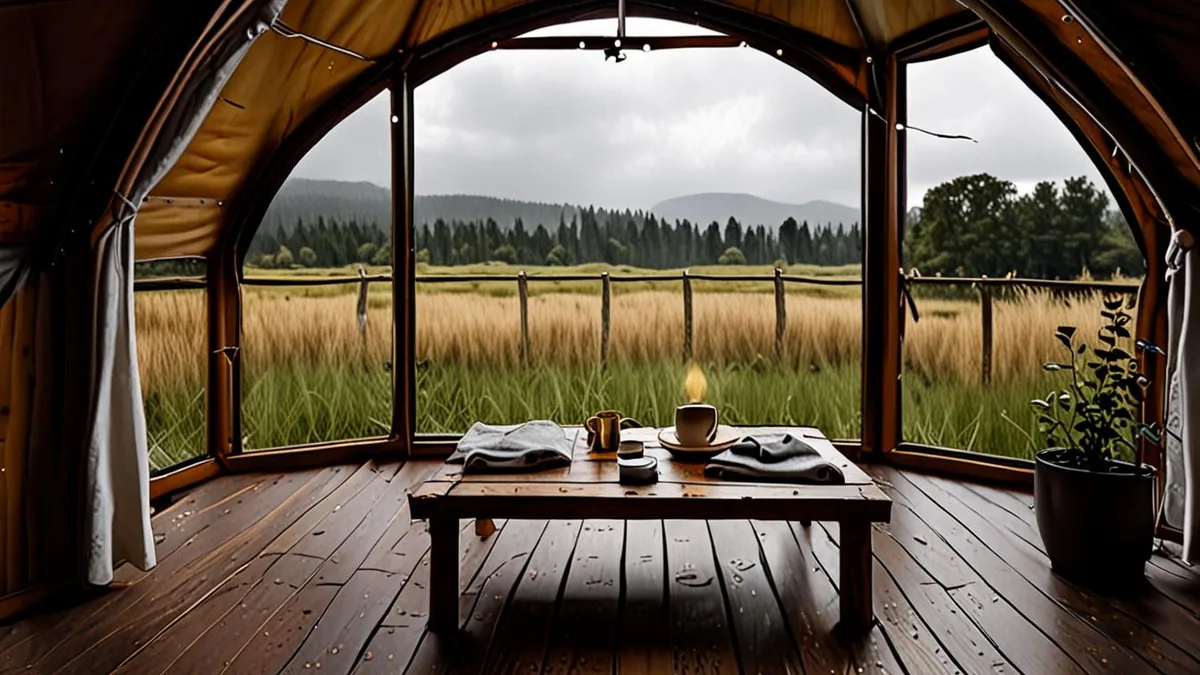
A rainy day at a glamping site moves at a completely different pace than a sunny one, and that’s part of the appeal. Mornings tend to be slow: you linger in a warm bed a little longer, brew coffee or tea, and watch the rain move across the landscape from a covered porch or through the window of a heated dome. Board games, a good book and hot drinks replace the usual rush to get out and do things.
Ask about indoor amenities before you book
Not all glamping units are equally equipped for wet weather. Many operators provide wood stoves or fireplaces inside their cabins and domes, and some sites have a shared lounge where you can spread out beyond your own unit. Others offer little more than a bed and a lamp, which makes a rainy stretch feel far tighter. A quick message before booking is all it takes to know what you’ll have on hand.
Use the gaps between showers
Rain rarely falls nonstop. Short dry windows of 1-2 hours are common between showers, and they’re usually enough for a brisk walk, a session at the firepit or a wander around the property. The trick is staying flexible: plan loosely, watch the sky, and head out when the rain eases rather than sticking to a fixed schedule. You’ll likely get outside more than you expect.
How to Keep Your Stay Comfortable When It Pours
Glamping in wet weather is comfortable when you work with the rain instead of against it. A few simple habits, starting from the moment you arrive, keep your sleeping space dry and your mood intact. Treat your stay like a series of small decisions rather than one big effort. None of these steps take more than a few minutes, yet together they make the difference between a cozy rainy getaway and a soggy ordeal. The goal is simple: keep wet things outside, dry things inside, and your host in the loop.
- Time your arrival carefully. Aim to reach the site before dark and, if possible, during a dry window. This lets you carry gear in while paths are still walkable, find the facilities and get oriented without fumbling through mud with a headlamp. Arriving in daylight also gives you time to spot drainage issues, covered walkways and the quickest route between your unit and the bathrooms before the next shower rolls in.
- Set up a wet zone right away. Designate the entry area or vestibule for boots, jackets and anything soaked. Keeping wet items out of the sleeping space is the single biggest factor in how dry and pleasant your unit stays over several days. A cheap mat or an old towel at the door catches the worst of it.
- Flag the forecast to your host. Most operators can add extra blankets, a heater or covered storage if they know rain is coming. A short message a day or two before arrival is usually all it takes, and many are happy to help.
- Check in about site logistics. Ask your host which paths flood or turn muddy, where covered parking is, and whether any facilities close in heavy rain, so you’re not surprised mid-stay.
Hosts deal with rainy stays all the time and generally want you to enjoy yourself, so don’t hesitate to ask for small adjustments. Communicating early is far easier than requesting help once everything is already damp. A quick conversation on day one sets the tone for the whole trip and often surfaces tips about the property you would never find on your own.
The Rainy-Day Glamping Takeaway
So the forecast shows rain all weekend and you’re weighing whether to go or cancel. In most cases, go anyway. Glamping in the rain is genuinely enjoyable when you have the right structure, packing list and expectations. A solid cabin, dome or yurt keeps the weather outside, while canvas options reward travelers who ask about seam sealing and rain flies before booking.
The upside is real, too. Shoulder-season rain trips often cost 20-40% less than peak summer stays and feel far cosier than fair-weather weekends. Bring warm layers for chilly, damp evenings, toss dry bags and a headlamp into your bag, and book a flexible rate so a multi-day storm becomes an inconvenience rather than a lost reservation. Do those things and the rain turns into a backdrop instead of a problem. Have you gone glamping in the rain? Share your experience in the comments or pass this article along to a friend planning a soggy getaway.