Every parent has been there: you book a getaway, imagine fresh air and starry skies, then lie awake wondering how a baby who fights naps at home will survive a night in a tent. The idea of glamping with a baby or toddler sounds wonderful until you picture 2 am feedings on a cold air mattress or a toddler escaping a zippered door at dawn. The good news is that glamping is nothing like tent camping, and most of those fears dissolve with the right unit, the right dates and a smart packing list.
This guide walks you through the whole process, from why a real bed and private bathroom change everything, to choosing accommodation that actually fits a travel cot, timing your booking, packing for little sleepers, structuring days around naps, and running the safety checks that matter before you go. Follow along and your first family trip can feel like a holiday, not an ordeal.
Why Glamping with a Baby or Toddler Actually Works
The reason glamping with a baby or toddler works so well comes down to one thing: it removes the pain points that make tent camping miserable for parents. Instead of wrestling an air mattress in the dark, you get a real bed for yourself and a flat, safe surface for a travel cot. Instead of shivering through a cold snap, most units come with heating you control. And instead of thin nylon between you and every passing noise, you have solid walls or sturdy canvas that muffle sound and keep drafts out. Those three differences alone can mean the difference between a child who sleeps and one who wakes at every rustle.
The private bathroom factor
Anyone who has carried a half-awake toddler across a dark campground to a shared washblock knows why this matters. With a private bathroom steps from your bed, a midnight diaper change or an urgent potty run stays a two-minute errand instead of a twenty-minute expedition that fully wakes everyone. You can also run a warm bath for a grumpy toddler and handle the endless hand-washing that comes with messy meals.
Packing gets easier too. Tent camping means hauling sleeping bags, air mattresses, pillows, a camp stove, coolers, cookware and lanterns. With a glamping unit, the bedding, cooking setup and lighting are already there, so your car space goes to the things your child actually needs: the cot, clothes, snacks and a few familiar comfort items. You arrive, unpack, and everyone can nap within the hour.
Choosing the Right Accommodation for Little Sleepers
Not all glamping units suit small children equally, and the differences matter most at bedtime. The single most useful spec to check is floor area: aim for a tent or cabin of at least 25-30 m² (270-320 sq ft). That gives you room to place a travel cot away from the door, away from zippers and away from walkways, so a late arrival or an early exit does not wake your little one. In a cramped dome or bell tent, the cot often ends up wedged against the entrance, and every trip outside becomes a risk.
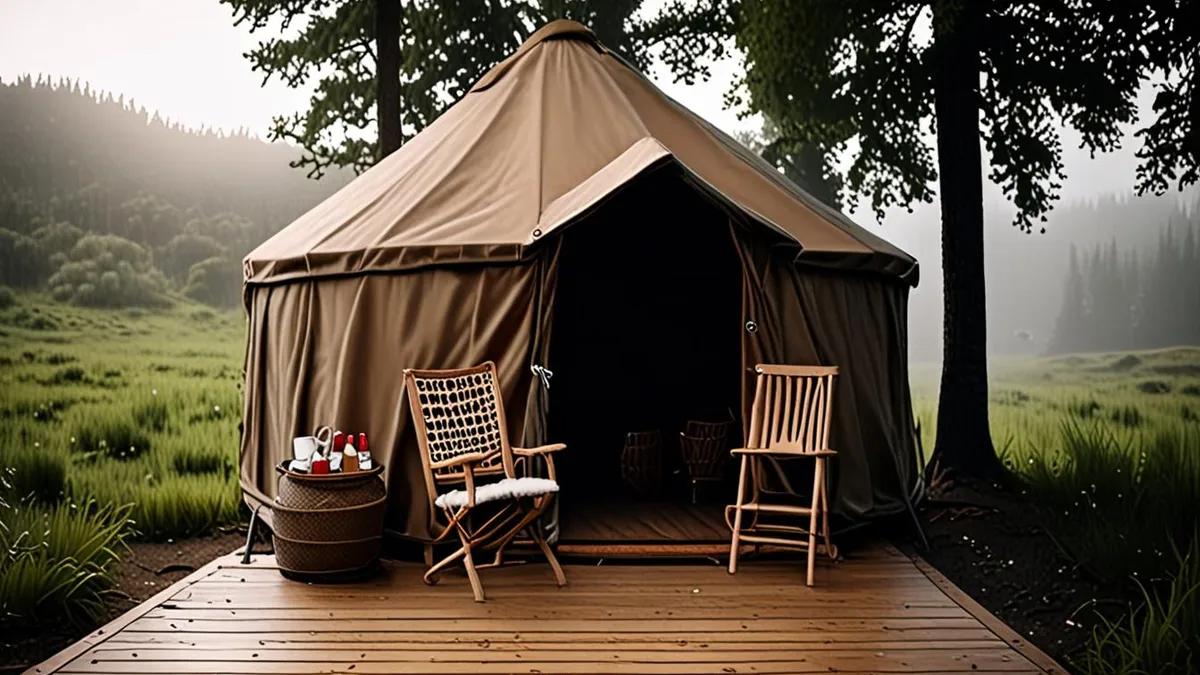
Season matters as well. In early autumn or spring, prioritize solid-roof cabins or lodges over bell tents. A rigid roof insulates better, handles rain without drumming a child awake, and eliminates the condensation that canvas tents often develop on cool nights. If you are weighing tent styles for your dates, it helps to understand the options first — this guide to choosing the right glamping tent for your stay breaks down how each type handles weather, space and comfort.
Before you book, ask the site directly about what they provide. A short email can save you from hauling gear you do not need:
- Cot or crib: confirm the size and whether bedding is included, so you know whether your own sleep sack and fitted sheet will fit it.
- High chair: one on site means your car stays free for more useful things, and mealtimes feel normal for your child.
- Blackout options: ask whether curtains are full blackout or whether you should bring a portable cover — long summer evenings can wreck a 7 pm bedtime otherwise.
- Unit level: request a ground-floor or deck-level unit so you are not navigating stairs or worrying about rail heights with a newly mobile toddler.
Deck-level units are especially handy: your toddler can step straight from the room onto a contained outdoor space, giving them play room while you keep an eye out from a chair nearby. This setup also makes transitions easier when you are juggling nap schedules, since you can move between indoor and outdoor space without packing up the whole unit.
It is also worth asking how the unit handles temperature swings. Even in the milder seasons, canvas can cool down quickly after sunset, so confirm whether heating is included and how it is controlled. A quick conversation with the site owner before booking usually covers all of these details — most hosts answer happily, because they would rather get the right family into the right unit than deal with an unhappy arrival.
When to Book and Where to Stay
Timing makes an enormous difference when you travel with a baby or toddler. The sweet spot is late May to early June or September, when nights generally stay above 10°C (50°F) — warm enough that a cold child is not your main worry — and sites are noticeably quieter than peak summer. Fewer neighbors means less noise drifting into your unit at nap time, and staff tend to be more relaxed about small requests like a kettle refill or a slightly later checkout. If you want to compare regions and pick the window that suits your destination, this guide to the best season for glamping by region is a useful starting point.
How far ahead to book
Family units — the spacious cabins and large tents that fit a cot comfortably — are the first to go in summer, so reserve 3-6 months ahead for those dates. For shoulder-season trips, booking 1-2 months out is typically enough, though popular sites near cities can fill faster on long weekends. When in doubt, book early and ask about flexible cancellation before you commit.
What to expect on price
Plan on roughly $120-$300 per night for a private tent or cabin that sleeps a family, with the higher end covering larger units, private bathrooms and premium locations. Check what is included at each price point: bedding, heating and a cot can add up quickly if they are charged separately, so ask for a full breakdown when you enquire.
Finally, keep your first trip close to home. Pick a site within a 2-hour drive of home, so a mid-journey meltdown is a quick stop rather than a marathon. If the trip goes well — and it usually does — you can push farther afield the next time.
Packing List: Baby and Toddler Edition
Packing for a baby or toddler is where most glamping trips are won or lost. The golden rule: bring 1.5-2 times the clothing you think you need per child per day. Mud, spilled milk, a surprise diaper blowout and a splash in a puddle can burn through three outfits before lunch. Add warm layers for evenings, since nights can drop to around 10°C (50°F) even in friendly seasons — think fleece sleepers, a knit hat and an extra blanket that lives in the stroller.
Sleep is the other make-or-break category. Familiar sleep cues matter more in an unfamiliar space than anywhere else, so pack the items below before anything fun. If you want a broader master list that covers the whole family, this complete glamping packing checklist is a good companion to this baby-specific version.
- Clip-on travel blackout cover: suction or clip it to the window of your cabin or tent to block early sunrises, which in late spring can start before 5:30 am and wreck a whole night’s sleep.
- White-noise app: download it offline before you leave, and bring a small portable speaker so it can mask zipper sounds, neighboring families and birdsong during naps.
- Familiar sleep sack: use the same one your child wears at home so the cot smells and feels like their usual crib setup, easing the transition to a new room.
- Children’s paracetamol/ibuprofen: pack both in original packaging, plus a dosing syringe, since rural sites are often far from a pharmacy that stocks pediatric versions.
- Thermometer and teething gel: a digital thermometer takes seconds, and teething discomfort hits harder in unfamiliar sleep environments — don’t wait for a bad night to wish you had them.
- Pre-portioned snacks and formula: divide dry snacks into single-serving bags you can grab on outings, and measure formula into travel dispensers so a 2 am feed takes one hand.
Finally, email the site before you pack the car: ask specifically whether your unit has a fridge for stored milk and a kettle for warming it. A small insulated bottle bag and a thermos of hot water cover you if the answer is no.
Structuring Days Around Naps and Meals
Glamping gives you a comfortable base, but the rhythm of your days is what decides whether everyone comes home happy. Babies and toddlers thrive on predictability, and a trip that ignores nap windows usually ends in tears — theirs and yours. The good news is that a simple daily structure takes almost no planning once you know the shape of it, and it works just as well in a cabin as it does under canvas.
- Pick one main outing per day. Choose a single highlight — a short nature trail, a farm visit, a lakeside picnic — and keep it under 2-3 hours so it fits comfortably between the morning and afternoon nap. One solid outing beats a packed schedule that ends with an overtired child.
- Plan quiet time back at your unit. Use the deck or tent porch as a contained play zone: a blanket, a few favorite toys and a snack cup keep a toddler happily occupied while you sip coffee and a younger baby naps nearby indoors.
- Shift dinner earlier than usual. Eat around 5:30-6 pm so there’s time for a calm bath-and-pajamas routine without rushing, and embrace the 7 pm bedtime as a feature, not a sacrifice.
- Claim your evening afterward. Once the kids are down, the fire pit, a glass of wine and actual conversation are yours — this is the payoff that makes the early bedtime worth it.
The same structure works whether you’re away for two nights or five. Flex it slightly for a special day out, but return to it the next morning. Children settle quickly when meals and naps land where they expect them, and you’ll find you actually get to relax rather than manage.
A few small habits make the routine easier to keep. Do the bulk of your driving and active exploring in the morning, when little ones are freshest, and save slower, flexible time for the afternoon slump. Build in buffer minutes around every transition — getting out the door, coming back, starting the bedtime wind-down — because everything takes longer with a toddler in tow. And if a nap happens in the stroller or the car seat instead of the cot, count it as a win and move on. The goal isn’t a perfect schedule; it’s a predictable one, loose enough to bend when the day demands it but steady enough that everyone knows what comes next.
Safety and Comfort Checks Before You Go
Glamping sites are generally safe, but they’re not childproofed the way a home or hotel is. Wood stoves, fire pits, ponds and raised decks are normal features of a good site — and exactly the things a crawling baby or newly mobile toddler will find first. The good news is that a ten-minute safety routine, done before you go and again on arrival, removes most of the risk. It also gives you peace of mind, which is half the point of a family getaway.
Start before you leave by contacting the site with direct questions about your specific unit — heating, water access and deck condition are all fair questions that family-friendly operators hear often. Then, the moment you arrive, do a walk-through with your child parked safely in the stroller or carrier while you check the list below.
- Heating type and guards: ask whether the unit has an enclosed wood stove, and if so, request or bring a stove guard — a crawling toddler can reach a hot stove door in seconds. Some sites only supply freestanding heaters, which you’ll want positioned well away from the cot.
- Water hazards: note any ponds, streams, creeks or water butts within reach of your deck, and agree on which adult supervises near them before anyone unpacks.
- Fire pits and ash: check whether the fire pit is raised, raked or still warm from previous guests, and establish a “no-go zone” rule your toddler hears from day one.
- Decking and paths: run your foot along deck boards for popped nails, gaps and uneven joins, and spot the tripping hazards — guy ropes, tent pegs, tree roots — between your unit and the bathroom.
- Portable baby monitor: if the cot sits inside while you relax on the deck after bedtime, a battery-powered video or audio monitor lets you enjoy the evening without checking every few minutes.
Do this once on arrival and it becomes second nature for the rest of the stay. You’ll relax faster knowing exactly where the hazards are — and so will whoever is on toddler duty that day.
Your First Family Glamping Trip, Simplified
If you love the idea of a glamping escape but worry that a baby or toddler will turn it into sleepless chaos far from home, the fix is mostly in the setup. A roomy cabin or tent gives the cot its own corner, milder nights protect everyone’s sleep, and staying within a 2-hour drive of home means a rough day never turns into a marathon.
The habits matter just as much as the booking. Pack more clothing and sleep aids than you think you need, and keep each day’s plan loose enough to fit around naps — those small choices are what make the trip feel easy rather than exhausting. Get the setup right and keep expectations realistic, and your first night under canvas with little ones can genuinely feel like a break rather than an ordeal.
If you have tips from your own trips with small children, share them in the comments or pass this guide along to another parent planning their first family glamping adventure.