You have picked the Maldives, chosen your dates, and narrowed it down to a resort stay. Then comes the decision that keeps travelers up at night: a standard island room at a friendlier price, or the iconic overwater villa you have seen in a hundred photos. This guide on Maldives resorts vs overwater villas breaks the choice down so you can book with confidence instead of second-guessing yourself.
We will walk through what a resort stay actually includes, the core differences between the two stay types, and what each one really costs once transfers and extras are factored in. You will also find advice on when to book, plus a clear breakdown of who each option suits best, from honeymooners chasing that glass-floor view to families who want direct beach access. By the end, you should know exactly which villa style fits your trip and your budget.
What a Maldives Resort Stay Actually Includes
One thing surprises many first-time visitors: in the Maldives, the resort essentially is the destination. Most resorts occupy their own private island, ranging from about 100 meters to over a kilometer across, with no other hotels, shops, or villages nearby. That means the island you book defines your entire trip — its house reef, its restaurants, its vibe. Island-hopping between resorts is possible but rarely practical, so choose your island carefully rather than assuming you can sample several.
Choosing your room category
Once you have picked an island, the next decision is your room type. Categories typically run from simple garden villas surrounded by tropical greenery, to beach villas steps from the sand, to water villas perched on stilts above the lagoon. Each step up usually brings more space, more privacy, and often extras like a private pool or a larger deck. Think about how much time you will actually spend in your room — some guests live on the deck all day, while others barely notice the difference between categories.
Understanding meal plans
Meal plans matter just as much as the room itself, because they can swing your total budget significantly. Most resorts offer a ladder of options: room-only, half board (breakfast and dinner), full board (all three meals), and all-inclusive, which usually adds drinks and sometimes snacks or minibar items. Since dining options on a one-island resort are limited to that resort’s restaurants, many guests find a half board or full board plan simpler and often more economical than paying per meal. Check what each plan actually covers before booking, as inclusions vary widely between resorts, and drinks in particular can add up quickly on a pay-as-you-go basis.
Maldives Resorts vs Overwater Villas: The Core Differences
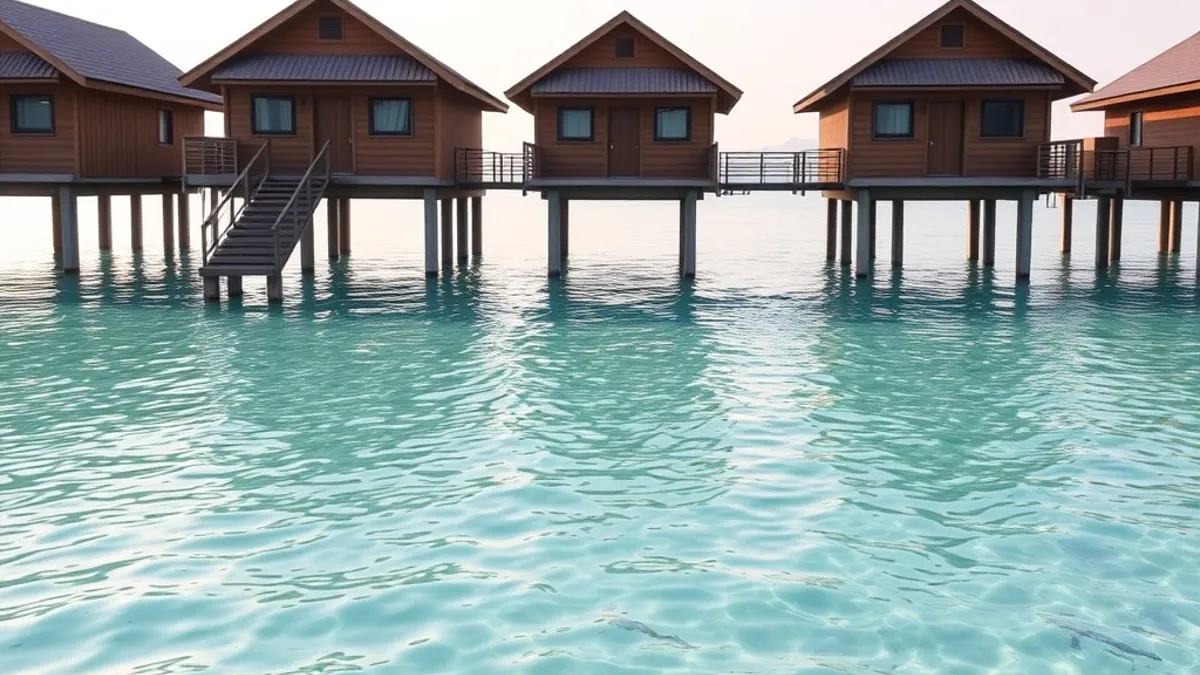
Choosing between an overwater villa and a beach villa comes down to how you want to experience the lagoon. Overwater villas sit on stilts above the water, usually with steps or a ladder leading straight down into the sea. You can roll out of bed, swim with reef fish before breakfast, and dry off on your own sun deck without ever seeing another guest.
Beach villas, by contrast, sit on solid ground with sand at your doorstep. You get natural shade from palms and vegetation, a shorter walk to restaurants, pools and the dive center, and none of the stair descents into water. For many travelers, that easy access to everything the resort offers matters more than the view from the bed.
The trade-off is price. At the same resort, an overwater villa typically costs 30-70% more than a beach villa, so the upgrade can add hundreds of dollars per night to your bill. Before deciding, think about how much time you will actually spend in the room versus in the water.
- Privacy layout: Overwater villas are often spaced farther apart on their jetties, so neighbors are less visible, while beach villas may sit closer together along the shore.
- Sun exposure: Beach villas benefit from trees and shade structures, whereas overwater decks are fully open, so midday sun can be intense on the water.
- Snorkeling start point: From an overwater villa you can often drop into a house reef or lagoon directly, while beach villa guests typically walk to a designated entry point.
- Room size and layout: Beach villas frequently offer more interior space or a garden area, while water villas trade floor space for decks and glass floor panels or lagoon-facing beds.
Cost Breakdown: What Each Stay Type Really Costs
Let’s talk numbers, because the gap between stay types is real. A standard beach villa at a mid-range resort commonly starts from around $400-600 per night in low season, depending on the resort tier. That entry price usually gets you a well-appointed room with a deck or small plunge area, though the most sought-after beach categories will sit above this range.
Overwater villas start higher. Expect roughly $600-800 per night in low season, and once peak season arrives, rates of $1,200+ per night are common. This aligns with the general pattern that water villas run 30-70% more than beach categories at the same resort, so the premium is consistent across most properties.
Don’t forget the transfers
Getting there matters too. Resorts located beyond roughly 30-60 km from Male typically rely on seaplane transfers, which usually cost $300-600 per person return. For a couple, that can add a four-figure sum to the trip, and some resorts add it automatically to your booking while others bill separately. Check how your chosen resort handles transfers before you compare nightly rates, otherwise you’re not comparing like with like.
A practical way to think about it: if your budget is tight, a beach villa in low season plus a house reef and a few excursions often delivers more memories per dollar than a water villa you can barely afford. If the overwater experience is the whole point of your trip, budget for it properly rather than stretching and skipping the extras.
When to Book: Seasons and Lead Times
The Maldives has two very different halves of the year, and your choice of dates can matter as much as your choice of villa. Peak season runs from November to April, when the weather is dry and sunny and the water is at its clearest. That visibility makes it the best window for snorkelling and diving, but it also brings the highest nightly rates of the year, especially for overwater categories.
From May to October, the picture changes. This is the low season, with a real chance of rain and cloudier spells, but also discounts of roughly 20-40% on room rates. If your main goal is a big villa at a smaller price and you can tolerate an afternoon shower, the wet season can be excellent value. The sea is still warm, and many resorts run promotions during these months.
How far ahead should you book?
Whatever season you choose, timing your booking matters. Booking 4-6 months ahead usually secures the best villa selection and rates, and this is especially true for overwater villas, which are limited in number on most islands. Leave it too late in peak season and you may find only garden or beach categories left, or water villas at inflated prices.
The same early-booking logic applies elsewhere. If you’re flexible about destinations, the principles in this guide to when all-inclusive resorts drop their prices show how seasonal timing shapes rates across resort destinations generally.
Who Should Choose an Overwater Villa
Overwater villas are the image most people carry of the Maldives: a thatched roof, a private deck, and steps leading straight into a turquoise lagoon. If that image is the reason you booked the trip, a water villa is the way to deliver it. Privacy is the biggest draw — no one walks past your terrace, and your nearest neighbor is often the open ocean.
Couples tend to get the most out of this category. Waking up to unobstructed ocean views, swimming off your own deck before breakfast, and watching the sun set from a hammock strung over the water are experiences a land-based room simply cannot match. The trade-off is practical: you are a boat or a walk away from the main island’s restaurants and pool, so spontaneous trips for a snack take more effort.
One honest note for light sleepers: overwater villas can feel more exposed to wind and waves, especially at night when the sound of water under the floor is amplified. Some guests find it soothing; others take a night or two to adjust.
- Anniversary trips: Many resorts offer romantic touches for milestone stays, such as private in-villa dinners on your deck or sunset cruises arranged through guest services — ask when you reserve.
- Photography enthusiasts: The unobstructed horizon and glass-floor panels or lagoon-facing decks give you sunrise, sunset and reef shots without leaving your room.
- Snorkelers who hate crowds: Direct lagoon access means you can slip into the water at off-peak hours, when house reefs are quietest and fish activity is often at its best.
Who Should Choose a Beach or Garden Villa
Beach and garden villas are the practical heart of any Maldives resort, and for many travelers they are the smarter pick. You step out of your door onto sand, with shade from palms or planted gardens, and the pool, main restaurant and dive center are usually just a short barefoot stroll away. That ease of movement matters more than most people expect once they arrive.
Families get the clearest benefit. Kids can play on the beach within sight of your terrace, duck into shade when the sun gets strong, and reach the pool or an ice cream without a long walk or a staff call. There is also more space to run around compared with a deck over open water, which gives parents genuine peace of mind.
Budget-conscious travelers have a different but equally good reason to choose land. Since overwater villas typically cost 30-70% more at the same resort, the savings from a beach villa can fund several dives, spa treatments or excursions such as dolphin cruises and local island visits — often the memories that outlast the room itself.
- Travelers with mobility concerns: Flat, level access from villa to restaurant and pool is far simpler than staircases down into a lagoon, especially after rain when steps can be slippery.
- Guests who love the feel of a beach: Morning walks along the shoreline, sand under your feet all day, and easy access to shade make a land villa feel more grounded and relaxed.
- Longer stays: If you are on the island for a week or more, the extra space and everyday convenience of a garden or beach setting tends to wear better than a deck over water.
Wrapping Up Your Maldives Stay Decision
So, which one suits you? If privacy and stepping straight into the lagoon matter most, the overwater villa delivers the iconic Maldives experience, but expect to pay roughly 30-70% more than a beach villa at the same resort. If you are traveling with kids or would rather spend your budget on diving, spa treatments and excursions, a beach or garden villa is the smarter pick, with sand, shade and easy access to pools and dining.
The best decision comes from matching your stay type to your season and budget. Peak season from November to April commands the highest rates, while the low season brings meaningful discounts. Whichever villa you choose, booking 4-6 months ahead usually secures the best selection and price. Still torn between sand and stilts? Leave a comment with your trip plans or share this article with your travel partner.