Wondering whether glamping actually means a real bathroom and a proper kitchen, or just a tent with nicer furniture? You’re not alone. Glamping sites facilities vary enormously, and the difference between a basic bell tent and a luxury safari lodge can be the difference between sharing a shower block and soaking in your own en-suite. Before you book, it helps to know exactly what’s standard and what counts as an upgrade.
This guide breaks down what you can typically expect: the overall picture from shared bathroom blocks to en-suite suites, kitchens and cooking setups, heating and cooling for year-round comfort, plus the extras like Wi-Fi, fire pits and pools. We’ll also show you how to match facilities to your trip and budget, so there are no surprises when you unzip that door. Let’s get into the details.
What Facilities Do Glamping Sites Have? The Full Picture
The quickest way to understand glamping sites facilities is to look at two things: the type of unit you’re booking and the price tier it sits in. At one end of the scale, a basic bell tent might come with a proper bed and access to a shared bathroom block. At the other, a luxury safari tent or cabin can include an en-suite bathroom, a kitchenette and heating. Most sites fall somewhere in between, and the facilities scale up with what you pay.
What’s standard almost everywhere
Unlike traditional camping, you won’t be wrestling with an air mattress at a glamping site. Real beds with proper mattresses and linens are standard at nearly all sites, from the most basic tents to the most expensive lodges. This is the core promise of glamping: you get the outdoor setting without sleeping on the ground.
Power is the other near-universal feature. Expect electricity or solar power for lights and device charging in most units. Some remote sites rely on solar with limited output, so charging may be slower or restricted to a communal area, but complete darkness and dead phones are rare at established operations.
The practical takeaway is this: if a listing doesn’t spell out the bathroom, kitchen or power situation, ask before booking. Unit type is the strongest predictor of what you’ll get inside.
Bathrooms: Shared Blocks vs En-Suite
At most established glamping sites, shared bathroom blocks with flush toilets and hot showers are the baseline. These are usually a short walk from the tents, cleaned regularly, and far more comfortable than the pit toilets of traditional campgrounds. If a site is charging a reasonable rate and doesn’t mention private bathrooms, this is what you should expect.
En-suite bathrooms are where the price tiers start to separate. They appear mostly in cabins, yurts and premium safari tents, and at mid-range sites you’ll typically find them in roughly 30-50% of units. The upgrade usually adds $20-50 per night over shared-facility rates, which many travelers consider worthwhile for a multi-night stay or a cold-season trip.
Before booking, check whether towels and toiletries are provided. Budget tent units often require bringing your own, and arriving without them after a long drive is a frustrating way to start a trip. Our complete glamping packing checklist covers exactly what to bring for sites with minimal provisions.
- Shower water pressure and hot water timing: at busy sites with solar-heated water, hot showers can run low in the evening when everyone returns at once, so showering earlier in the day often gets better results.
- Distance and lighting on the path: if your tent is several minutes’ walk from the block, ask whether the path is lit at night and bring a headlamp for trips after dark.
- Family and accessible facilities: some sites set aside private shower rooms with baby-changing tables or step-free access; these are worth requesting in advance rather than assuming they exist.
Kitchens and Cooking Setups
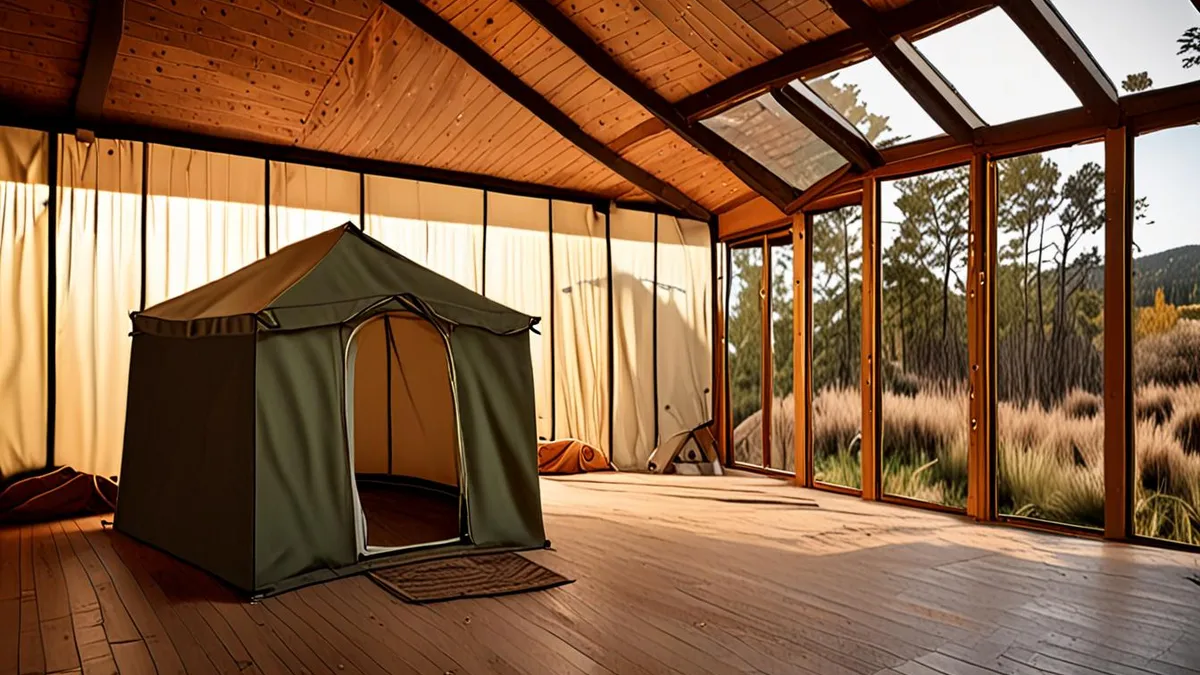
Kitchen facilities are the biggest dividing line between glamping tiers. Full kitchens with a stove, fridge and sink are common in cabins and some yurts, letting you cook proper meals just as you would in a vacation rental. If self-catering is a priority for your trip, a cabin is usually the safest choice.
Most safari and bell tents offer far less. A typical mid-range tent comes with a kitchenette at best: a kettle, a cooler box and a camp stove. Some tents offer no cooking gear at all, meaning every meal is either eaten out or prepared on a communal BBQ. This is one of the most common surprises for first-time glampers, so read the unit description carefully rather than assuming a fridge is included.
If a site has no cooking facilities at all, it usually makes up for it with an on-site cafe or food options nearby. Many tent-based sites deliberately skip kitchens because they expect guests to eat at the restaurant, so factor those meal costs into your budget.
- What’s missing even in a kitchenette: cooler boxes have no ice supply unless the site restocks it, so perishables like meat and milk are risky; plan around shelf-stable ingredients instead.
- Cookware and utensils: units with a camp stove often include a basic pan and a couple of plates, but sharp knives, cutting boards and dish soap are frequently absent, so check the inventory list.
- Communal cooking shelters: some tent sites provide a shared covered kitchen with sinks and prep space; these work well but get crowded at peak dinner hours, so cook early.
Heating, Cooling and Year-Round Comfort
One of the biggest differences between glamping and traditional camping is how comfortable units stay once the temperature drops. At sites that market themselves for colder months, a heat source is usually part of the package. Wood stoves or electric heaters are standard in units advertised for October to April stays, so if a listing mentions off-season availability, ask which type of heating the unit uses and whether fuel or firewood is included in the rate.
Heating is far more common than cooling. Air conditioning is the rarer feature, and it is mostly limited to cabins in hot regions. Canvas tents, even luxury safari tents, rarely have it because the material simply is not designed to hold cold air. If you are traveling somewhere hot and humid, look specifically for cabins or units with fans and good cross-ventilation, and check the listing for any mention of climate control.
Why structure matters in cold weather
The unit type itself makes a huge difference. Insulated structures like cabins and yurts handle cold seasons far better than canvas tents. A cabin with solid walls and a wood stove can feel genuinely cozy in freezing conditions, while a bell tent with a heater still lets cold radiate through the canvas at night. If shoulder-season or winter travel is on your mind, it helps to plan around regional weather patterns — this breakdown of the best season for glamping by region explains when different areas stay comfortable. As a rule of thumb, book a solid-walled unit for anything outside the warm months, and treat heated tents as a mild-autumn option rather than a midwinter one.
A few practical questions will save you a chilly night. Ask whether the heater runs all night or needs refueling, whether extra blankets are provided, and how far the unit sits from the shared bathroom block in winter. Sites that welcome cold-season guests usually answer these details readily, and their answers tell you a lot about how well the unit actually performs once temperatures fall.
Extras: Wi-Fi, Fire Pits, Pools and Activities
Facilities beyond the basics vary enormously from one site to the next, and they often explain why two seemingly similar units are priced differently. Wi-Fi is offered at roughly 60-70% of glamping sites, but in remote locations it is often weak or limited to a communal area near reception. If you need to work during your stay, ask whether the signal reaches the units themselves, not just the main lodge.
The most reliable extras are the outdoor ones. Fire pits, BBQ grills and outdoor seating are near-universal communal facilities, and they are a big part of what makes an evening at a glamping site feel special. Most sites provide firewood or sell it on-site, though a few expect you to bring your own, so it is an easy question to ask before arrival.
Larger glamping resorts go much further, adding leisure facilities and organized experiences that push rates toward $150-300 per night. Typical examples include:
- Swimming pools and hot tubs, with hot tubs sometimes reserved for premium units or bookable by the hour
- Kayaks, paddleboards or small boats for sites on lakes, rivers or the coast, usually free for guests
- Guided activities such as wildlife walks, stargazing sessions, yoga classes or local farm tours, which may carry an extra fee
- On-site cafes or bars, handy when a unit has no cooking facilities of its own
- Kids’ play areas, animal pens or bike rentals at family-oriented resorts
These extras are exactly where prices climb, so it pays to decide which ones you will actually use. If you are weighing a bare-bones tent against a full resort stay, how much does glamping cost breaks down what you typically get at each price level.
How to Match Facilities to Your Trip
Once you know what facilities exist, the trick is matching them to the trip you are actually taking. A couple on a summer weekend needs very little: a comfortable bed, a shared bathroom and a fire pit will do. A family of four in November needs a lot more, from reliable heating to a real kitchen and space to dry wet clothes. The mistake most first-timers make is booking on looks alone, then discovering mid-trip that the beautiful safari tent has no stove, no heater and a bathroom block a short walk away. Here is a simple process for getting it right before you pay.
- Choose your unit type first. Cabins and yurts are the safest bets for full kitchens and en-suite bathrooms, while bell tents suit budget stays from $80-120 per night. Decide whether cooking and private bathrooms matter to you before you fall in love with a photo.
- Check the season against the facilities. If you are traveling between October and April, confirm heating and bathroom type before booking. Ask specifically whether the unit has a wood stove or electric heater, and whether the bathroom is en-suite or in a shared block.
- Read the fine print on what is provided. Some sites supply towels, linens and toiletries; budget tent units often expect you to bring your own. A quick look at the listing’s “what to bring” section usually settles it.
- Plan meals around the cooking setup. If the unit has no stove or fridge, check whether there is an on-site cafe or restaurants nearby, or pack a cooler and simple gear.
- Verify anything that matters by email. Wi-Fi strength, firewood supply and pool access all vary, and a one-line question before booking prevents most disappointments.
The whole process takes ten minutes and saves you from the classic glamping letdown: arriving expecting a hotel and finding a tent with a kettle. It also explains the price gaps you will see on booking pages. A basic tent unit sits at the lower end of the range because it offers fewer comforts, while a cabin with a kitchen and private bathroom commands more, and peak-season rates with full facilities typically run $150-300 per night. Match the facilities to the season, the group and the meals, and those price differences start to make perfect sense. Do this check every time, even on repeat visits, because sites upgrade and rebrand their units often enough that last year’s listing may not match this year’s reality.
The Bottom Line on Glamping Facilities
So, does glamping mean real bathrooms and kitchens or just a fancy tent? The honest answer is that it covers both. Nearly every site gives you a proper bed, linens and some form of power, and established sites provide flush toilets and hot showers. Full kitchens and en-suite bathrooms, however, are mostly reserved for higher-tier units like cabins and yurts.
Price is a reliable guide: basic tent units typically run from $80-120 per night, while stays with full facilities usually sit in the $150-300 range. Because the details vary so much from site to site, checking the bathroom setup, kitchen gear and heating situation before you book is the surest way to avoid surprises. If this breakdown helped you plan a trip, feel free to leave a comment or share the article.