You both want the same thing: a night under the stars with a real bed, a glass of wine and no one else around. The problem is that planning romantic glamping trips can feel surprisingly complicated. Tent or dome? Which season? How far ahead do you book, and what should you actually pack when the site promises “luxury camping”?
This guide walks you through the whole process step by step. We’ll cover why glamping works so well for couples, how to choose the right stay type for two, and which season gives you the best mix of weather, privacy and price. From there, we’ll set a realistic couples budget, explain when to book your getaway, and share a packing list built for romance rather than survival. By the end, you’ll have a clear plan for a couples escape that feels special without turning into a logistics project.
Why Glamping Works for Couples
The magic of glamping for couples is that it blends two things that rarely go together: genuine seclusion and hotel-style comfort. You get a real bed with proper linens, heating for cool evenings and often a private bathroom, all set in a quiet natural spot far from lobbies, elevators and noisy neighbors. It feels like a remote retreat, but without the sacrifice.
Romance is also built into the design. Most couples-oriented units come with a private deck, a fire pit or a hot tub as standard features, so the atmosphere is there the moment you arrive. There’s no need to book a spa treatment or plan a special evening; lighting the fire and sitting outside together is the activity.
More Time Together, Less Time Setting Up
Traditional camping eats hours before you even relax: pitching a tent, inflating mattresses, cooking on a finicky stove. With glamping, someone else has done all of that. You show up, unpack a small bag and start enjoying each other’s company. That simplicity is exactly what makes these trips feel like a true break rather than an outdoor chore.
Choosing the Right Stay Type for Two
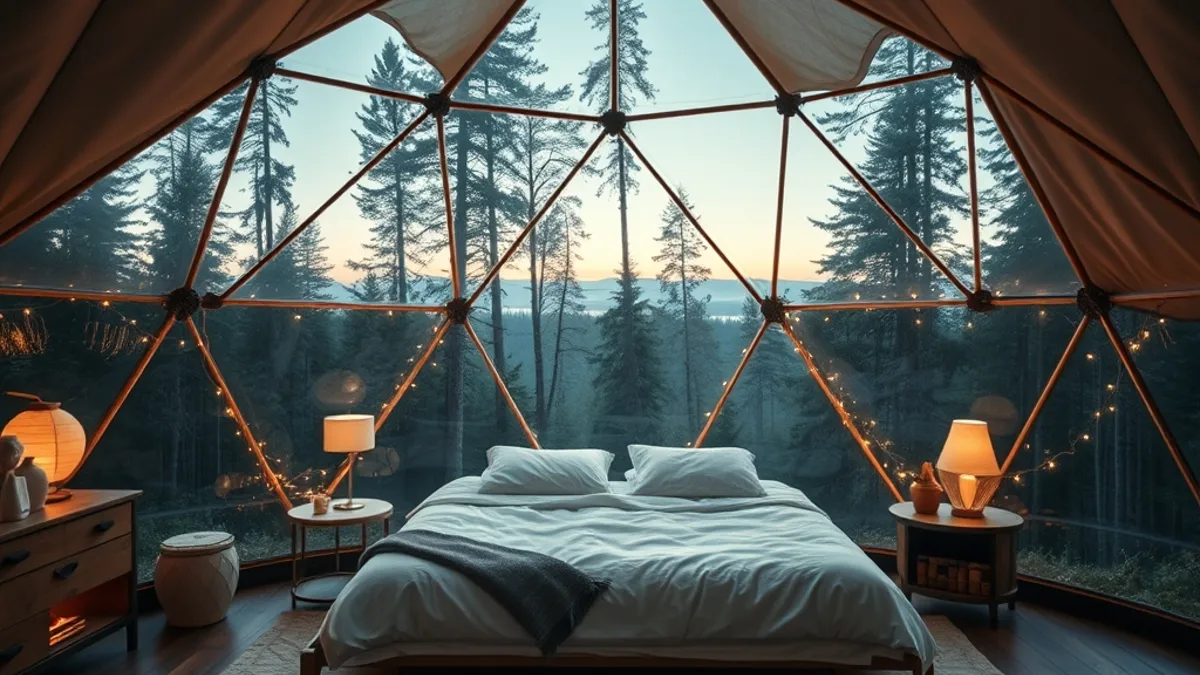
The stay type you pick shapes the whole mood of the trip, so it pays to match it to what you both want. Safari tents and domes are the go-to choice for couples who want room to spread out and wide views from the bed. Units in the 25-40 square meter range give you genuine living space, often with large windows or clear panels for stargazing without leaving the covers.
Treehouses bring the most novelty and privacy, which is why they’re so popular for anniversaries and proposals. The trade-off is price: in high season, these units often max out at $500-$800 per night. If you’d rather keep costs down, yurts and cabins are the cozier, better-value option, typically running $150-$400 per night while still offering real beds and shelter. Before you commit to any style, it helps to read up on how to choose the right glamping tent for your stay so you know what each structure handles well.
Whatever type you choose, check the features that matter most for two:
- En-suite bathroom: a private toilet and shower inside or right next to your unit means no midnight walks across a dark site in a robe.
- King bed: many glamping units default to doubles or two singles, so confirm the bed size before booking if space to stretch out matters to you.
- Private hot tub: often the single most romantic feature on offer, but it’s usually limited to certain units or available as a paid add-on, so verify it’s attached to your accommodation and not shared.
Picking the Best Season for a Romantic Escape
Timing does a lot of the romantic work for you. In most temperate regions, peak glamping season runs from May to October, and within that window, June and September tend to offer the best balance of pleasant weather and fewer crowds. You get long, warm evenings for sitting by the fire without the full summer rush around you.
The Honeymoon-Style Sweet Spot
If your trip is meant to feel like a honeymoon, aim for late September to mid-October. Fall colors are at their best, sites are noticeably quieter, and the cooler air makes a hot tub or fire pit even more appealing. It’s the window that delivers the most atmosphere for the least effort, which is why many couples save their big trips for it.
Season also affects your wallet. Shoulder-season midweek dates can save 20-30% versus weekend rates, which means the same budget might stretch to a treehouse instead of a standard tent. Weather and pricing shift a lot by region, so it’s worth checking the best season for glamping by region before you lock in dates for a specific destination.
Setting a Couples Budget
The nightly rate is rarely the whole story when you’re planning a glamping trip for two. Most stays already include the essentials that make the experience feel special — a real bed, a private bathroom and your own outdoor space — but the add-ons are where budgets quietly grow. Extras like breakfast baskets, private hot tub sessions or a chef-prepared dinner served at your tent typically fall somewhere between modest and splurge-worthy, and pricing varies a lot by operator. One or two of these can turn a good trip into a memorable one; four or five can come close to doubling your total. Pick the one or two extras you’ll actually use and skip the rest.
Don’t forget the extras
It also helps to decide early what you’re paying for. A luxury dome or a treehouse with panoramic views usually commands a clear premium over a cozy yurt or cabin, so talk with your partner about whether the view or the budget matters more before you fall in love with a listing. If a splurge is out of reach, remember that timing rather than sacrifice is the easiest way to stretch a couples budget. Midweek and off-season dates are typically noticeably cheaper than weekend rates — sometimes enough to move you up a stay tier entirely.
Before you set your number, it’s worth comparing what different stay types actually cost. For a deeper breakdown, see this guide to typical glamping prices, then build your total around the rate, one or two add-ons and a little buffer for the unexpected.
Booking Your Getaway at the Right Time
Glamping sites are small by nature, and the most romantic units are usually the first to go. A property might have only two or three domes with private hot tubs, so timing your booking matters as much as choosing the site itself. The good news is that the planning is simple once you know the rhythm of how these places fill up. Here is how to work it out step by step.
- Count back 3-6 months for summer weekends. Friday and Saturday nights between May and October sell out first, especially for units with hot tubs, private decks or the best views. Booking early also gives you the pick of the property instead of whatever is left over, which can mean the difference between a secluded dome and a tent right next to the fire pit.
- Use a 1-2 month lead time for off-season and midweek trips. Availability is usually much better outside peak weekends, so you can often book closer to your travel dates and still get the unit you want. This flexibility is handy for spontaneous escapes.
- Read the cancellation terms before you pay. Some sites offer flexible changes, while others keep a deposit no matter what happens. Know exactly what you are committing to in case weather or work plans force a shift.
- Confirm heating and insulation if you travel outside May-October. Not every tent, yurt or dome is winterized. Ask directly whether the unit has a heater, wood stove or proper insulation, so a chilly night does not catch you off guard.
Once your dates are locked in, send the host a quick note mentioning that it is a couples trip. Small gestures like a better-placed unit or a quiet corner of the site are often possible when they know in advance. A single message takes two minutes and can quietly shape the whole stay, so it is worth the small effort before you arrive.
Packing for Romance, Not Survival
Packing for a glamping trip is a different exercise from packing for camping. You do not need to bring a kitchen or a camp bed, so the space in your bag is free for things that make the trip feel romantic. Think atmosphere first, practicality second.
Start with the two-person extras: a string of battery-powered lights for the deck, a bottle you both love, and cozy layers for sitting by the fire after dark. Evenings outside are usually the best part of the trip, so dress for lingering rather than rushing indoors.
Practical gear still matters. Sites are often reached on gravel or grass paths, so closed-toe shoes and a weatherproof layer for each of you will keep plans on track if the weather turns. Before you pack anything else, message the host and confirm exactly what the stay provides, since most glamping units include linens, towels and basic kitchen gear. That leaves only personal items on your list:
- A soft blanket or throw for the fire pit. Many units provide bedding but not outdoor blankets, and sharing one by the fire beats shivering in a jacket.
- Insulated mugs or a small thermos. Hot drinks on a private deck taste better than walking to a shared kitchen block in the dark.
- A portable speaker. Check the site’s quiet rules first, but low-volume music turns a hot tub or deck into a proper date night.
- A headlamp or lantern. Paths between units are often unlit, and phone flashlights are awkward when your hands are full of wine glasses.
Wrapping Up Your Couples Glamping Plan
A romantic glamping getaway doesn’t have to feel overwhelming. The planning comes down to three decisions made together: pick a stay type you both love, choose a season that fits your mood, and set a budget that matches. When those three line up, everything else falls into place. A private hot tub and an en-suite bathroom will do more for the romance than any amount of extra planning, so prioritize those features over fancy extras.
Timing handles the rest. Book 3-6 months ahead if you’re set on a peak summer weekend, since the most romantic units go first. If your dates are flexible, a midweek trip can save you 20-30% and might even let you upgrade to a nicer tent for the same money. Start with one weekend, one tent, and one bottle of wine packed in the bag. Have a question or a favorite glamping memory? Share it in the comments below.