Choosing between a safari lodge vs tented camp is one of the most common dilemmas travelers face when planning a first safari. Both promise incredible game viewing, but they deliver very different experiences, and the wrong pick can leave you either overpaying for facilities you never use or roughing it more than you expected. Budget, comfort level and wildlife expectations all play a role in which option actually fits.
This guide breaks the decision down clearly. We compare the core structural differences, comfort and facilities, real costs, wildlife access and location trade-offs, plus when to book and how each stay type suits different seasons. Finally, we walk through how to choose between the two based on your travel party and itinerary, then wrap up the lodge vs camp decision so you can book with confidence.
Safari Lodge vs Tented Camp: The Core Differences
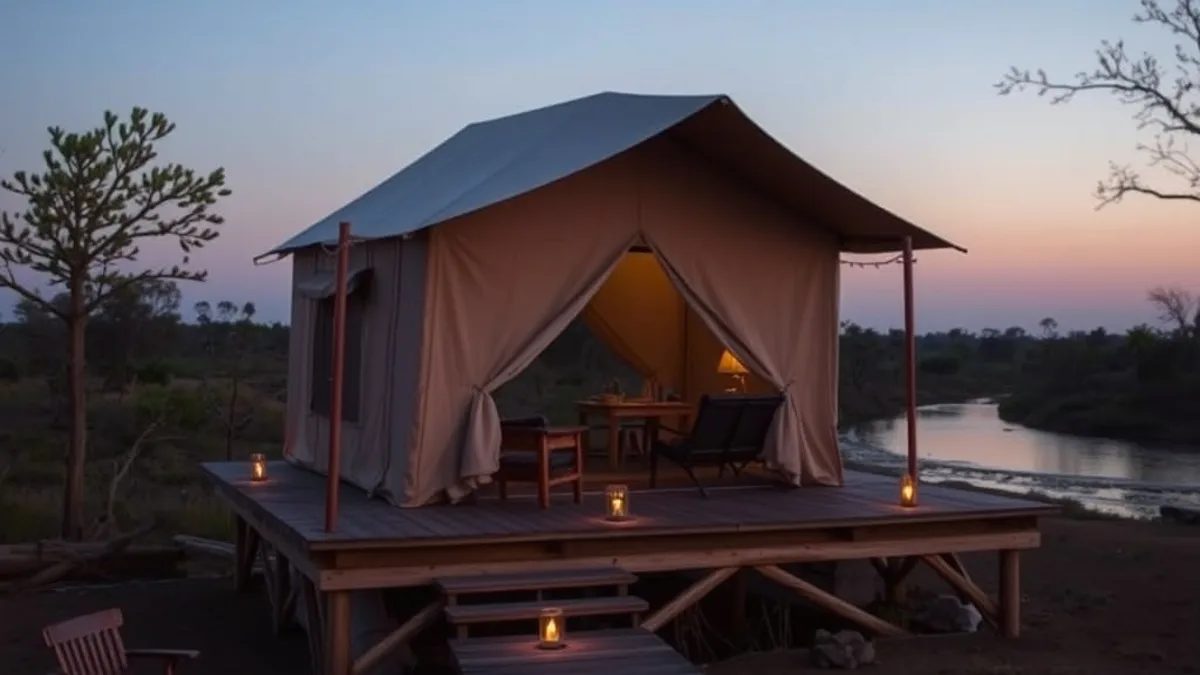
The most fundamental difference comes down to construction. A safari lodge is a permanent structure built with solid walls, foundations and conventional roofing, much like a boutique hotel dropped into the bush. A tented camp, by contrast, uses large canvas tents stretched over fixed or semi-permanent platforms, which gives you a very different sense of connection to your surroundings.
That difference in structure shapes everything else. Lodges typically offer the fuller resort package: swimming pools, spa treatments and multiple dining venues where you can vary your evenings. Tented camps concentrate on intimate communal spaces instead, usually a single dining area and a lounge or fire deck where all guests gather around shared meals and stories from the day’s game drives.
Size and flexibility
Guest capacity differs sharply between the two. Tented camps usually host just 8-20 guests at a time, which keeps the atmosphere personal and the service hands-on. Larger lodges often accommodate 40-80 guests, bringing more energy, more staff and more amenities, but also more company at sightings and around the dinner table.
There is a practical difference too. Because camps are canvas on platforms, some can be relocated seasonally to follow the wildlife, while lodges are fixed to one site for good. That flexibility matters more than you might think in areas where animal movements shift with the rains.
Comfort and Facilities Compared
Step inside a safari lodge and you could be in a well-appointed hotel. Expect en-suite rooms, air conditioning, gyms and sometimes full spa facilities, all built to hotel-style standards. If you want a clearer picture of what arrival day looks like, our guide to what a lodge is and what to expect on arrival covers the details.
Tented camps cover a much wider spectrum. At the basic end, you get simple canvas tents with shared bathrooms a short walk away. At the luxury end, camps offer suites with plunge pools, full plumbing and plumbing-fed outdoor showers that rival any lodge room. The key difference is atmosphere: canvas walls are thin, so you will hear lions roaring and hyenas calling at night. Most guests count that as the highlight rather than a drawback, but it is a real difference in how immersive the stay feels.
Families with young children usually find lodges easier to manage, thanks to solid walls, climate control and dedicated kids’ facilities. Many camps also set minimum age limits, often somewhere between 8 and 12 years, so check before booking if you are traveling with younger kids.
- Room layout: Lodge rooms are typically self-contained units, while many camp tents are connected to the main area by open pathways, so staff often escort guests after dark.
- Power and connectivity: Remote camps frequently run on solar power with limited charging windows, whereas lodges usually have round-the-clock electricity and more reliable Wi-Fi.
- Dining style: Camps tend to serve one set menu eaten communally with other guests, while lodges more often offer à la carte options and multiple venues.
What Each Stay Type Really Costs
Cost is where the two options really separate. Mid-range safari lodges commonly run USD 300-600 per person per night on an all-inclusive basis, covering your accommodation, meals and activities. Luxury lodges in prime reserves can exceed USD 1,000 per person per night in high season, especially in flagship locations where demand outstrips supply.
Where tented camps fit in
Permanent tented camps typically cost 20-40% less than comparable luxury lodges, which makes them one of the best value routes into quality safari areas. You often get the same guiding, the same concessions and very similar food, simply with canvas instead of brick walls. For a fuller breakdown of where your money goes, see our guide to what you really pay for on a safari lodge stay.
One thing to understand before comparing quotes: safari rates are rarely just room rates. They usually bundle accommodation, meals, game drives and park conservation contributions into a single nightly price. That bundle is why two properties that look similar online can differ so much in price, and why the cheapest headline rate is not always the best deal. Always ask exactly what is included, whether drinks, park fees and laundry are covered, and confirm current rates directly with your operator since prices shift from year to year.
Wildlife Access and Location Trade-offs
Where you sleep shapes how you experience the bush, and location is where lodges and tented camps differ most. Lodges tend to cluster near park gates and inside private reserves, where boundaries are often fenced or semi-fenced. That predictability makes them a comfortable base, especially if you prefer knowing exactly what to expect when you step outside your room.
Tented camps usually sit inside unfenced concessions, which means animals genuinely roam through camp. It is common to hear elephants feeding a few meters from your canvas at night or to be escorted by a guard after dark. For many travelers this is the highlight of the whole trip, but it does require a certain comfort with the wild being, well, wild.
Mobile camps and the migration
Mobile tented camps take location one step further by physically relocating to follow the Great Migration through the Serengeti-Mara ecosystem, typically between roughly June and October. Staying in one puts you close to the herds as they move, something a fixed lodge simply cannot match.
There is also a rules-based difference worth knowing. Private concessions generally allow night drives and off-road tracking, so guides can follow a leopard into thick bush or spotlight nocturnal species after dinner. Lodges inside public parks usually cannot offer either, since park regulations restrict driving to designated roads during daylight hours. If night drives and flexible game viewing are priorities, a concession-based camp is typically the stronger choice. For a deeper look at timing your stay, see this guide to booking a lodge stay in Kruger National Park.
When to Book and Seasonal Considerations
Timing your booking matters almost as much as choosing where to stay. The best camps and lodges in popular reserves are small, and the most sought-after weeks sell out long before the season starts. A tented camp hosting 8-20 guests simply cannot absorb last-minute demand the way a big hotel can, so a little planning goes a long way. Here is a simple sequence to follow.
- Decide on your season first. Dry seasons offer the best game viewing because animals gather at water sources and vegetation is thinner. In East Africa that window runs June to October; in Southern Africa it is roughly May to September.
- Book 6-12 months ahead for high season. Popular reserves fill early, and the most atmospheric tented camps often have only a handful of tents, so availability disappears fast. If you have your heart set on a specific camp, treat this as non-negotiable.
- Check whether your camp operates year-round. Many tented camps close or scale back during the rainy season, roughly November to March in parts of East Africa, while most lodges stay open throughout the year. Confirm the exact operating dates before you commit.
- Consider shoulder season if your dates are flexible. The weeks just outside peak season often bring lower rates, greener landscapes and fewer vehicles at sightings, though wildlife viewing can be a bit harder work.
One final tip: reconfirm your booking details and camp operating dates with your operator before paying a deposit, since seasonal schedules can shift from year to year. Ask exactly what your rate includes, such as meals, game drives and park or conservation fees, so there are no surprises on the final invoice. A quick check now can save you an unpleasant surprise at the airstrip.
How to Choose Between a Lodge and a Tented Camp
If you are still torn, start with what you actually want from the trip rather than from the property. A traveler who wants a hot shower, a gym session between drives and a pool for the kids has different needs from one who wants to fall asleep to the sound of lions. Neither is the better choice in absolute terms; each simply suits a different style of safari. It also helps to think honestly about how you sleep, how you feel about insects after dark and how much structure you want in your days.
Traveler type is a useful shortcut. Honeymooners and photographers often gravitate toward small camps, where fewer guests means quieter vehicles and more flexible time at sightings. First-timers frequently prefer lodges, where the hotel-style routine and solid walls make the bush feel less intimidating. Your itinerary should influence the decision too: fly-in mobile camps are the natural fit for migration routes, while lodges work better in self-drive regions where you arrive by car and come and go on your own schedule.
It can also pay to mix the two. Many safari itineraries pair a lodge stay with a few nights under canvas, so you get full facilities at the start and a more atmospheric finish without committing your whole trip to either style.
- Families with young children: a lodge usually wins, since many tented camps welcome only older kids and lodges offer more space and supervision-friendly layouts.
- Repeat safari-goers: a small tented camp adds novelty, because the intimate scale and closeness to wildlife feel different from a standard lodge circuit.
- Budget-conscious travelers: tented camps typically undercut comparable lodges, freeing up budget for extra nights or a second destination.
- Special-occasion trips: small camps often excel here, with private dinners and personalized service that larger properties struggle to replicate.
Wrapping Up the Lodge vs Camp Decision
So which one wins? There is no single answer, and that is exactly the point. A safari lodge gives you solid-built comfort, full facilities and hotel-style service, but you pay for it, with mid-range stays commonly running USD 300-600 per person per night. A tented camp trades some of those amenities for intimacy, the sound of the bush through canvas walls and rates that typically sit 20-40% below comparable lodges.
The right choice comes down to three things: your budget, your comfort expectations and the season you plan to travel. A family with young children will usually lean toward a lodge, while honeymooners and photographers often prefer a small camp. Whichever way you lean, match the stay to your trip rather than the other way around. If this helped you decide, leave a comment or share the article with your travel companions.