You’ve been traveling all day. Your flight was delayed, the shuttle took forever, and now you’re finally in your hotel room, ready to collapse into bed. Instead, you lie awake staring at the ceiling while a delivery truck rumbles past below and a strip of streetlight sneaks through the gap in the curtains. Sound familiar? Learning how to sleep better in a hotel doesn’t require luck or an expensive suite upgrade. It comes down to a handful of simple fixes for the two biggest sleep saboteurs: light and noise.
This guide walks you through practical solutions you can use on any trip. We’ll look at why hotel rooms disrupt your sleep in the first place, how to choose a quiet room before you even arrive, and what to pack in a small sleep kit. You’ll also learn easy in-room tricks for blocking light, ways to tame noise with earplugs and white noise, and how to make front desk requests that actually get results. Most fixes take less than five minutes.
Why Hotel Rooms Disrupt Your Sleep
You know the feeling: you’re exhausted after a long day of travel, yet the moment the lights go off, your brain refuses to shut down. There’s a reason for that. Your brain is constantly monitoring your environment for danger, even while you sleep. In your own home, the sounds are familiar and get filtered out. In a hotel, everything is new.
Your brain treats unfamiliar sounds as threats
Street traffic, the steady hum of the HVAC unit and muffled voices in the hallway all register as unknown noises. Instead of tuning them out, your brain flags them as potential threats and keeps you in a lighter stage of sleep so you can react if needed. That’s why a car alarm three blocks away can jolt you awake at 2 a.m., even though you’d sleep right through the same sound at home.
Light leaks are everywhere in hotel rooms
Then there’s the light problem. Hotel curtains rarely close completely, so thin lines of glow leak around the edges. Add in a glowing digital clock, the standby light on the TV and the bright gap under the door where hallway light pours in, and your room is never truly dark. Even small amounts of light can interfere with your sleep quality.
There’s one more factor you can’t control: researchers call it the first-night effect. Sleeping in an unfamiliar bed naturally produces lighter sleep stages on that first night, as your brain stays partially alert in the new environment. The good news is that while you can’t eliminate the first-night effect entirely, you can remove the light and noise triggers that make it worse.
Choosing a Quiet Room Before You Arrive
The easiest way to sleep well in a hotel is to pick the right room before you ever leave home. Location within the building matters more than most travelers realize, and a few minutes of planning beats any gadget you can pack. The good news is that you don’t need insider knowledge to do this, just a little strategy when you book.
As a general rule, rooms on floors 3-6 and away from the elevators tend to be the quietest. These floors are high enough to escape most street noise but not so high that you’re stuck next to rooftop equipment. Being away from the elevator bank also means less dinging, less foot traffic and no ice machine humming through the wall at all hours.
When you book, use the notes field on your reservation to request a quiet room away from the elevator. Front desk staff see these notes before you arrive, and it costs you nothing to ask. Then, when you check in, confirm the request in person. If you have flexibility, here’s what to look for:
- Corner rooms at the end of the hallway usually share fewer walls with neighbors, so you’re less likely to hear a TV through the wall or doors slamming next door at midnight.
- Rooms facing an inner courtyard or the rear of the property avoid street traffic entirely. A courtyard view may be less scenic, but it’s typically far quieter than a room over the main road or entrance.
- A room away from the lobby and housekeeping areas means fewer hallway voices, luggage carts rolling past your door and early-morning cleaning crews starting their rounds nearby.
None of these requests are guaranteed, of course. Busy nights and small properties limit your options. But asking costs nothing, and the worst outcome is the room you would have gotten anyway.
Blocking Out Light: Simple In-Room Fixes
Even in a well-chosen room, hotel darkness is rarely complete. Curtains never quite meet the wall, every electronic device seems to have a glowing LED, and hallway light streams under the door. The fix is a small toolkit of tricks that take minutes and cost almost nothing.
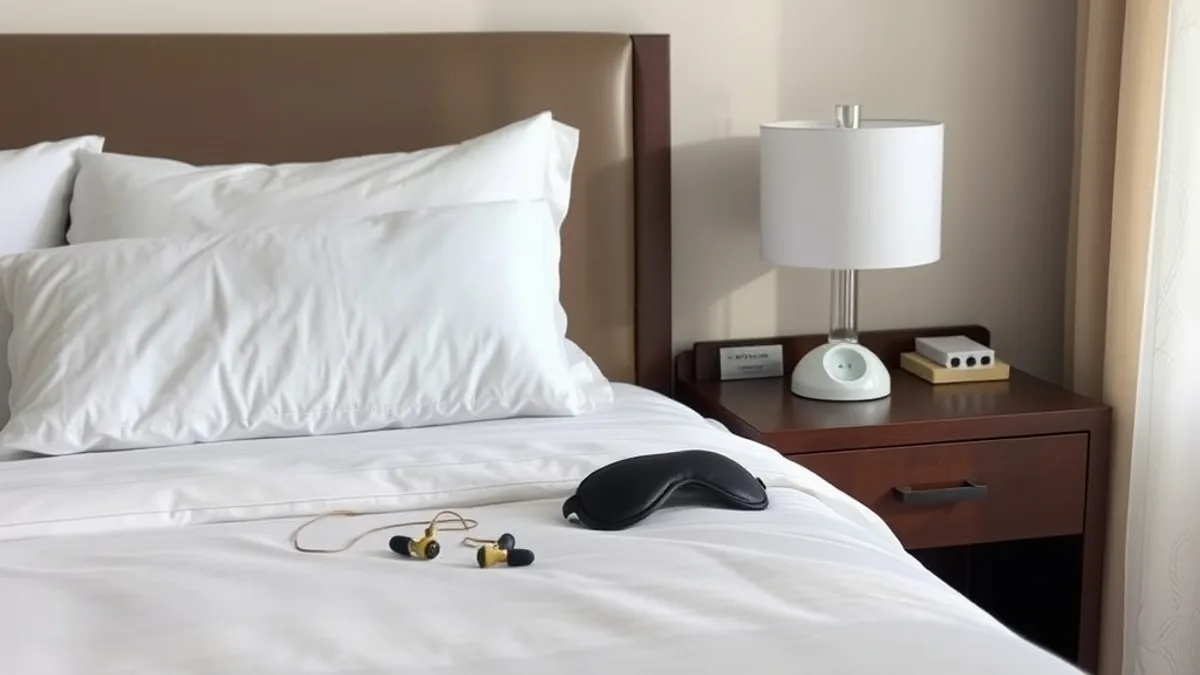
Start with a travel sleep mask, which typically costs $5-15. It’s the single most reliable fix because it covers the light that curtains miss, no matter how badly the room is lit. A contoured mask that sits away from your eyes is more comfortable for side sleepers, so it’s worth checking the fit before your trip.
For the curtains themselves, get creative with what’s in the room. Clothes hangers and binder clips can pin the curtain edges shut against the wall, closing that annoying strip of glow. If you travel often, blackout curtain clips or a portable blackout blind, which typically cost $10-25, make this fix faster and more thorough.
Then hunt down the small lights. Here’s how to handle the usual suspects:
- LED clock displays and TV standby lights: drape a towel over the clock or fold a piece of paper and tape it over the light. Just make sure the towel doesn’t block the clock’s buttons if you need an alarm.
- The gap under the door: roll up a towel and place it along the door gap. This blocks the bright hallway light that otherwise draws a glowing line across your floor all night.
- Smoke detector and thermostat lights: a folded paper wedge can dim a blinking green or red light on the ceiling unit or wall thermostat without covering any sensor vents.
Do this light sweep once when you arrive, before you’re tired, and you won’t have to fumble around in the dark at midnight. Two minutes of work buys you a genuinely dark room.
How to Sleep Better in a Hotel by Taming Noise
Noise is the number one sleep thief in most hotel rooms, and the good news is that you can fight it with a few cheap tools. The trick is to combine two approaches: blocking sound with earplugs and masking what gets through with a steady, soothing background sound. Used together, they handle everything from street traffic to a neighbor’s late-night TV.
Foam earplugs are the cheapest and most effective starting point. A pack costs $3-10, and a decent pair reduces noise by roughly 20-30 decibels, which is enough to turn a busy street into a distant murmur. If you have never worn them before, practice at home first — rolling them down tightly and inserting them correctly makes a big difference in comfort and fit.
- Run a free white noise app on your phone, or bring a dedicated portable machine for $20-40 if you travel often and want better sound quality and longer battery life.
- Set the volume just above the level of the offending noise — loud enough to mask hallway voices, but not so loud that it becomes its own distraction.
- Check whether the in-room TV offers a sleep or ambient channel with fan or rainfall sounds, which saves your phone battery and keeps the nightstand clear.
- Place your earplugs and phone charger within arm’s reach of the bed so you can adjust or plug in without fumbling around half asleep.
- If one earplug keeps popping out on your side of the head, try a slightly different size or a softer foam — fit matters more than brand.
Give the combination a full night before judging it. Many travelers notice deeper, less interrupted sleep by the second night, once the masking sound has become familiar.
Packing a Small Hotel Sleep Kit
The smartest travelers keep a small, dedicated sleep kit that lives in their carry-on and never gets unpacked between trips. Everything you need to handle light and noise problems fits in a zippered pouch, and the whole setup comes in under $50 if you buy budget versions of each item.
What goes in the kit
Start with the four essentials: a travel sleep mask, foam earplugs, a portable sound source and blackout clips. A basic sleep mask runs $5-15 and covers the light that curtains always seem to miss, while blackout curtain clips typically cost $10-25 and let you seal stubborn curtain gaps without any DIY skills. Add a pack of foam earplugs, then mask leftover street and hallway sounds with a free white noise app or a small portable machine that costs $20-40. With those four items, you are covered for the most common complaints.
The comfort extras
Two small additions make an unfamiliar bed feel far more like your own. A lightweight travel blanket adds a familiar texture, and packing your own pillowcase brings the smell and feel of home — both of which help your brain relax in a new environment. Finally, toss in a small cable organizer. It keeps your phone charger, earplug case and sound machine from sprawling across the nightstand, so nothing rolls behind the bed at 2 a.m. when you need it most.
Keep the kit assembled between trips and restock the earplugs occasionally. That way, packing for a hotel stay requires zero thought — the sleep kit simply goes in the bag.
Room Changes and Front Desk Requests That Work
Sometimes the fix isn’t in the room at all — it’s at the front desk. A polite, specific request made at the right moment solves most noise and equipment problems, and the timing matters more than most travelers realize. Front desk staff can move you, send maintenance up, or simply tell you which rooms to avoid, but only if you ask early and clearly. Think of the desk as your fastest route to a better night: the agents know the building, they know which rooms draw complaints, and they usually have more flexibility than you’d expect, especially before the evening rush sets in.
- Ask for a quieter room within the first hour of check-in. Requests made right after arrival succeed most often, before the remaining inventory fills up with other guests and latecomers. A quick, friendly ask at the desk beats a phone call from your room an hour later.
- If street noise turns out to be unbearable once you’re in the room, request a floor change or a courtyard-facing room. Rooms facing away from the road are typically much quieter, and staff can usually tell you which side of the building is calmest at night.
- Report equipment problems before you settle in. A rattling HVAC unit or a door that slams shut on its own won’t fix itself, and maintenance can often resolve it in minutes if you mention it right away rather than at checkout.
- Be specific about the problem. “The room is loud” gives the desk little to work with; “the elevator is right next to my wall” tells them exactly which room to move you from and what to look for in a replacement.
Stay friendly throughout — front desk agents deal with complaints all day, and a calm, clear request gets better results than frustration. If the hotel is fully booked and no room change is possible, they can often still send up earplugs, a fan or a maintenance visit, which may be all you need to sleep well anyway. And if the first solution doesn’t work, don’t hesitate to check back at the desk the next morning; a follow-up request shows you’re serious and often gets a different, more helpful response.
Rest Easy on Your Next Stay
A good night’s sleep in a hotel comes down to two things: choosing your room wisely before you arrive, then fixing what you can’t control once you’re inside. A quiet location handles most of the noise problem before it starts, and simple in-room fixes like a sleep mask and white noise cover the rest. Neither step takes more than a few minutes, and together they tackle the exact issues that keep tired travelers staring at the ceiling.
The real secret is preparation. A small sleep kit packed at home and one quick, polite request at the front desk solve the majority of hotel sleep problems, from light leaking around curtains to a rattling air conditioner. So next time you arrive exhausted after a long travel day, you won’t have to hope the room cooperates — you’ll already have a plan. If these tips helped you, leave a comment or share this article with a fellow traveler.