Planning a first glamping trip usually starts with excitement and ends with a dozen open questions. Will the tent actually be warm? Is there a bathroom nearby? Do you bring towels, or are they provided? Most first-timers worry they simply don’t know what a luxury tent stay involves, from booking the right unit to knowing what bedtime will feel like with canvas walls.
This guide walks you through the whole experience so nothing catches you off guard. We’ll set realistic expectations about what glamping is and isn’t, break down what a night typically costs, and explain when to book for the best rates and weather. You’ll also learn how to choose the right structure as a beginner, what site facilities are really like, and how to pack smarter than a hotel stay requires. By the end, you’ll be ready to book with confidence and enjoy the night sky instead of second-guessing the details.
What Is Glamping, Really? Setting Expectations for Your First Glamping Trip
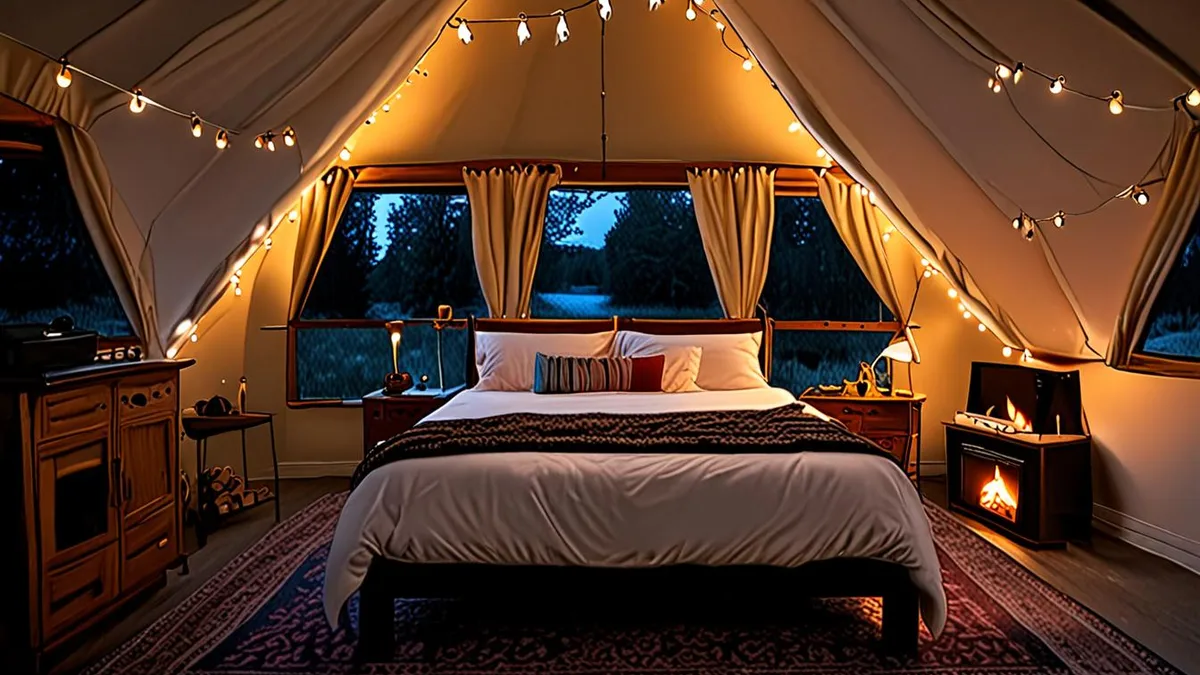
Glamping sits somewhere between camping and a hotel stay, and knowing exactly where it lands helps you set expectations. In most units you’ll get a real bed with proper linens, some form of heating or cooling, lighting, and often electricity for charging a phone or running a small fan. What you won’t get is a standard solid wall. The walls are canvas, which means you’ll hear the wind, the rain, and whatever owls or coyotes are active after dark.
Comfort varies more than you might think
The term “glamping” covers a wide range of setups. Safari tents and yurts tend to be rustic-luxe: comfortable and charming, but still clearly a tent experience. Domes and cabins feel closer to hotel rooms, with better insulation, solid doors, and more reliable temperature control. Before booking, read the unit description carefully so you know which end of the spectrum you’re choosing.
Even the most comfortable unit is still outdoors. Insects find their way in occasionally, temperatures swing between afternoon and midnight, and canvas lets morning light through early. None of this is a flaw — it’s part of the appeal — but arriving mentally prepared makes the difference between a cozy adventure and a frustrating surprise.
How Much Your First Night Will Cost
For most first-timers, the cost question comes before anything else. In the US, a standard glamping tent or yurt typically runs $100–$300 per night. In high-demand areas — popular national park gateways, coastlines, and regions close to major cities — expect $150–$400 for comparable units. If you want a fuller picture of what drives these numbers, this guide to typical glamping prices breaks down the details by unit type and region.
Where the top of the range goes
Premium domes and units with en-suite bathrooms sit at the top of that range, and the jump is usually justified by the extras: better insulation, private bathrooms, and sometimes hot tubs or decks. If it’s your first trip, a mid-range unit is a sensible way to test whether glamping suits you.
Timing matters more than most people realize. Midweek stays and shoulder-season dates often save 20–30% compared to weekend rates in peak summer. Two nights at a yurt from Sunday to Tuesday can cost less than one weekend night at the same site.
Finally, read the fine print before you book. Many sites add cleaning fees, and popular locations commonly require two-night minimums on weekends, which can meaningfully change the total for a quick getaway. Check the full price at checkout rather than the nightly rate on the listing.
When to Book and When to Go
Glamping availability follows a simple rule: the nicer the weather, the faster the calendars fill. Peak season runs roughly May–October in most temperate regions, and for those dates you should book 2–6 months ahead. Popular sites near national parks and lakes can fill even earlier for summer weekends, so if you have your heart set on a specific unit, don’t wait.
Shoulder months work in your favor
May and September are the sweet spots for many first-timers. You get milder crowds, often better rates, and weather that’s still pleasant in most regions. Midweek stays during these months are the easiest to land — booking 3–4 weeks out can work, which is nearly impossible for a July Saturday.
Region matters as much as the calendar. Desert sites and southern locations are at their best in winter, when daytime temperatures are comfortable instead of punishing. Mountain sites are the opposite: summer is their prime, and early or late-season nights can get genuinely cold at altitude. Matching the season to the region is the difference between a relaxing stay and a shivery one.
To plan around this, it helps to see how the timing changes from one landscape to the next. This regional breakdown of the best season for glamping covers which months suit each area and how booking windows shift accordingly.
Choosing the Right Structure for a First-Timer
Your first glamping trip is only as good as the structure you sleep in, and this is where a little research pays off. For most beginners, a safari tent or yurt is the sweet spot. Both sit on solid platforms, come with real beds and mattresses, and usually include some form of heat — a small wood stove or propane heater — which makes a huge difference on a cool night.
Domes and cabins sit at the more weatherproof end of the scale. A cabin is essentially a small building, and a geodesic dome has rigid panels and insulation that buffer wind and rain far better than canvas. Bell tents, on the other hand, are the most basic option: round canvas walls, minimal furniture and the closest thing to traditional tent camping you will find at a glamping site. They can be charming, but go in knowing the experience is simpler.
Capacity is another thing to get right. Most units sleep 2–4 guests, while family layouts can handle up to 6. But capacity numbers can be misleading — a unit that “sleeps 4” might mean one queen bed plus two floor futons, which is fine for kids and less fun for adults. Confirm the actual bed configuration before you book, not just the headcount.
- Safari tents: often include a covered porch or deck, which gives you a dry outdoor sitting area even when it rains.
- Yurts: the circular design and felt or canvas insulation tend to hold heat better than a standard tent, making them a solid choice in cooler months.
- Domes: transparent panels are common, so ask whether the unit offers blackout covers if you want to sleep past sunrise.
- Bell tents: usually the lightest on amenities, so check whether heating, cooking gear or even flooring are included at all.
- Cabins: often the only option with a fully enclosed, lockable door, which some travelers prefer for peace of mind.
If you want a deeper breakdown of tent styles and what each one includes, this guide on how to choose the right glamping tent walks through the options in detail.
What the Site Facilities Are Actually Like
Glamping sites vary more in facilities than hotels ever will, so it pays to ask specific questions before you book. The biggest one is the bathroom situation. Many sites use shared bathhouses located 20–100 meters from the tents — a short walk, but a memorable one at 2 am in the rain. Premium sites offer en-suite bathrooms inside or attached to the unit, and this single feature often explains most of the price difference between listings.
Cooking setups range just as widely. At the simple end, you get a campfire grill and a fire pit; at the other end, some sites provide a full outdoor kitchen with a stove, counter space and cookware. A few units include a small fridge, which matters more than you might think for keeping milk, butter and drinks usable over a couple of days.
Connectivity is the other reality check. Expect limited or no Wi-Fi and patchy cell signal at many rural sites, so download maps and entertainment before you arrive. Timing matters too: check-in is usually 3–5 pm and check-out 10–11 am, which gives you a narrower window than a hotel stay — plan your arrival with daylight to spare, since finding your unit and settling in is easier before dark.
- Hot water: some shared bathhouses have limited showers, so ask how many and whether they run on a schedule or a tank.
- Lighting paths: sites with bathhouses often light the walkways, but a few rely on lanterns — worth confirming if you are traveling with kids.
- Firewood: some sites provide it free, others sell bundles on-site, and a few prohibit outside wood to prevent pests.
- Trash and dishwashing: many sites have no trash pickup at individual units, so expect to carry your waste to a central station and wash dishes at a communal sink.
- Pets and parking: pet policies and whether you can park next to your unit vary widely, and both can change your packing and arrival plans.
Packing Smarter Than a Hotel Stay Requires
Packing for glamping sits in an awkward middle ground between a hotel stay and tent camping, and the most common mistake is packing for the wrong one. The key issue is temperature: canvas walls cool fast at night, even on a warm summer evening, and that chill creeps into your sleep. Bring layers you can add and remove easily, plus a warm sleep setup — think a thermal base layer for bed, thick socks and possibly a lightweight extra blanket even if linens are provided.
The second category is what I call the 2 am kit. Walking to a bathhouse in the dark, over grass or gravel, is a very different experience than padding down a hotel hallway. A flashlight or headlamp, slip-on shoes you can grab without fumbling, and bug repellent will earn their place in your bag on the very first night. Keep all three within arm’s reach of the bed, not buried in a duffel.
Finally, resist the urge to overpack the household stuff. Most glamping sites provide linens and towels as standard, and many also supply basic kitchen gear if there is cooking equipment. The exact list varies by site, so confirm what’s included before you start stuffing the car — the space you save is better used for extra layers.
- Eye mask: canvas lets morning light through, and an eye mask is the simplest fix if you are not an early riser.
- Sealable snack bags and a water bottle: with no mini-bar and sometimes no fridge, having your own stash saves late-night trips to the main lodge.
- Dry shampoo and wet wipes: useful if the bathhouse is a hike away or hot water runs out on a busy weekend.
- A book or downloaded podcasts: with limited or no Wi-Fi at many rural sites, offline entertainment is worth planning for.
- A small daypack: handy for carrying layers, water and repellent on walks around the site without returning to your tent.
Ready to Book Your First Glamping Trip
Glamping takes the guesswork out of outdoor nights: you get a real bed and heating or cooling, wrapped in a genuine outdoor atmosphere where you can still hear the wind and the wildlife. If your first-timer worries were about what a luxury tent stay actually involves, the answer is simpler than it seems — it is a comfortable room with canvas walls.
The practical details are just as manageable. Budget roughly $100–$400 per night depending on the region and unit, and book 2–6 months ahead for stays between May and October. Pick a beginner-friendly structure like a safari tent or yurt, verify the bathroom and cooking facilities before you pay, and pack layers for cool canvas nights. Then all that is left is to step outside and enjoy the night sky. If you have been on a first glamping trip yourself, share how it went in the comments.