You have picked Dubrovnik, sorted your dates, and now you are stuck on the same booking dilemma as thousands of travelers before you: villa vs apartment in Dubrovnik, which one actually gives you better value for your money? It is not an obvious choice. A villa promises space and a pool but sits outside town, while an apartment inside the old town puts you steps from everything, though often in a smaller space at a surprisingly high nightly rate.
This guide breaks the decision down clearly. We compare what each option really costs, from apartments in or near the old town to villas along the Lapad and Zaton coastline, then look at location, space, privacy and how well each suits couples, families or groups. We also cover which season fits each option best, since July and August prices behave very differently from May or October. A quick decision checklist at the end helps you match the right choice to your trip in minutes.
Villa vs Apartment in Dubrovnik: The Core Differences
At their heart, the two options serve different kinds of trips. A villa in the Dubrovnik area is a self-contained holiday home: you typically get a private pool, a sea-view terrace, several bedrooms and a full kitchen with space to cook and eat together. Most sit in residential coastal neighborhoods outside the old town, which means quieter evenings and room to spread out, but also more planning around how you get into town.
An apartment is the opposite trade-off. You give up the pool and the sprawling outdoor space, and in return you get location. Old town apartments put you steps from restaurants, cafes, the city walls and the small beaches below the walls. You can drop back midday, head out for dinner on foot and never think about parking or bus timetables.
Who each option fits best
Villas shine for groups and longer stays. If you are traveling with family or friends and plan to stay a week or more, having a shared living area, outdoor dining and a pool to come home to changes the rhythm of the trip. Days can revolve around the villa, with sightseeing trips into town when you feel like it.
Apartments suit couples and short city breaks. For two or three nights, you will likely spend most of your time out exploring anyway, so a compact space with an unbeatable location often beats a bigger property you barely use. The honest question to ask yourself before booking: will you spend more hours by a pool or more hours walking the walls? Your answer usually decides the booking.
Price Comparison: What Each Option Really Costs
Here’s the honest math: in high season, a villa in the Dubrovnik area typically runs 200-600+ EUR per night, while an apartment in or near the old town costs 80-250 EUR. On paper, the apartment looks far cheaper. But that comparison only works if you’re traveling as a couple.
The picture changes fast when you split costs. A villa sleeping 6-8 people, divided among the group, often brings the per-person price close to or even below what two separate apartment bookings would cost. Add in the private pool and shared living space, and the value case for groups becomes hard to ignore. It’s the same logic travelers apply when comparing a private pool villa in Bali against several hotel rooms — one shared property frequently beats multiple smaller bookings.
Timing matters too. In the shoulder-season months of May, June, September and October, villa rates can drop by 30-50 percent. A property that costs 500 EUR a night in August might dip into territory that competes directly with premium apartments, while you still get the pool, the terrace and the space.
- Cleaning and utility fees: some villa owners add a final cleaning charge or bill electricity and air conditioning separately, which can nudge the effective nightly rate up — ask before booking.
- Security deposits: villas more often require a refundable damage deposit on arrival, typically a few hundred euros, so factor that into your upfront cash flow.
- Minimum stay rules: villas frequently impose minimum stays of around a week in peak season, while apartments usually accept 2-4 nights — a hidden cost if your trip is short and you’d have to extend it.
- Food and transport offsets: cooking together in a villa kitchen and skipping several restaurant dinners can offset part of the nightly rate, though you’ll spend more on taxis or a rental car to reach the old town.
Location and Getting Around
Location is one of the biggest practical differences between the two options, and it shapes your daily routine more than you might expect. Most villas in the Dubrovnik area sit 5-15 km from the old town, mainly along the Lapad and Zaton coastline. That means beaches and sea views on your doorstep, but also a daily decision about how to get into town. You will typically rely on local buses, taxis or a rental car, so factor travel time into any sightseeing plans and check bus connections before booking a specific property.
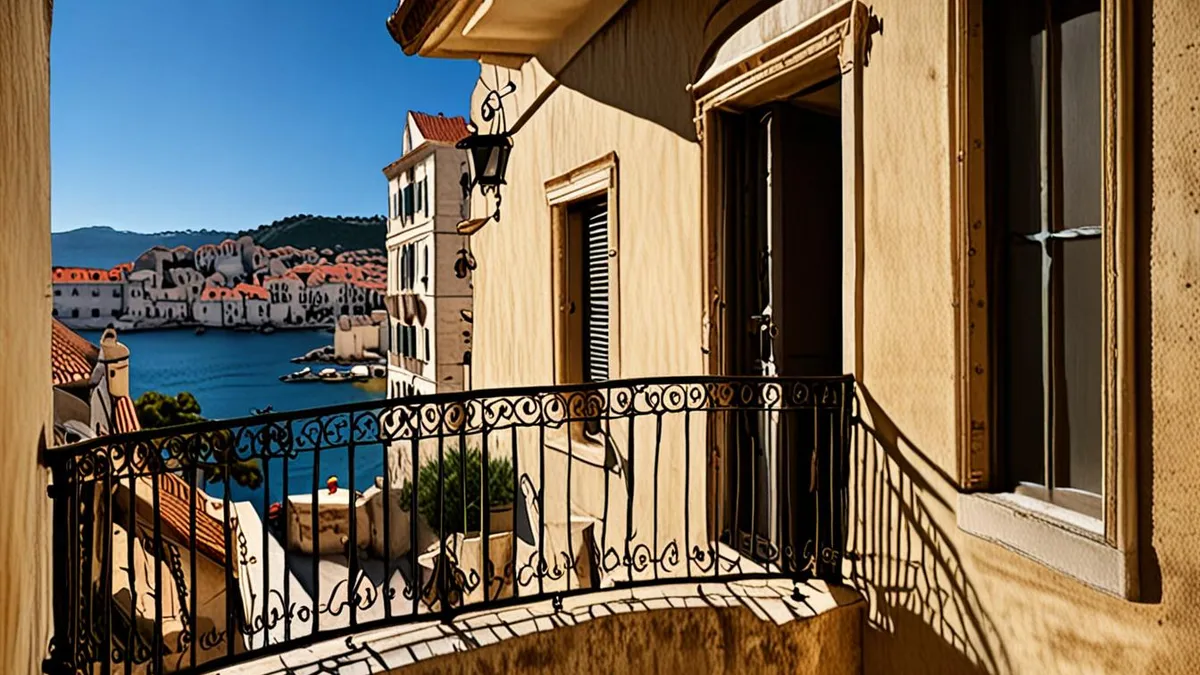
Old town apartments flip that equation. Inside or just outside the walls, you are usually a 5-15 minute walk from major sights, restaurants and the cable car, so you can pop back to your apartment midday for a rest or a swim-towel swap. The trade-off comes at arrival and departure: vehicle access in the old town is strictly restricted, so expect to walk your luggage from the nearest drop-off point. Pack light or arrange help if you are staying up steep stairs or lanes.
Which suits your trip style?
Villa stays favor beach days, long lunches on the terrace and pool time, with the old town as an occasional evening outing. Apartment stays favor sightseeing, gallery-hopping and dinners out within walking distance. If your ideal day ends with sunset drinks in the old town rather than a drive home, the apartment’s location may be worth more than a private pool.
Space, Privacy and Group Fit
The biggest practical difference between a villa and an apartment comes down to how many people it can comfortably hold. Villas in the Dubrovnik area typically offer 3-5 bedrooms, which means a single booking can sleep a family reunion or a group of friends without anyone drawing straws for the sofa. Add a private pool, a proper outdoor dining area and enough terrace space for everyone to spread out, and the villa starts to feel less like accommodation and more like the destination itself.
Apartments, by contrast, usually sleep 2-4 people in one or two bedrooms. That works perfectly well for a couple or a small family, but communal space is limited. If you book a two-bedroom old town apartment with five friends, expect squeezed mornings, luggage piled in corners and a single bathroom queue before breakfast.
Couples face a genuine dilemma here. If you dream of privacy and your own pool, a smaller villa or a villa-style suite can deliver it, though you trade away the convenience of stepping out your door into the old town. A compact apartment does the opposite: minimal space, maximum location.
- Bedroom configuration matters more than the total bed count. Check whether the villa’s bedrooms are true doubles or include twin rooms and sofa beds, since a “sleeps 8” property may only suit four adults comfortably.
- Outdoor dining capacity varies widely. Some villas fit a table for ten under a shaded terrace, while others offer a small bistro set, so look at photos before assuming group dinners are realistic.
- Pool privacy differs between properties. A hillside villa may overlook neighboring terraces, while a walled garden property offers genuine seclusion, which matters to couples more than to large groups.
- Bathrooms per bedroom is a key ratio for groups. With 6-8 people sharing, aim for at least one bathroom per two bedrooms to avoid morning bottlenecks.
When to Book and Which Season Fits Each Option
Timing is where villa and apartment bookings diverge sharply. Because the Dubrovnik area has a limited stock of genuine sea-view villas, the best properties for late June to August sell out first. Reserve 4-6 months ahead if you want a specific villa in peak season, especially one with a pool and an unobstructed view over the Adriatic.
Booking apartments in high season
Apartments are simply more numerous, both inside the walls and in neighborhoods just outside them, so availability is less of a scramble. Even so, July and August are the busiest and most expensive months in the city, and the well-reviewed apartments near major sights go early. A 3-4 month lead time is a sensible target for a peak-season apartment booking, particularly if you want a specific feature like a balcony or a view over the rooftops.
Why shoulder season suits villas best
If your dates are flexible, aim for May, June, September or October. These months offer milder weather and lower rates, and the sea is still warm enough for serious swimming well into the shoulder months. Villa prices soften noticeably outside the peak, and you get the pool, the terrace and the coastline views with thinner crowds on the roads and beaches. For a pool-centered holiday, shoulder season is the sweet spot: the villa itself becomes the experience rather than a base for fighting through crowds.
How to Choose: Quick Decision Checklist
By now the choice usually narrows itself, but a quick checklist keeps the decision honest. The core logic is simple: villas reward groups who plan to spend most of their time on-site, while apartments reward short stays centered on the old town. Match the property to how you will actually spend your days, not to a fantasy version of the trip. It is easy to be swayed by a glossy pool photo or a charming stone staircase, but the right answer depends on routine, not aesthetics. Think about who is traveling, how long you are staying and how much time you genuinely want to spend in transit.
- Count your nights before anything else. If the trip is 2-4 nights, an apartment inside the walls lets you see more per day; a week or longer makes the villa’s on-site space pay off.
- Work out the real per-person cost. A villa at the top of the 200-600+ EUR range can look expensive until you divide it by six or eight travelers, often undercutting two separate apartment bookings.
- Check the walk to bus stops or parking before you book either option. A villa 5-15 km from the old town needs a realistic daily transport plan, and even an apartment inside the walls means hauling luggage from a drop-off point due to restricted vehicle access.
- Look honestly at your sightseeing energy. If the plan is morning exploring and evening dining out, an apartment under 250 EUR per night fits; if the plan is long poolside afternoons with occasional excursions, the villa is the better spend.
Whichever way you lean, run through this list before paying the deposit. Access, group size and trip length shape your daily routine far more than a listing photo ever will. If your group splits evenly between pool people and sightseers, consider compromising with a villa in the Lapad or Zaton area, where the coast offers beaches and a shorter ride into town. And once you have settled on a property type, confirm the details directly with the host: exact walking distances, parking arrangements and luggage logistics are all easier to sort out before arrival than after a long flight.
The Bottom Line
So which should you book? If you are traveling with a group of six to eight, want a private pool and plan to spend most days relaxing on-site, a villa wins on space and group value, typically running 200-600+ EUR per night in high season. If you are staying just a few nights and want restaurants, the walls and beaches on your doorstep, an apartment at 80-250 EUR per night is the better deal.
Ultimately, the choice comes down to group size, trip length and whether you prioritize poolside relaxation or old town convenience. Whichever way you lean, booking 4-6 months ahead gives you the best pick of either option for the late June to August peak. Have you stayed in a Dubrovnik villa or apartment? Share your experience in the comments or pass this article along to a friend planning their trip.