Staring at an empty suitcase a few days before a resort trip is a familiar kind of panic. You know the resort has pools, restaurants and maybe even a spa, but you have no idea what actually counts as “provided” and what will leave you paying resort-shop prices or begging a neighbor for sunscreen. That gap between what you assume and what you pack is exactly where resort vacation packing goes wrong.
This checklist sorts it out for you. We’ll cover the documents and money essentials that get you through the airport and check-in, a clothing plan built around a week of beach weather, and the sun and swim gear worth carrying from home. Then we’ll tackle toiletries and health items resorts don’t always stock, electronics and practical extras, and just as important, what to leave at home so your bag stays light. A final recap pulls the whole list together so you can pack in one sitting and get back to counting down the days.
Resort Vacation Packing: Documents and Money Essentials
Before anything goes into the suitcase, sort out the paperwork, because a forgotten document can end a trip before it even starts. Check your passport right now rather than the night before departure. Many countries require it to be valid for at least six months beyond your return date, and renewals can take weeks, so this is the one item with a real deadline attached to it. If your passport is close to expiring, handle the renewal first and book flights afterward. It also helps to photograph every document and store the images in a dedicated folder on your phone, so nothing important lives only on paper.
Money is the second half of this section. Cards work almost everywhere at a resort, but tips, drivers and small off-resort purchases move faster with cash, and small bills make the whole process smoother. Vendors outside the resort gates often can’t break large notes, and staff appreciate exact change. Here’s what to have in order:
- Passport valid at least six months beyond your return date, with a printed photocopy stored separately from the original and a digital scan saved in your email or cloud storage in case the physical copy is lost
- Booking confirmations, resort reservation details and your travel insurance card saved offline on your phone, since airport and hotel Wi-Fi is often slow or gated behind a login right when you need it
- Small bills in pesos or USD, roughly $50-100 equivalent, broken into convenient denominations so you can tip housekeeping, bell staff and drivers without waiting for change
- A credit card with no foreign transaction fees as your backup to cash, which saves you a percentage on every resort or excursion charge and gives you fraud protection that cash can’t offer
Put all of this in one folder or pouch that stays in your carry-on, never in checked luggage. If your bag takes a detour, your trip shouldn’t. Review the folder the night before you fly, then zip it into your personal item and leave it there until you’re through arrival formalities at your destination.
Clothing Checklist for a Week at a Beach Resort
Clothing is where overpacking happens most, and it’s usually because people pack for imagined scenarios instead of the actual rhythm of a resort week. The reality is simple: you’ll live in swimwear and light clothes by day, and you’ll want a handful of nicer outfits for evenings. Daytime temperatures at beach resorts typically sit between 28-33°C (82-91°F) in high season, so breathable fabrics beat fashion statements every time. Think cotton, linen and anything that dries fast, because between pool splashes, sea breezes and humid evenings, nothing stays crisp for long.
Most all-inclusive resorts require reservations at their à la carte restaurants, and many enforce a smart-casual dress code at dinner. That doesn’t mean a suit or heels, but beach cover-ups and flip-flops won’t get you a table either. A quick check of your resort’s dress code before you fly will save you a last-minute shopping scramble. Here’s the core list:
- Two or three swimsuits so one is always dry, since swim-up suites and pools mean you’ll be in the water daily, plus a cover-up or rash guard for walking between the pool and the buffet
- One smart-casual dinner outfit per 3-4 nights, such as a collared shirt or a sundress, which you can rotate with different accessories rather than bringing a fresh look for every evening
- Four or five breathable daytime outfits in cotton or linen for the heat, plus a light long-sleeve layer for air-conditioned lobbies, restaurants and shuttle buses that can feel surprisingly cold
- Flip-flops for the pool deck, comfortable sandals for daytime wear, and one pair of walking shoes if your trip includes excursions like ruins, cenotes or jungle hikes
Stick to a color palette so everything mixes and matches. Fewer pieces that all work together will cover the week better than a suitcase full of one-off outfits. Roll your clothes instead of folding them to save space and reduce wrinkles, and leave a little room for anything you pick up on the way home.
Sun, Swim and Beach Gear to Pack
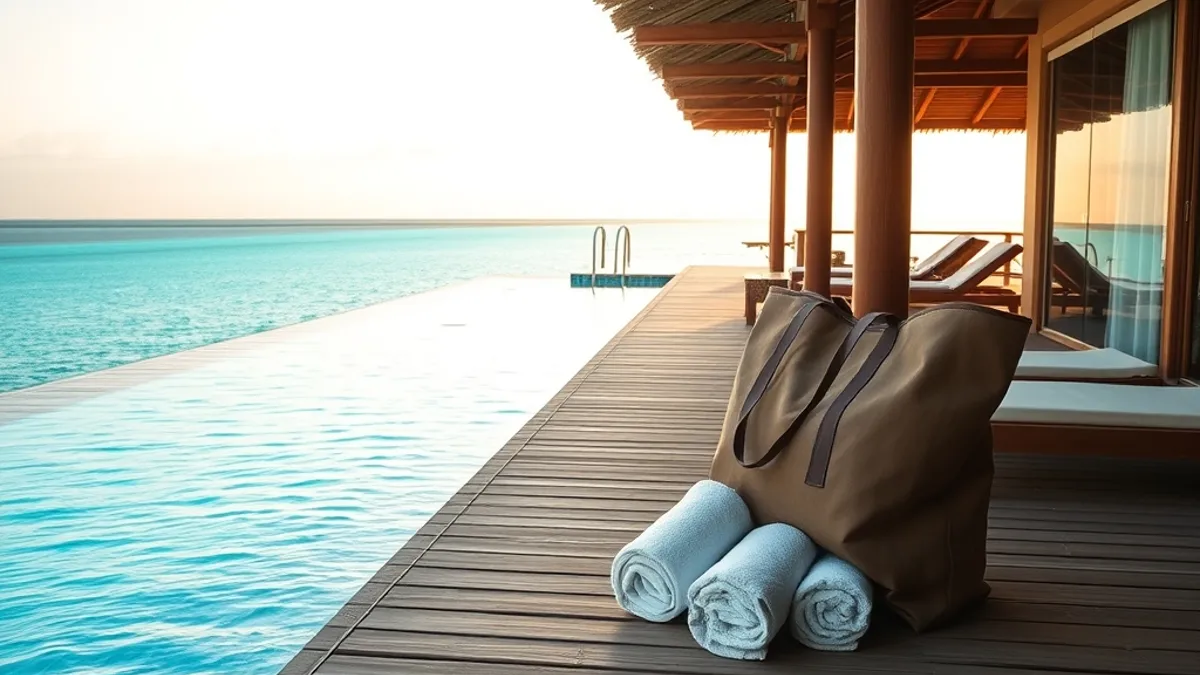
Sun protection is the one category where packing from home genuinely saves you money, because resort shops sell sunscreen at heavily inflated prices and the selection is often limited to whatever’s left by midweek. Bring your own reef-safe SPF 30-50 sunscreen, and pack more than you think you need; a week of daily pool and ocean time goes through a bottle faster than you’d expect.
The tropical sun at midday is unforgiving, and a sunburn on day two can flatten the rest of your trip. A layered approach works far better than sunscreen alone, and a few small gear items make beach days noticeably easier. If you’re still planning the trip itself, it’s worth reading up on the best time to book all-inclusive resorts in Mexico for lower prices before you finalize dates. Here’s what to pack:
- Reef-safe SPF 30-50 sunscreen, ideally in a stick format for faces and easy reapplication, since many protected swimming areas and marine parks prohibit ordinary sunscreens that damage coral
- Polarized sunglasses to cut glare off the water, a wide-brim hat for your face, neck and ears, and aloe or after-sun lotion to calm skin on the evenings you inevitably stay out too long
- A waterproof phone pouch so you can take photos at the pool and in shallow water without worry, plus a packable beach tote or dry bag to carry towels, sunscreen and wet gear in one trip
- A rash guard for snorkeling or long days on the water, which protects your back and shoulders from sun that washes off in the water and saves you from reapplying sunscreen every hour
Apply sunscreen before you leave your room each morning, not when you reach the pool. It needs time to bind to your skin, and the walk across a hot deck is often all the exposure it takes to start burning.
Toiletries and Health Items Resorts Don’t Always Provide
Even the most upscale resorts can surprise you with the basics. Shampoo, conditioner and body wash are usually provided, but the brands and quality vary widely, and smaller items like conditioner, lotion and dental kits are often skimpy or missing entirely. Pack your own travel-size versions of the essentials so you are not stuck making a mid-vacation run to a hotel shop at inflated prices.
Medications deserve the most careful attention. Bring everything you take daily in its original packaging, ideally in your carry-on, since replacing a prescription abroad can be difficult. Beyond your regular meds, a small health kit handles the most common resort ailments: headaches from too much sun, stomach upsets from unfamiliar food, and queasy boat rides on snorkeling trips.
Mosquitoes tend to appear around garden paths, lobbies with open-air walkways and outdoor dining areas, especially in the evening. A repellent you like and trust beats whatever the resort shop happens to stock. And with long, hot days spent in the sun, a few small extras keep everyone comfortable and hydrated.
- Painkillers: ibuprofen or acetaminophen in a small pouch, since sunburn and post-swim soreness show up fast.
- Antihistamines: useful for insect bites, rashes from new sunscreen or mild allergic reactions.
- Anti-diarrheal tablets: a traveler’s classic for a reason, especially when trying new food and drinks.
- Motion sickness tablets: handy for catamaran trips, snorkeling excursions or winding coastal drives.
- Insect repellent: a compact spray or lotion for evenings in garden and pool areas.
- Hand sanitizer: small bottles for excursions, buffets and days away from your room.
- Rehydration salts or electrolyte packets: lightweight and ideal after hot days of swimming and cocktails.
Electronics and Practical Extras
Electronics are where packing mistakes get expensive. The core is simple: your phone, its charger and a power bank. Keep in mind that most airlines restrict power banks in checked luggage, so a battery of 20,000 mAh or smaller goes in your carry-on and keeps your phone alive on long travel days, airport layovers and beach afternoons away from an outlet.
Power outlets are another common frustration. Resort rooms often have a limited number of sockets, usually positioned awkwardly behind the bed or desk. If you travel with a phone, tablet, camera and e-reader, a universal adapter plus a small power strip turns one outlet into enough for the whole family. Check your resort’s plug type before you go; many destinations in Mexico and the Caribbean use the same plugs as the United States, but it takes one minute to confirm.
The practical extras take up almost no space and earn their spot repeatedly. A reusable bottle keeps you hydrated between bar visits, and a few ziplock bags solve the eternal problem of wet swimwear in your luggage.
- Power bank (20,000 mAh or less): sized to comply with most airline carry-on rules, and enough to recharge a phone several times.
- Universal adapter: one unit covering multiple plug types, useful if your trip includes stops beyond the resort.
- Small power strip: charges several devices from a single adapter, ideal for families sharing a room.
- Reusable water bottle: refill at water stations or fountains many resorts provide, cutting down on plastic cups.
- Ziplock bags in a few sizes: seal wet swimsuits, protect your phone from sand and store receipts.
- Foldable spare bag: packs flat on the way out, then carries souvenirs and duty-free purchases home.
What to Leave at Home When Packing for a Resort
Knowing what not to pack saves as much luggage space as knowing what to bring. The biggest category is anything the resort already provides or actively restricts. Many all-inclusive resorts limit outside food and drinks, so that bag of snacks and the bottle of spirits in your suitcase may simply be confiscated at check-in. Check your resort’s policy first, but in most cases you can leave both at home.
Beach towels are another near-universal waste of suitcase space. Virtually every resort supplies them, usually by the pool and often refreshed daily, so packing your own adds bulk for no benefit. The same logic applies to toiletries: full-size bottles weigh a lot, and a week’s vacation needs only travel sizes. Shoes are the classic overpacking trap; two pairs, sandals and something sturdier, cover nearly every resort scenario.
Finally, think twice about valuables. Poolside is no place for jewelry you would hate to lose, and even a safe in your room is a better home for items you genuinely cannot travel without.
- Outside snacks and alcohol: many all-inclusive resorts restrict them, and everything you need is already included in your package.
- Beach towels: resorts provide them poolside and refresh them daily, so yours just takes up space.
- Expensive jewelry and watches: leave irreplaceable pieces at home rather than worrying about them in a room safe or on the sand.
- Full-size toiletries: a week needs travel sizes at most, and heavy bottles eat your luggage allowance.
- A third pair of shoes: sandals plus one pair of walking shoes covers beach, dinner and excursions; anything more is dead weight.
Final Resort Vacation Packing Recap
If the suitcase is still sitting empty a few days before departure, start with the non-negotiables: your documents, small bills in cash, and a smart-casual dinner outfit or two. Those three categories cover everything a resort genuinely expects you to bring, from check-in to à la carte dinners.
From there, the beach essentials are simple: two swimsuits so one is always dry, reef-safe sunscreen, and light clothing suited to a week of 28-33°C heat. Just as important is what stays home — towels, snacks and valuables are either provided by the resort or restricted by it. Pack light, pack smart, and the rest falls into place quickly. If this checklist helped you get ready, leave a comment or share it with a fellow traveler.