You’ve probably heard friends talk about glamping or seen photos of canvas tents with real beds inside, and wondered what actually counts as glamping. Is a yurt glamping? What about a cabin in the woods? The word gets thrown around a lot, and it’s not always clear which accommodation type suits your trip, your budget or the season you’re traveling in.
This guide breaks down what is glamping in plain terms, starting with a simple definition and then drawing the line between glamping and traditional camping. From there, we walk through the main structure types: classic safari tents, yurts and bell tents, plus the premium end with domes, treehouses and cabins. You’ll also find a realistic breakdown of what each type typically costs per night, and practical advice on choosing the right one based on your group size, must-have comforts and how far ahead you need to book. By the end, you’ll know exactly which glamping style fits your next getaway.
What Is Glamping? The Short Answer
Glamping is short for glamorous camping, and the name does a lot of the explaining. Instead of arriving at a field with a pile of gear, you arrive at a structure that is already set up and fully furnished: real beds with proper bedding, heating or cooling for the season, and often a private bathroom. Everything is ready the moment you walk in.
The easiest way to picture it is as a middle ground between a hotel and a tent. You still get the best parts of outdoor living: fresh air, dark skies, waking up to birdsong instead of traffic. What you skip are the worst parts: buying equipment, pitching anything yourself or sleeping on a thin mat on hard ground. Someone else has done the setup work, and you simply check in.
Why the term covers so many different stays
Here’s where travelers get stuck: glamping is not one structure type. The word covers everything from large canvas safari tents and round yurts to geodesic domes, treehouses and solid-walled cabins. They all fall under the same umbrella, but they differ wildly in comfort, insulation, price and the season they suit best. A bell tent in July and an insulated cabin in January are both glamping, yet they offer completely different experiences.
That variety is good news once you understand it, because it means there’s almost certainly a glamping type that fits your trip. The trick is knowing which structures handle cold weather, which ones work for families versus couples, and where each sits on the price scale. That’s exactly what the rest of this guide sorts out for you.
Glamping vs Camping: Where the Line Falls
The line between glamping and camping comes down to one simple question: who set up the shelter? With camping, you bring your own tent and pitch it yourself, along with everything that goes with it: sleeping bags, cooking gear, lanterns and coolers. With glamping, the structure is pre-built and pre-furnished before you ever arrive. You show up with your suitcase, not your equipment.
Comfort and facilities: the real difference
The gap shows up immediately in what’s waiting for you. Glamping usually includes proper bedding made up on real beds, working lighting, and often a kitchenette or an en-suite toilet and shower. Camping, by contrast, relies on shared facilities: communal wash blocks, shared cooking areas and whatever comfort your own gear provides. Neither approach is wrong, but they appeal to very different moods and energy levels.
Money is another clear dividing line. A standard campsite pitch often costs somewhere between $20 and $50 per night, while glamping typically starts above $100 per night for even the simplest structures. You’re paying for the built accommodation, the furnishings and the labor of keeping it all ready for guests.
If you’re weighing the two options for an upcoming trip, it helps to compare them side by side on cost, comfort and effort. Our guide to glamping vs camping and which is right for your next trip walks through that decision in detail, so you can match the style of stay to the kind of weekend you actually want.
Safari Tents and Yurts: The Classic Glamping Types
The classic glamping types are the ones you’ll encounter most often, and for good reason: they deliver the canvas-and-nature experience most people imagine when they hear the word. These structures have been refined over years of use, so they tend to be well designed, widely available and priced more gently than the premium options. If it’s your first glamping trip, one of these three is usually where you’ll start.
Each type has a distinct personality, though. Safari tents lean toward space and home-like layout, yurts toward coziness and character, and bell tents toward simplicity and romance. Knowing how they differ in size, insulation and sleeping capacity helps you pick the right one before you book, especially since most units sleep 2 to 4 guests, with family units often accommodating 4 to 6.
- Safari tents: many sit on raised wooden platforms, which keeps you dry in rain and level on uneven ground; the covered deck effectively doubles your living space in dry weather.
- Yurts: the circular shape and central ring at the top give them a surprising amount of headroom, and the lattice walls hold heat better than flat canvas panels, making them comfortable well into cooler evenings.
- Bell tents: because they’re single-pole structures, they go up and come down quickly, which is why many sites offer them at the friendliest rates; the low ceiling means most people stand comfortably only near the center.
- Packing implications: even with furnished structures, a few personal items make stays easier, and our complete glamping trip packing checklist covers exactly what’s worth bringing and what you can leave at home.
One practical note on seasons: canvas structures like these are at their best during the warm months, roughly May to September in most temperate regions. Outside that window, look at insulated domes or solid cabins instead, which we cover in the next section.
Domes, Treehouses and Cabins: The Premium End
Once you move past canvas tents, glamping starts to look a lot like boutique lodging. This is the premium end of the market, where the structures themselves become part of the experience. Expect higher prices, but also better insulation, real furniture and views you simply cannot get from a standard hotel room.
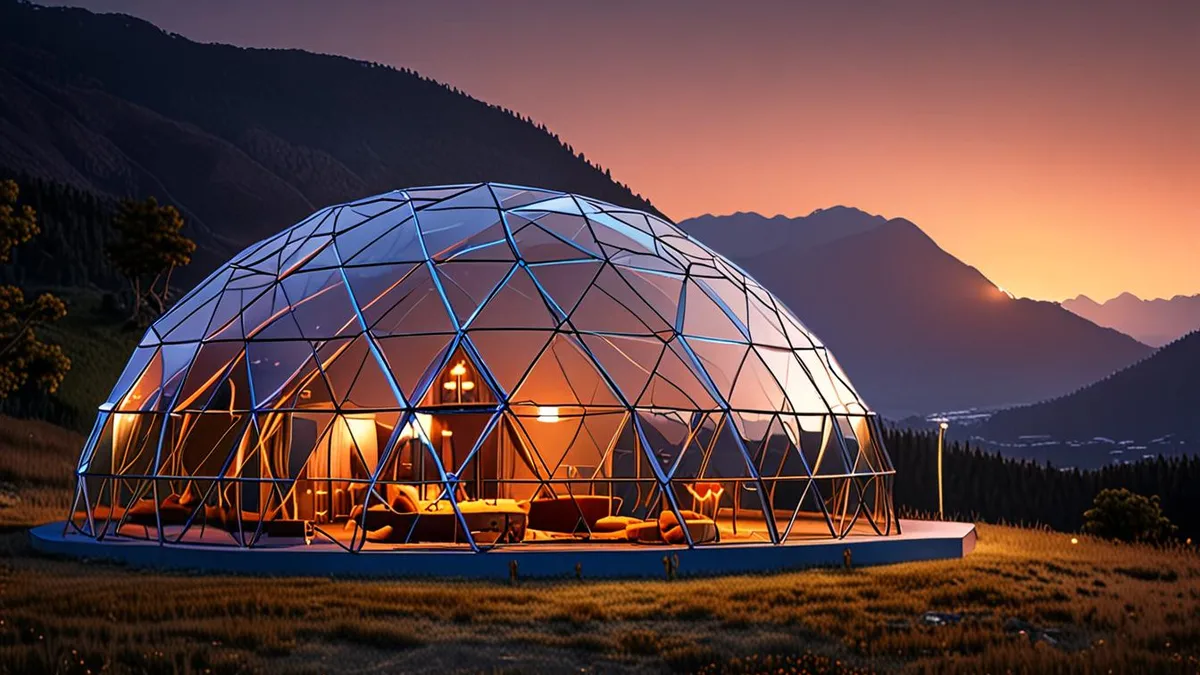
Geodesic domes are the most photogenic of the bunch. These spherical structures use triangular panels, often partially transparent, so you can lie in bed and watch the sky. Many are marketed specifically for stargazing, with skylights positioned right above the mattress. Because they are engineering-heavy and often sit in remote scenic spots, they usually cost between $200 and $500 per night.
Treehouses are the dreamers’ option. Modern glamping treehouses are not the rickety backyard builds you remember from childhood; they are elevated constructions with plumbing, heating and often a wraparound balcony in the canopy. They tend to book out for anniversaries and proposals, which is part of why they are usually the most expensive category.
Glamping cabins round out the premium tier. These are solid-walled mini lodges with real windows, doors and locks, making them the closest thing to a hotel room in a natural setting.
- Geodesic domes: the transparent panels can be shaded or tinted for privacy, and many sites restrict light pollution around them to improve night-sky visibility.
- Treehouses: access is usually by staircase or ramp rather than a ladder, but travelers with limited mobility should confirm the layout with the operator before booking.
- Glamping cabins: because the walls are solid, they handle wind and cold far better than any canvas option, and many include a small wood stove or electric heater as standard.
- Both domes and treehouses: availability is limited since most sites only have one or two units, so these are the first categories to sell out in high season.
How Much Does Glamping Cost by Type
Glamping prices vary more between structure types than between destinations. A basic bell tent in one region can cost less than a mid-range safari tent somewhere else, so it pays to know which category you are booking before you compare listings.
The budget end is where most first-timers start: bell tents and basic yurts, often simple canvas setups with shared bathroom facilities a short walk away. They work well for couples trying glamping for the first time or for travelers who want the outdoor feel without a big bill. The mid-range covers safari tents and standard domes, typically around $150 to $300 per night, where you can usually expect an en-suite bathroom, a kitchenette and proper furniture. At the top, treehouses and panoramic domes command premium rates, especially those with sweeping views.
Timing matters as much as structure. Off-season rates from October to April can be 20 to 40 percent lower than peak-season prices, so a dome that is out of budget in July may be affordable in November. For a fuller breakdown of what drives these numbers, see how much glamping really costs per night.
- Location premium: the same structure type can cost noticeably more with a lakefront position, a national park view or a short drive from a major city.
- What’s included: some budget sites charge separately for linen, firewood or final cleaning, so check the total before comparing prices.
- Midweek savings: many operators drop their rates from Sunday through Thursday even within peak season, which can shave a meaningful amount off a mid-range booking.
- Group math: a family unit sleeping 4 to 6 can work out cheaper per person than two separate budget tents.
Choosing the Right Glamping Type for Your Trip
With so many structure types on offer, the easiest way to choose is to work through four questions: when you are going, who is coming, how far ahead you are booking, and which comforts you refuse to give up. Answer those and the right option usually picks itself.
Start with the season. Canvas structures like safari tents, yurts and bell tents are at their best during peak season, when nights stay mild and the canvas earns its keep. If you want to travel in the colder half of the year, look for cabins or insulated domes, which work year-round thanks to solid walls or proper insulation and heating.
Next, count heads. Most glamping units sleep 2 to 4 guests, while dedicated family units often accommodate 4 to 6. Booking two standard tents for a group of five is often more expensive and less sociable than one family-sized unit, so check the sleeping layout, not just the capacity number.
Finally, think about timing and priorities. Summer weekends at popular sites fill up fast, so book 2 to 6 months in advance, especially for domes and treehouses where a site may only have one or two units. Then make a short list of the comforts you consider non-negotiable before you compare prices.
- En-suite bathroom: if a private toilet and shower matter to you, filter for it early, because budget bell tents and some yurts rely on shared facilities a short walk away.
- Heating: a wood stove or electric heater extends the usable season of a canvas tent well beyond summer, so ask what heat source is installed rather than assuming.
- Kitchenette: a small fridge, sink and two-burner stove saves restaurant costs on longer stays, but some units only offer an outdoor grill or a shared camp kitchen.
- Private deck: a covered veranda effectively doubles your living space in changeable weather, and it is a common feature on safari tents but rare on basic bell tents.
Wrapping Up: Finding Your Glamping Style
So, what counts as glamping? Any pre-built, pre-furnished structure that gives you real beds and outdoor surroundings: canvas safari tents, round yurts, bell tents, geodesic domes, treehouses and solid cabins. Each comes with its own price band and best season, from simple canvas stays to panoramic domes with a view of the stars.
Budget on typical rates of $100 to $500 per night. The cheapest options are bell tents and basic yurts, while premium domes and treehouses sit at the top of the range. Traveling off-season can shave a good chunk off those prices. Once you know your group size, your travel dates and which comforts you refuse to compromise on, picking the right glamping type becomes genuinely simple. If this guide helped you plan a trip, leave a comment or share it with a fellow traveler.